Eagle Ray Water Testing Vs Taylor Kits: Accuracy Guide
For U.S. pool owners, Eagle Ray’s accuracy compared with Taylor kits is not established by the evidence available for this article. A fair answer needs the exact Eagle Ray model, its test method, and results from a controlled comparison. A brand name or a digital display alone cannot show which test is closer to the true value.
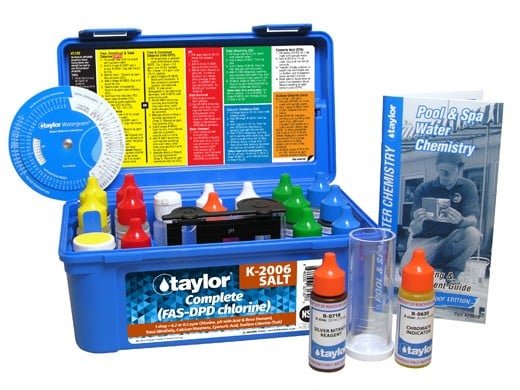
A Taylor K-2006–type kit provides a useful comparison because its FAS-DPD chlorine test uses a measured sample and a counted-drop endpoint. That does not make Taylor error-free. Old reagents, poor technique, and test interference can affect its results, too.
For a backyard pool in the United States, the practical approach is to compare both systems on the same water before trusting a disputed reading. For a public pool, follow state and local testing rules; a home comparison does not establish regulatory compliance.

What Can You Actually Conclude About Accuracy?
There is not enough verified, model-specific evidence here to assign Eagle Ray an accuracy percentage or declare it better or worse than Taylor. No live product research or hands-on testing was available for this article. Eagle Ray’s current specifications and any independent validation therefore remain unverified.
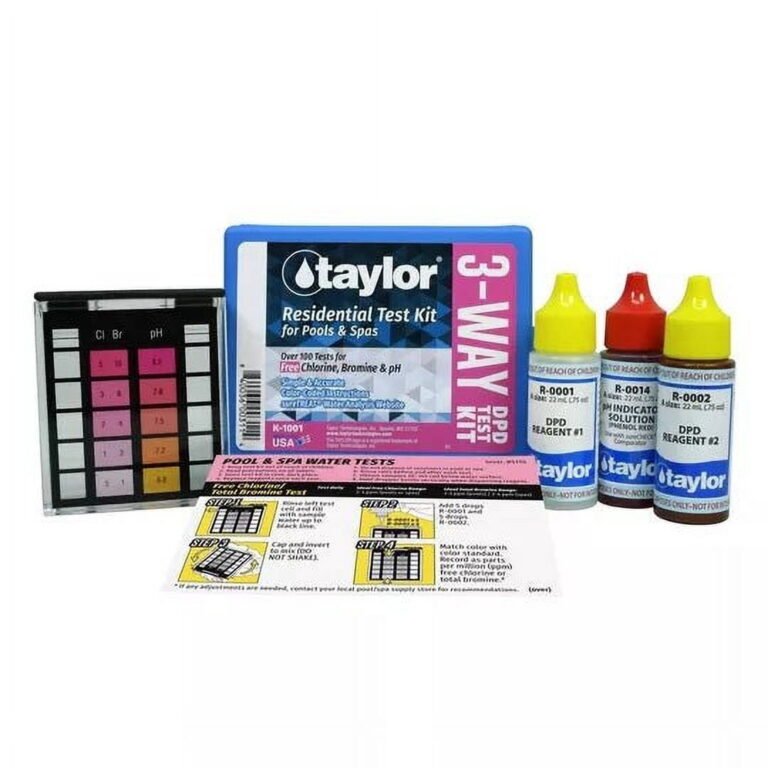
That limit matters because “Taylor kit” also describes more than one test system. A basic color-comparison kit is not the same as a K-2006 kit with FAS-DPD chlorine testing.
The table separates documented Taylor features from questions that still need an Eagle Ray manual or a controlled test.
| Comparison point | Taylor K-2006–type kit | Eagle Ray |
|---|---|---|
| Free chlorine method | FAS-DPD titration: add reagent to a measured sample until the pink color clears | Exact model and method need verification |
| Chlorine reporting increment | Common instructions provide 0.5 ppm per drop with a 10 mL sample or 0.2 ppm per drop with a 25 mL sample | Check the model’s stated resolution and accuracy separately |
| pH method | Visual color comparison using phenol red | Verify whether it uses color, an electrode, or another method |
| Other pool tests | Includes tests for total alkalinity, calcium hardness, and cyanuric acid | Verify which values are measured rather than calculated |
| Main sources of uncertainty | Sample size, reagent condition, endpoint judgment, lighting, and interference | Depend on the test method, supplies, maintenance, and operating limits |
| Evidence of superiority | A documented method does not prove universal superiority | Model-specific comparative evidence is needed |
Taylor’s official website provides product information and testing resources. Use the instructions supplied with the exact kit and reagents in hand.
The key distinction is between a documented test method and proven comparative accuracy. Knowing how a test works helps assess it, but it does not replace validation.

What “Accurate” Means in Pool Water Testing
Accuracy means closeness to a dependable reference value—not agreement with another device. Two tests can match and both be wrong. Two sound tests can also differ slightly because each has some uncertainty.
Three terms help explain what you see:
- Accuracy: How close a result is to the reference value.
- Repeatability: How closely repeated tests agree under the same conditions.
- Resolution: The smallest change the test reports.
A display that reads 3.27 ppm has finer resolution than a test that reports in 0.5 ppm steps. It is not necessarily more accurate. Extra digits are like finer marks on a ruler: they help only if the ruler itself is right.
Taylor’s drop size is not an accuracy guarantee
Under common Taylor FAS-DPD instructions, each drop represents:
- 0.5 ppm chlorine when using a 10 mL sample.
- 0.2 ppm chlorine when using a 25 mL sample.
Those values describe the reporting increment. They do not prove that every result is accurate within ±0.5 ppm or ±0.2 ppm. Follow the instructions for the specific kit, reagent, and sample size.
Each water parameter needs its own comparison
A system may give dependable free chlorine results but less dependable cyanuric acid results. Do not assign one accuracy score to every test it performs.
Keep these measurements distinct:
- Free chlorine: The chlorine result used in routine sanitizer control.
- Combined chlorine: Chlorine bound in compounds, calculated from total minus free chlorine in many methods.
- pH: A measure of how acidic or basic the water is.
- Total alkalinity: The water’s capacity to resist changes in pH.
- Calcium hardness: The amount of calcium expressed as calcium carbonate.
- Cyanuric acid, or CYA: A chlorine stabilizer that changes how chlorine results must be interpreted.

How to Compare Eagle Ray and Taylor on Your Pool
Test fresh portions of the same water, close together in time, with both systems in good working order. Testing different samples hours apart mostly compares changing pool conditions.
This procedure checks agreement and repeatability. It does not, by itself, establish which system is correct.
Before you start
Have the following ready:
- The exact Eagle Ray model name and current instructions.
- A Taylor kit suited to the parameter being checked.
- Usable reagents and any required Eagle Ray supplies.
- Clean sample containers.
- A log for results, test times, and recent chemical additions.
Confirm that each test can handle the expected concentration. Follow any stated limits for temperature, salt, sanitizer type, or interfering chemicals.
Step-by-step comparison
- Let recent chemical additions mix fully. Follow the chemical label and equipment instructions. Do not sample where a fresh dose has just entered the pool.
- Collect one representative sample. Choose a location away from a return jet, skimmer, or chemical feed point. Use the collection depth specified by the test instructions.
- Split the water into separate portions. Never reuse water after adding test reagents.
- Test promptly with both systems. Keep sample handling and timing as consistent as possible.
- Run three independent tests with each system. Prepare a fresh test portion each time.
- Record every result. Include any unclear color endpoint, warning message, or out-of-range result.
- Repeat on another day. One session may reveal a problem, but it cannot validate performance across all pool conditions.
If Eagle Ray measures water directly in the pool rather than testing a collected sample, follow its manual. Record its reading when and where you collect the Taylor sample. Do not assume a stored or delayed reading represents that sample.
Signs the comparison is working
Useful results are repeatable, within each test’s stated range, and collected without obvious handling errors. Small differences that do not change the treatment decision may have little practical effect.
If results vary widely within the same system, fix that repeatability problem first. Averaging erratic readings can hide the fault rather than solve it.
How to Interpret Different Results
Judge the difference by the parameter, concentration, and decision it could change. There is no universal acceptable gap between Eagle Ray and Taylor.
The following example is hypothetical. It illustrates a comparison method, not observed product performance.
| Free chlorine trial | Eagle Ray | Taylor, 10 mL FAS-DPD sample |
|---|---|---|
| 1 | 3.2 ppm | 3.0 ppm |
| 2 | 3.3 ppm | 3.5 ppm |
| 3 | 3.2 ppm | 3.0 ppm |
| Mean | 3.23 ppm | 3.17 ppm |
The mean results differ by about 0.06 ppm. That gap is smaller than the Taylor test’s 0.5 ppm reporting increment in this example. It would not support a claim that either system is more accurate.
It also would not prove that either mean equals the true chlorine level.
Use absolute differences before percentages
A difference of 0.5 ppm is 50% of a 1.0 ppm result, but only 5% of a 10.0 ppm result. The percentage alone can make the same gap look either large or small.
For routine comparison:
- Calculate the difference in the test’s units.
- Check each method’s range, resolution, and stated uncertainty.
- Ask whether the difference would change the action you take.
Do not treat a stated resolution as an uncertainty limit. A manufacturer’s “0.1 ppm resolution” claim is not the same as “±0.1 ppm accuracy.”
When a third test helps
A qualified pool professional or laboratory may help resolve a persistent disagreement. Ask which method it uses, whether it suits pool water, and how it controls test quality.
A pool-store printout is another measurement—not automatic proof. For chlorine, prompt testing matters because storage and transport can change the sample.

Why Eagle Ray and Taylor Readings Might Disagree
Check sampling and technique before deciding that a device is defective. Many apparent accuracy problems arise before the measurement starts.
Different water or different timing
A sample near a return jet may not match water from another part of the pool. Sunlight, pool use, circulation, and recent dosing can also change results between tests.
Take paired readings as close together as the methods allow. Record when chemicals were last added.
Reagent or supply problems
Heat, poor storage, contamination, and age can affect test chemicals. A bottle that still contains liquid is not necessarily fit for use.
Follow each manufacturer’s storage and replacement guidance. Do not mix brands or substitute reagents unless the manufacturer permits it.
Technique errors
For a drop-count test, sample volume and drop formation matter. Hold bottles as directed, use the correct fill line, and follow the endpoint instructions.
For a visual color test, use the specified lighting and viewing method. Colored lenses and glare can make a match harder to judge.
Interference or an exceeded test range
High sanitizer concentrations can interfere with some pH and color-based tests. Nonchlorine shock and other treatment chemicals may also affect certain methods.
Consult the exact instructions before diluting a sample or adding an interference-removal reagent. An improvised fix can create a new error.
If Eagle Ray uses an electronic sensor, optical reader, cartridge, or strip, check the maintenance rules for that specific design. Do not assume that all digital systems require calibration—or that none do.

Which Test Should You Trust for Chemical Dosing?
Trust a supported, in-range result from a correctly used method—not the brand name or the most detailed display.
A Taylor FAS-DPD kit is a reasonable manual cross-check when its reagents are sound and the user follows the procedure. Its chlorine test avoids choosing a shade from a chlorine color chart, though the user must still identify the endpoint.
Eagle Ray could be suitable for routine use if the exact model has documented performance, appropriate limits, and consistent results. Convenience may help an owner test more often. It does not establish accuracy on its own.
When conflicting readings would lead to a large or safety-critical chemical dose:
- Repeat the tests with fresh samples.
- Check range limits and possible interference.
- Seek qualified help if the conflict remains unresolved.
Do not average two conflicting readings merely to choose a dose. If sanitizer status is uncertain, keep swimmers out until the water has been checked and corrected.
U.S. owners can consult the CDC’s Healthy Swimming guidance for pool health information. Public pool operators must also follow applicable state and local requirements.

FAQs
Can I calibrate Eagle Ray against a Taylor kit?
Only if Eagle Ray’s instructions allow that procedure. Agreement with a pool sample does not make the Taylor result a calibration standard. Some instruments require certified standards; others do not support user calibration.
Does one matching result prove Eagle Ray is accurate?
No. It shows agreement for one sample under those conditions. Stronger evidence includes repeat tests, several relevant concentrations, and comparison with a suitable reference method.
Can Taylor testing be wrong for saltwater pools?
Yes, as any test can be wrong when used outside its limits or with poor technique. A saltwater pool still needs appropriate sanitizer and water-balance testing. Check the exact kit’s compatibility and interference guidance rather than assuming salt makes it unsuitable.
Should I replace my manual kit if a digital system is consistent?
Consistency alone is not enough. A system can give the same wrong answer each time. Keep a suitable independent check until the digital system’s performance and maintenance needs are clear.
Evidence Scope and Next-Question Gap Map
This guide offers a comparison method, not a tested product verdict. No competitor pages, current search results, Eagle Ray manual, or independent Eagle Ray–Taylor comparison were inspected during this task. No claim is made about current rankings, product revisions, or the absence of research elsewhere.
The follow-up questions below are inferred from the reader’s task. They are not verified search-demand findings.
| Next question | Reader stage | Basis | Competitor coverage | Reader benefit and evidence needed | Priority and placement |
|---|---|---|---|---|---|
| Which Eagle Ray model and method are being compared? | Before testing | Inferred: the product identity determines the comparison | Not checked | Prevents comparing unlike systems; requires the exact manual | High; opening comparison |
| How can I check both tests fairly? | During testing | Inferred: conflicting readings need controlled sampling | Not checked | Separates sampling error from method disagreement; requires both procedures | High; comparison steps |
| What should I do before dosing from conflicting results? | After testing | Inferred: the reading affects a safety-related action | Not checked | Reduces the risk of a wrong dose; requires repeat checks and applicable guidance | High; dosing section |
The main unresolved evidence need is a model-specific validation study with clear methods, reference values, test ranges, and uncertainty. Manufacturer specifications would help define the comparison, but would not alone prove superiority.
Conclusion
Eagle Ray cannot responsibly be called more or less accurate than Taylor without the exact model and sound comparative evidence. Taylor’s FAS-DPD method offers a documented manual cross-check, but it is not an error-free reference standard.
Start by identifying the Eagle Ray model. Then compare fresh, matched samples, repeat each test, and investigate any difference that would change your treatment decision. Use verified results—not extra decimal places—to guide pool care.