Are Antimicrobial Hot Tub Filters Worth It: The Real Value
Introduction
For U.S. hot tub owners, an antimicrobial filter can sound like an easy way to keep spa water cleaner. For most people, it is an optional extra—not a replacement for sanitizer, water testing, or regular filter care. It may be worth the added cost if the filter fits your spa and its specific antimicrobial benefit is clear. But a label alone does not show that it will make the water safer or reduce your maintenance.
The key is to separate what the filter may do on its surface from what keeps the water safe. The CDC’s hot tub guidance calls for regular disinfectant and pH checks; a filter does not take the place of those steps. CDC hot tub guidance

Key Takeaways
- An antimicrobial hot tub filter may help limit microbes on the filter media, depending on its treatment and test evidence.
- It does not replace chlorine or bromine, proper pH, water testing, or routine cleaning.
- A filter is worth considering when it is compatible with your spa, the added cost is reasonable, and the claimed benefit is clear.
- Do not assume it will let you use less sanitizer, clean less often, or prevent illness.
- If a filter is worn, damaged, or the wrong size, choose the correct replacement rather than paying extra for an antimicrobial feature.
What Is an Antimicrobial Hot Tub Filter?
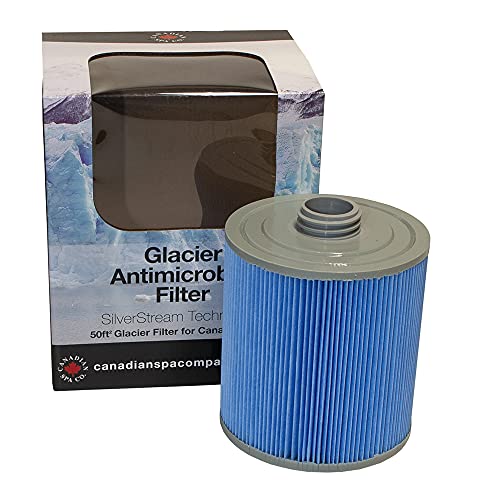
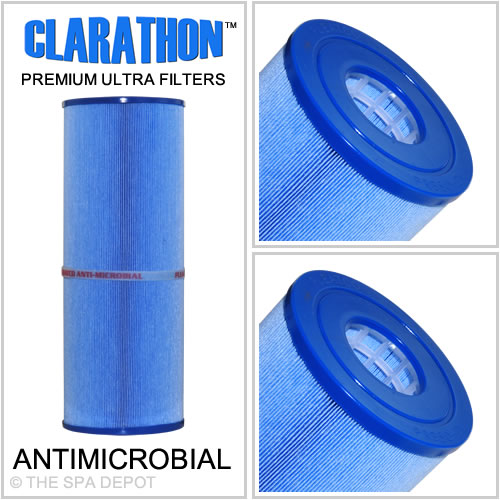
An antimicrobial hot tub filter is a filter cartridge or other filter media treated or made with a substance intended to limit the growth of microbes on the filter itself. Some products use silver-based materials; others may use a different treatment. The exact material and claim depend on the product.
A hot tub filter’s main job is still mechanical: water passes through the media, which captures particles such as hair, lint, and debris. The sanitizer in the water—usually chlorine or bromine—does a different job by disinfecting the water. Filtering and sanitizing work together, but they are not interchangeable.
“Antimicrobial” is not the same as “sterile.” It does not mean the filter removes or kills every germ in the water, nor does it prove that the spa is safe if sanitizer levels fall outside the required range. Check the product label and instructions to learn what the maker claims the treatment does and what it does not do.
In the United States, pesticide claims are subject to EPA rules. The EPA’s treated-article exemption generally applies when a treated product is meant to protect the product itself. Claims that a product protects people from germs may require a different level of EPA registration. A treated filter should not be taken as proof that the spa water is disinfected. EPA: Treated Articles Exemption

What Can an Antimicrobial Filter Do—and What Can’t It Do?
An antimicrobial treatment may limit the growth of certain microbes on the filter media under the conditions tested for that product. That is a narrow claim about the filter surface. It does not, by itself, establish how well the product works in every hot tub, with every water balance, or over the full life of the cartridge.
| An antimicrobial filter may… | It does not… |
|---|---|
| Limit growth of specific microbes on treated media, if supported by product testing | Disinfect all the water in the tub |
| Offer an added feature for the filter surface | Replace chlorine or bromine |
| Be one option when buying a compatible replacement cartridge | Prove that you can test or clean less often |
| Make a particular product worth comparing with a standard cartridge | Guarantee protection from illness or biofilm |
The difference matters because hot tubs hold warm water, and sanitizer levels can change with use and water conditions. Follow the sanitizer and pH range on your spa maker’s instructions and the disinfectant label. The CDC recommends that hot tub owners check disinfectant and pH levels regularly; its U.S. guidance lists chlorine at at least 3 parts per million (ppm) or bromine at 4–8 ppm, with pH at 7.2–7.8. Check current CDC guidance and your product labels before adjusting water. CDC hot tub guidance
Do not reduce sanitizer because a filter is described as antimicrobial. If water becomes cloudy, develops an unusual odor, or tests outside the proper range, address the water chemistry and follow the spa maker’s maintenance steps. A treated filter cannot correct those problems on its own.

Are Antimicrobial Hot Tub Filters Worth the Extra Cost?
Usually, they are not essential. A standard, correctly sized filter used and cared for as directed can serve the core filtration role. The antimicrobial feature may be worth paying for if it has a specific, relevant claim, the filter is compatible with your spa, and the price difference fits your budget.
Use this quick decision table:
| Your situation | Practical choice |
|---|---|
| You need a replacement and the antimicrobial model costs little more | Consider it if the claim and fit are clear |
| The product says it reduces sanitizer use or makes water safe, but gives no clear evidence | Do not rely on that claim |
| The cartridge does not match your spa’s required size or design | Do not buy it, even if it is antimicrobial |
| You already maintain water and filters well, with no specific issue to solve | A standard replacement is likely enough |
| You want to cut testing, cleaning, or sanitizer use | Do not buy it for that purpose |
The biggest deciding factor is not the word “antimicrobial.” It is whether the maker explains what the treatment targets, what evidence supports the claim, how long the treatment is meant to last, and whether the filter fits your spa. If those details are missing, the added benefit is hard to judge.
How to Judge the Cost and Product Claims
Compare the total cost of the filter with a standard cartridge that has the same required fit and function. Do not compare products with different sizes, construction, or replacement schedules as if the antimicrobial treatment were the only difference.
A simple calculation can help:
Extra cost per year = price difference ÷ expected service life in years
For example, if an antimicrobial cartridge costs $20 more and both cartridges are expected to last one year under the maker’s care instructions, the added cost is $20 per year. This is a hypothetical comparison, not a claim about typical prices or filter life. Use the actual prices and replacement guidance for your spa.
Before buying, look for:
- The exact filter dimensions, model number, or spa models it fits.
- The substance used for the antimicrobial treatment.
- The specific claim: for example, whether it concerns the filter media or the water.
- Test details or documentation that support the claim.
- Clear cleaning, care, and replacement instructions.
- Warranty terms and any limits on the antimicrobial claim.
Be cautious with claims such as “keeps water germ-free,” “eliminates chemicals,” or “prevents illness.” Those statements go beyond what a treated filter alone can establish. If the claim is about reducing sanitizer or protecting public health, look for appropriate evidence and regulatory information rather than relying on marketing language.

How to Maintain an Antimicrobial Hot Tub Filter
An antimicrobial cartridge still needs routine care. Follow the spa and filter makers’ instructions for rinsing, cleaning, and replacement; treatments can differ, so do not assume every cartridge can be cleaned the same way.
- Check the water. Test sanitizer and pH as often as the spa maker and sanitizer label direct. Keep them in the recommended range.
- Inspect the cartridge. Look for tears, crushed pleats, or other damage. Replace a damaged filter with the correct compatible part.
- Clean it as directed. Use the maker’s approved method and products. Do not assume household cleaners or a high-pressure wash are safe for the media.
- Replace it on schedule. Use the maker’s guidance and the filter’s condition; a treated surface does not make a worn cartridge last forever.
- Follow spa instructions during removal. Do not run the tub without a filter unless the spa maker says it is safe to do so.
If the water remains cloudy or has an unusual odor after routine checks, do not assume the filter treatment will fix it. Test the water, confirm that the filter is clean and correctly installed, and follow the spa maker’s troubleshooting guidance. If you cannot bring the water back into range, contact a qualified spa service professional.

Common Mistakes to Avoid
- Using the filter as a sanitizer: A filter traps particles; it does not replace the spa’s disinfectant.
- Lowering sanitizer levels: An antimicrobial claim is not a reason to use less chlorine or bromine.
- Assuming every “antimicrobial” claim means the same thing: Check the target, test conditions, and product documentation.
- Ignoring fit: A filter that does not match the spa’s required dimensions or design may not work properly.
- Skipping cleaning: Treated media still collects debris and needs care.
- Expecting a health guarantee: No filter label alone proves that hot tub water cannot carry germs or cause illness.
If anyone using the spa develops a health concern after exposure, seek medical advice. For water-quality or equipment problems you cannot resolve by following the manufacturer’s instructions, contact a qualified spa professional.

FAQs
Do antimicrobial hot tub filters let you use less chlorine or bromine?
No. Do not reduce sanitizer based on an antimicrobial filter claim. Maintain sanitizer and pH according to current CDC guidance, the spa maker’s instructions, and the sanitizer label.
Do antimicrobial filters kill bacteria in hot tub water?
A claim about antimicrobial action on filter media does not prove that the filter disinfects all the water. Water disinfection depends on maintaining the proper sanitizer level and water balance.
Are silver-ion hot tub filters better?
Not automatically. Silver-based materials are one type of treatment, but the name alone does not establish how well a specific filter works, how long its treatment lasts, or whether it offers a useful benefit for your spa. Check the product’s documentation and compare it with a compatible standard filter.
Can I clean an antimicrobial filter with the same product as a regular cartridge?
Only if the filter maker says that method is suitable. Follow the instructions for that exact cartridge; cleaning products or methods that work for one filter may damage another.
How often should I replace an antimicrobial hot tub filter?
Follow the spa or filter maker’s replacement schedule and inspect the cartridge for damage or wear. Antimicrobial treatment does not prevent the filter media from becoming worn or clogged.
Conclusion
For most hot tub owners, an antimicrobial filter is an optional feature, not a necessary upgrade. Consider one if it fits your spa, its added cost is reasonable, and its documented claim addresses something you value. Keep testing the water, maintaining sanitizer and pH, and caring for the filter as directed—whether you choose an antimicrobial cartridge or a standard one.
Next Step
Check your spa manual for the exact filter model and maintenance instructions. Then compare a compatible antimicrobial cartridge with a standard replacement, focusing on the documented benefit—not just the label.