Best Kitchen Gadgets for Disabled People: 10 Practical Picks
Opening a jar, keeping food steady, or scooping a meal can take more effort than the cooking itself. The right kitchen gadget can reduce a specific barrier—such as weak grip, one-handed use, or trouble keeping a plate steady—but no single tool suits every body or kitchen.
We reviewed these 10 products by the task their designs appear intended to support, the information available in their product listings, and the practical trade-offs buyers should investigate. We did not physically test them, so we separate stated product details from questions you should verify before ordering. The aim is a useful shortlist, not a promise that an adaptive tool will work for everyone.
Affiliate disclosure: We may earn a commission if you buy through links on this page. This does not affect our product selections or editorial judgments.
Our Top 3 Picks at a Glance
These picks address different everyday tasks: keeping food contained, opening jars, and stabilizing items for one-handed work. Choose by the movement that is hardest for you—not by a broad label such as “senior” or “adaptive.”
Vive Spill-Proof Scoop Plate, 9-inch, 2 Pack

A simple, task-specific option for keeping food contained while eating. The raised wall may be useful for scooping, though plate size and table stability still matter.
Jar Opener for Weak Hands and Arthritis

A focused manual aid for a common grip-heavy chore. Check how it grips different lid sizes and whether positioning it is manageable with your available hand movement.
One-Handed Adaptive Equipment Set, 5 Pieces

A multi-piece set intended to help secure items for opening jars or bottles and mixing. It offers more than one kind of support, but each piece still needs to suit your counter and grip.
| Rank & Award | Product | Best For | Rating | Check Price |
|---|---|---|---|---|
| 1. Best Overall | Vive Spill-Proof Scoop Plate |
Keeping food contained while scooping | 4.5 / 5 ★ | Check Price on Amazon |
| 2. Runner-Up | Jar Opener for Weak Hands and Arthritis |
Manual jar opening with limited grip | 4.5 / 5 ★ | Check Price on Amazon |
| 3. Best Value | One-Handed Adaptive Equipment Set |
Stabilizing items for opening and mixing | 4.3 / 5 ★ | Check Price on Amazon |
| 4. Best Premium Pick |  Delfori Under Cabinet Jar Opener |
Fixed-position jar opening | 4.7 / 5 ★ | Check Price on Amazon |
| 5. Best Budget Pick | 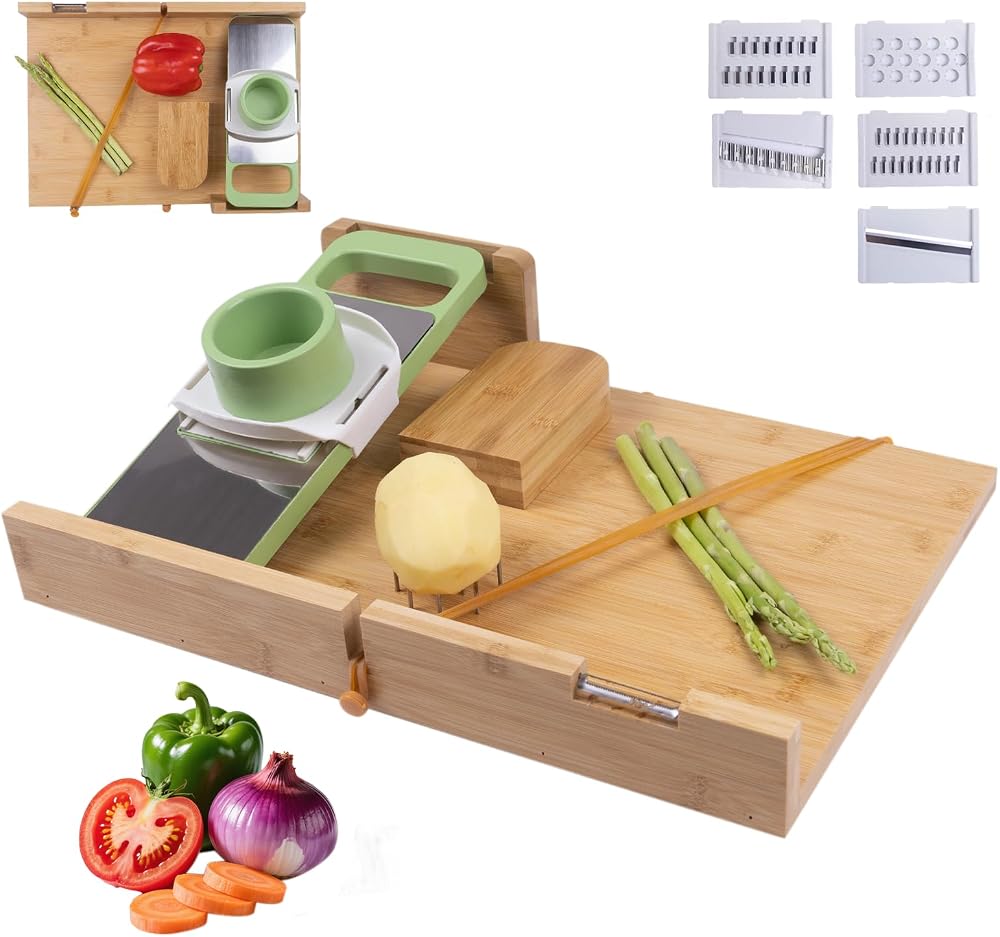 Adaptive One-Handed Cutting Board with Bread Stops |
Securing food for one-handed prep | 3.8 / 5 ★ | Check Price on Amazon |
| 6. Best for Beginners |  Adaptive One-Handed Cutting Board with Steel Spikes |
Holding food in place during prep | 4.5 / 5 ★ | Check Price on Amazon |
| 7. Most Versatile |  Acacia One-Handed Cutting Board Set with Ulu Knife |
One-handed cutting with included knife | 5.0 / 5 ★ | Check Price on Amazon |
| 8. Best High-Performance |  Adaptive One-Handed Cutting Board with Steel Spikes |
Stabilizing ingredients during cutting | 4.1 / 5 ★ | Check Price on Amazon |
| 9. Best Compact / Portable |  Bamboo One-Handed Cutting Board Set with Ulu Knife |
Portable one-handed prep setup | 4.7 / 5 ★ | Check Price on Amazon |
| 10. Editor’s Choice |  AMOSA Electric Jar Opener |
Reducing manual twisting for jars | 5.0 / 5 ★ | Check Price on Amazon |
We assessed each item against its listed purpose, the task it may simplify, and the setup or safety questions a buyer should resolve; the supplied ratings are listing snapshots, not our test scores. We did not handle these products, so details such as grip force, stability, cleanup, and fit should be confirmed against current instructions and return terms. Below, each pick is assessed by the task it makes easier, the effort it still requires, and the practical drawbacks to consider before buying.
1. Vive Spill-Proof Scoop Plate, 9-inch, 2 Pack — Best Overall
The Vive plate is the most straightforward pick here: its raised wall is intended to help keep food on the plate during scooping. That can be useful for someone who has difficulty coordinating a fork or using one hand to steady food. The listing specifies a 9-inch plate and a two-pack; check the product page for current material and care details before buying.
Who should consider it: People who want a contained eating surface and caregivers who need a pair of matching plates. A scoop plate does not address every dining challenge, but it avoids the setup and moving parts found in mechanical aids.
The catch: A raised edge can help guide food, but the plate still needs to stay put. Confirm its base grip, fit with your usual dishes or placemat, and whether the 9-inch size gives you enough room.
| ✅ Pros (What We Liked) | ⚠️ Cons (What Could Be Better) |
|---|---|
|
|
Check Latest Price on Amazon →
2. Jar Opener for Weak Hands and Arthritis — Runner-Up / Best Alternative
This blue manual jar opener is aimed at users who struggle with a tight grip. The product name is not a substitute for details: check the listing for its opening mechanism, lid-size range, materials, and whether it needs to be held against a counter or jar while turning.
Who should consider it: Someone who wants a compact manual aid for lids and prefers not to manage batteries or charging. A common practical check is to try the tool first on a dry, empty jar with the lid fully seated; that lets you see whether positioning itself is comfortable before opening food.
The catch: Manual leverage still requires some movement and stabilization. If twisting is painful or the jar cannot be held securely, this may not solve the main barrier. Check the return policy rather than assuming all jar openers work across every lid shape.
| ✅ Pros (What We Liked) | ⚠️ Cons (What Could Be Better) |
|---|---|
|
|
Check Latest Price on Amazon →
3. One-Handed Adaptive Equipment Set, 5 Pieces — Best Value for Money
This five-piece set is described as helping secure the bottom of jars or bottles and stabilize a bowl while mixing. The range of tasks is its appeal: a fixed or grippy base can free the other hand for turning or stirring. The listing also names a storage box, which may help keep smaller parts together.
Who should consider it: People looking for several stabilization aids rather than one dedicated jar opener. Before ordering, verify what each of the five pieces does and how large an item it can hold; product titles alone do not establish dimensions or surface compatibility.
The catch: A set can mean more pieces to store and clean, and a base that grips one countertop may behave differently on another. It is not automatically a one-handed solution if setup requires two hands or repositioning.
| ✅ Pros (What We Liked) | ⚠️ Cons (What Could Be Better) |
|---|---|
|
|
Check Latest Price on Amazon →
4. Delfori Under Cabinet Jar Opener — Best Premium Pick
An under-cabinet opener keeps the gripping mechanism in a fixed location, which may reduce the need to hold a separate tool and jar at once. The listing calls this a jar opener and under-counter can opener; verify the exact intended uses and installation method on the current product page. Do not assume it opens cans unless the manufacturer confirms that function.
Who should consider it: A buyer with a suitable cabinet location who expects to open jars regularly and can manage installation. Fixed placement can be convenient once installed, but only if the user can reach and position jars beneath it.
The catch: Installation is a real commitment. Check cabinet clearance, mounting requirements, and the heights and sizes of jars you use. Skip it if you cannot safely reach the mounting point or if a permanent fixture is impractical in your kitchen.
| ✅ Pros (What We Liked) | ⚠️ Cons (What Could Be Better) |
|---|---|
|
|
Check Latest Price on Amazon →
5. Adaptive One-Handed Cutting Board with Bread Stops — Best Budget Pick
This board combines several listed features: bread stops, a rubber-band attachment, steel spikes, a replaceable grater, and an anti-slip bottom. That variety may make it useful for keeping different foods in place, but the relatively lower listing rating among this group is a reason to read recent reviews and inspect the product details closely.
Who should consider it: Someone who wants a multi-feature board for one-handed food preparation and is comfortable working around fixed spikes. Check whether its size fits your counter and whether the attachments suit the foods you prepare most often.
The catch: Spikes can help secure food, but they are also sharp points that require careful handling, cleaning, and storage. The listing’s 3.8 out of 5 rating is not proof of a defect, but it makes checking buyer feedback and return conditions especially sensible.
| ✅ Pros (What We Liked) | ⚠️ Cons (What Could Be Better) |
|---|---|
|
|
Check Latest Price on Amazon →
6. Adaptive One-Handed Cutting Board with Stainless Steel Spikes — Best for Beginners
This version centers on a cutting board with stainless steel food spikes. The basic idea is easy to understand: hold an ingredient in place so one hand can work with a knife or other utensil. Confirm the board’s dimensions, base material, spike layout, and cleaning instructions from the seller before deciding if it matches your routine.
Who should consider it: A cook who wants a single-purpose stabilizing board rather than a bundle of accessories. It may be a more approachable starting point if the main difficulty is keeping food from shifting while preparing it.
The catch: A spike board is not inherently safe for every user or food. It still requires controlled cutting, careful removal of food, and safe storage. If your movement is unpredictable, ask an occupational therapist or accessibility specialist whether this style fits your needs.
| ✅ Pros (What We Liked) | ⚠️ Cons (What Could Be Better) |
|---|---|
|
|
Check Latest Price on Amazon →
7. Acacia One-Handed Cutting Board Set with Ulu Knife — Most Versatile Pick
This set pairs a one-handed cutting board with an ulu-style knife, a curved blade commonly used with a rocking motion. The combination may suit someone who prefers a downward rocking cut to the back-and-forth motion of a standard chef’s knife. The supplied rating is 5.0 out of 5, but ratings alone cannot tell you whether the handle, board, or blade motion will suit your hand.
Who should consider it: A user who wants the board and cutting tool together and can safely control a rocking blade. Check the listed board material, dimensions, knife grip, blade care, and whether the board has features to secure the food.
The catch: A curved knife changes the cutting motion rather than removing the need for control. Acacia also calls for care consistent with the manufacturer’s instructions; confirm washing and drying guidance before use.
| ✅ Pros (What We Liked) | ⚠️ Cons (What Could Be Better) |
|---|---|
|
|
Check Latest Price on Amazon →
8. Adaptive One-Handed Cutting Board with Steel Spikes — Best High-Performance
This board is another focused option for holding food steady during one-handed preparation. Its listing specifies steel spikes, but the supplied product information does not provide enough detail to compare its spike arrangement or base stability with the other boards here. Treat the product images and current specifications as essential checks.
Who should consider it: Someone who specifically wants a spike-style board and has verified that its surface, size, and attachment points work for their preferred foods. A good fit is more important than the “high-performance” badge.
The catch: The label does not establish cutting performance or ease of cleaning. Inspect how food comes off the spikes and where the board can be stored safely. If you cannot reliably control a knife near the spikes, this is not the right tool for that task.
| ✅ Pros (What We Liked) | ⚠️ Cons (What Could Be Better) |
|---|---|
|
|
Check Latest Price on Amazon →
9. Bamboo One-Handed Cutting Board Set with Ulu Knife — Best Compact / Portable
This bamboo set also pairs an adaptive cutting board with an ulu-style knife. The listing reports a 4.7 out of 5 rating. Bamboo may appeal to buyers who prefer that material, but confirm the board’s exact size, weight, surface treatment, and care instructions; the product title does not establish that it is more portable than the acacia set.
Who should consider it: A cook who wants a board-and-knife kit and has determined that a rocking cut works for them. Check whether the board can be carried and positioned comfortably, particularly if it will be used outside the home.
The catch: “Compact / portable” is a comparison label, not a verified measurement. Ask for dimensions and weight before treating it as travel-friendly. A wooden board also needs appropriate cleaning and drying to keep it in usable condition.
| ✅ Pros (What We Liked) | ⚠️ Cons (What Could Be Better) |
|---|---|
|
|
Check Latest Price on Amazon →
10. AMOSA Electric Jar Opener — Editor’s Choice
The AMOSA is listed as an electric jar opener with a gripper pad, auto-tighten, and manual-twist operation. Those modes suggest it is designed to reduce the effort of opening jars, but verify the power source, operating steps, compatible jar sizes, and whether the jar must be held steady. The listed rating is 5.0 out of 5; that is a buyer rating, not an independent performance result.
Who should consider it: Someone whose main difficulty is twisting jar lids and who can manage the device’s setup and controls. The manual-twist mode may be useful if the powered operation is not suitable, but check the instructions to understand what that mode entails.
The catch: Electric operation brings extra questions: batteries or charging, storage, cleaning around the gripper, and what happens if the tool cannot fit a lid. It may reduce twisting, but it cannot guarantee a jar will be stable or easy to position.
| ✅ Pros (What We Liked) | ⚠️ Cons (What Could Be Better) |
|---|---|
|
|
Check Latest Price on Amazon →
How to Choose the Right Adaptive Kitchen Gadgets (Buying Guide)
Start with the task, not a diagnosis. For weak grip, compare the force and hand positioning needed by manual and electric jar openers. For one-handed prep, look for a board or base that stays in place and can be set up without help. For eating, consider whether a raised-wall plate addresses the specific difficulty—such as guiding food onto a utensil—without being awkward to lift or wash.
Before you buy, confirm dimensions, materials, compatibility, cleaning instructions, and the current return policy. Check whether an electric tool needs batteries or charging, whether replacement parts are available, and how much counter or cabinet space the item takes. Product titles and ratings can change; verify the exact model and current instructions on the product page. If you are comparing accessibility needs across different tasks, our guide to best kitchen gadgets for the blind focuses on tools and design considerations for visual access.
Maintenance is part of usability. Follow the manufacturer’s cleaning directions, inspect moving parts and grips for wear, and store cutting tools and exposed spikes where they cannot be touched accidentally. A gadget can reduce a particular effort; it does not remove every kitchen risk. For families teaching children to take part in meal prep, age-appropriate task ideas are covered in our guide to cooking skills for kids by age.
Frequently Asked Questions
Which kitchen gadgets can help with weak grip?
Lever-style or electric jar openers, grippy stabilization aids, and raised-wall plates may help with different grip-related tasks. Compare the force required, how much positioning the tool needs, and whether it remains stable on your counter. The best option depends on the specific motion that is difficult.
What can help someone open cans one-handed?
None of the 10 products in this roundup is clearly identified as a dedicated adaptive can opener. The Delfori listing mentions an under-counter can opener, but its exact functions need confirmation from the manufacturer. Look specifically for a one-touch or fixed-base can opener, then verify can compatibility, lid handling, and whether the user must steady the can.
Are electric kitchen gadgets easier to use than manual ones?
Not always: electric tools can reduce turning effort, but they add power, control, storage, and cleaning considerations. Manual tools avoid batteries, yet still require placement and movement. Compare the whole task—including setup and cleanup—rather than judging only the powered action.
What should I test before buying an adaptive kitchen tool?
Check setup, hand positioning, stability, the force or movement required, compatibility with your usual dishes or ingredients, cleanup, and storage. If possible, try the motion using a returnable item or consult an occupational therapist or accessibility specialist. Ratings can inform a purchase, but they cannot predict an individual fit.
What are the best kitchen gadgets for disabled people?
Best kitchen gadgets for disabled people are task-specific tools that reduce gripping, stabilize food, or make opening and serving easier. Start with the hardest task, then check setup, force, counter stability, cleanup, storage, and compatibility. A tool should fit the person’s routine, not its label.