
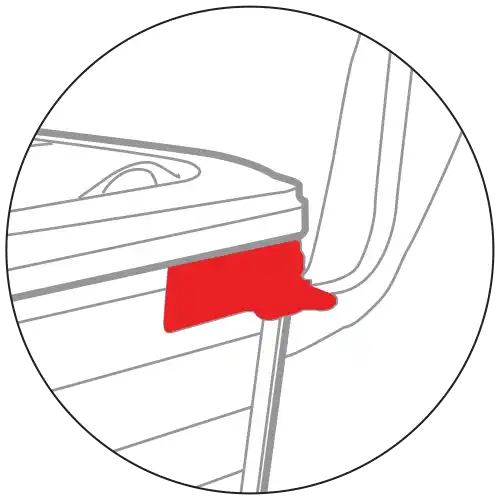
Hot Tub Cover Lifter Clearance: Calculator & Guide
For many hot tub cover lifters, about 18 inches of open space behind the spa is a useful planning estimate. It is not a universal fit rule: the exact rear, side, and overhead clearances depend on the lifter model, spa shape, and how the cover opens. Check the lifter’s installation manual before buying or mounting it.
This guide is for U.S. homeowners measuring a deck, patio, or indoor spa area. Use the calculator below to compare your available space with the requirements for your specific lifter. If you have not chosen a model, use the estimate only to screen your space—not to confirm compatibility.

What clearance does a hot tub cover lifter need?
A cover lifter needs enough room for its arms and folded cover to move without hitting a wall, fence, railing, roof, or other fixed object. The space required is usually described in three ways:
- Rear clearance: Space behind the spa, where the cover folds or rests.
- Side clearance: Space beside the spa for mounting brackets, arms, or moving parts.
- Overhead clearance: Open space above the spa rim for the raised cover and lifter hardware.
The manufacturer’s installation guide is the authority for the minimum clearances of a particular model. Two lifters may hold the same cover in different positions, so a general estimate cannot replace a model-specific measurement.
As an early planning check, reserve around 18 inches behind the spa if you do not yet know which lifter you will use. Some models may need more or less. Do not assume that the space beside or above the spa is adequate just because the rear measurement passes.
Hot tub cover lifter clearance calculator
Use this worksheet to check a lifter you have selected. Measure in inches, and use the measurement points shown in its manual where they differ from the general guidance below.
| Measurement | Your number | What to compare it with |
|---|---|---|
| Available space behind spa | ___ in. | Lifter’s stated minimum rear clearance |
| Available space beside spa | ___ in. | Lifter’s stated minimum side clearance |
| Open space above spa rim | ___ in. | Lifter’s stated overhead requirement |
| Cover dimension perpendicular to hinge | ___ in. | Used for a rough folded-height estimate |
| Lifter’s stated mechanism allowance, if given | ___ in. | Add only if the maker provides this value |
Rear and side check
- Rear result: available rear space − required rear clearance = ___ inches.
- Side result: available side space − required side clearance = ___ inches.
A result of zero or more means the measurement meets that stated minimum. A negative result means the area is short by that many inches. Allow extra room if you need space to walk around the spa or service the lifter.
Rough overhead estimate for a vertical-fold lifter
For a lifter that raises the folded cover upright, a rough estimate of the cover’s height above the spa rim is:
Cover dimension perpendicular to hinge ÷ 2 + any mechanism allowance specified by the manufacturer
This is a screening estimate, not a substitute for a lifter’s listed overhead clearance. The arm shape and cover position can change the final height.
Hypothetical example: The cover dimension perpendicular to its hinge is 84 inches. Half of that is 42 inches. If the lifter manual specifies a 10-inch mechanism allowance, the rough height estimate is 52 inches above the spa rim. If the manual does not provide an allowance, do not invent one; use its stated overhead requirement or ask the manufacturer.
How to measure your spa and installation area
Measure the spa, cover, and surrounding obstacles before ordering a lifter. A tape measure and a note of where the cover hinge sits can prevent a costly fit problem.
- Find the cover hinge. The hinge is the seam where the cover folds. Note which side of the spa it runs along.
- Measure the available rear space. Measure from the spa shell to the nearest wall, fence, railing, or other fixed object behind the cover’s intended lift path.
- Measure side space. Check both sides, especially where the lifter brackets will attach. Use the mounting locations in the product manual.
- Check overhead obstructions. Measure from the spa rim to a roof, ceiling, beam, or other obstruction above the raised cover.
- Include anything that sticks out. Account for steps, handrails, cover handles, lights, and trim that could block the cover or lifter arms.
- Compare the measurements with the exact manual. Confirm the lifter is made for your spa’s shape, cover size, and mounting surface.
Measure to the nearest fixed obstruction, not just to the edge of a deck or patio. A fence post or roof support may reduce usable space even when the wider area looks open.
What changes the clearance requirement?
The required space depends on the lifter’s design and the spa setup. These factors can change whether a lifter fits:
- Lifter style: Some models hold the folded cover upright; others use a different arm path or resting position.
- Spa shape and size: A square spa, a rounded model, and a large swim spa may need different mounting positions or cover support.
- Cover dimensions and weight: A larger or heavier cover may not be compatible with every lifter.
- Mounting method: A lifter that attaches to the spa may have different space needs from one that mounts to a deck or another surface.
- Nearby obstacles: A wall, fence, privacy screen, roof, or railing can block the cover even if the lifter’s arms clear.
- Access needs: Minimum product clearance may not leave enough room for a person to walk, clean, or service the equipment.
Treat “minimum clearance” as the space needed for the lifter to work—not as a promise that the surrounding area will feel easy to use. If the space is tight, ask the manufacturer or installer to confirm the layout using your measurements.
Common fit problems and what to check
If a cover lifter does not fit or move freely, check the installation measurements before changing the hardware.
- The cover hits a wall or fence: Recheck the rear clearance and confirm the lifter is mounted on the side shown in its instructions.
- An arm catches on a railing or step: Check both side clearances and the full path of the moving arms, not only the mounting brackets.
- The raised cover hits a roof: Recheck overhead clearance from the spa rim and use the lifter’s required folded-cover height.
- The brackets do not line up: Confirm the lifter is compatible with the spa shell and that the mounting points match its manual. Do not drill into the spa cabinet or shell unless the manufacturer permits it.
- The cover feels too heavy or binds: Stop and inspect the lifter setup. Check for a misaligned arm, an incompatible cover, or a mounting issue. Do not force the mechanism.
If the manual does not clearly address your spa or the installation surface, contact the lifter manufacturer or a qualified installer. Guessing at mounting points can damage the spa or create an unstable setup.
Safety and clearance limits
A cover lifter moves a heavy cover; it is not a seat, step, or safety lock. Keep people clear of the moving arms and pinch points while opening or closing it. Follow the lifter and spa makers’ instructions, and secure the cover as directed whenever it is closed.
Do not use a cover lifter to hold a cover open in strong wind unless its instructions allow that use. If the cover is hard to lift, stop rather than pulling harder. A damaged, poorly mounted, or incompatible lifter may fail or strain the cover.
Key takeaways
- Plan for roughly 18 inches behind the spa as an early estimate, not a universal rule.
- Check the exact lifter manual for rear, side, and overhead clearances.
- Measure the cover’s hinge direction and the full path of the raised cover.
- Use the calculator to screen your layout, then confirm fit with the manufacturer’s requirements.
- Do not force a binding lifter or treat it as a safety lock.
FAQs
Is 12 inches enough behind a hot tub for a cover lifter?
It may be enough for some setups, but it is less than the roughly 18-inch planning estimate used here. Check the exact lifter manual before purchasing or installing a model in a 12-inch space.
Do I need clearance on both sides of the hot tub?
Often, at least one side needs space for mounting or moving parts, but the required amount and side depend on the lifter. Check both sides and follow the model’s installation guide.
How much space is needed above a hot tub cover?
There is no single overhead number for all lifters. For a vertical-fold design, half the cover dimension perpendicular to the hinge gives a rough estimate of the cover height above the rim; the manufacturer’s requirement accounts for the lifter’s geometry.
Can I install a cover lifter close to a wall?
Possibly, if the lifter is designed for that layout and the wall does not block the cover or arms. Measure the full movement path and compare it with the model’s stated clearances.
Can I use a cover lifter on a deck?
Some lifters are designed to mount to a deck or another surface, while others use different mounting points. Confirm the mounting method, surface requirements, and clearances in the instructions before installation.
Conclusion
For a quick layout check, start with about 18 inches behind the spa, then measure the side and overhead space. The exact answer comes from the installation guide for the lifter you plan to use. Compare those requirements with your measurements before buying or drilling, and ask the manufacturer or a qualified installer if the fit remains uncertain.