The Complete Kitchen Utensils List: What to Buy, Keep, Skip
If you’re trying to build a kitchen from scratch, replace worn-out tools, or stop buying gadgets you never use, a flat utensil list is not enough. The useful version is a decision-first inventory: what belongs in a real kitchen, what you’ll actually reach for every week, and what sounds handy but ends up in a drawer forever.
This guide gives you the complete list of kitchen utensils organized by job, frequency, and material so you can shop smarter. You’ll get the daily essentials, the specialty tools worth owning, the ones to skip, and a printable checklist mindset you can use whether you cook a little or a lot.
Think of it as a kitchen reset with receipts attached. No fluff. No gadget pile-up. Just the tools that earn their space.
What belongs on a truly complete kitchen utensils list?
Featured snippet answer: A complete list of kitchen utensils includes spoons, spatulas, ladles, tongs, whisks, peelers, graters, knives, measuring cups, measuring spoons, colanders, can openers, scissors, turners, strainers, mashers, thermometers, and specialty tools like zesters, garlic presses, and pastry brushes.
The 4 buckets that make the list complete
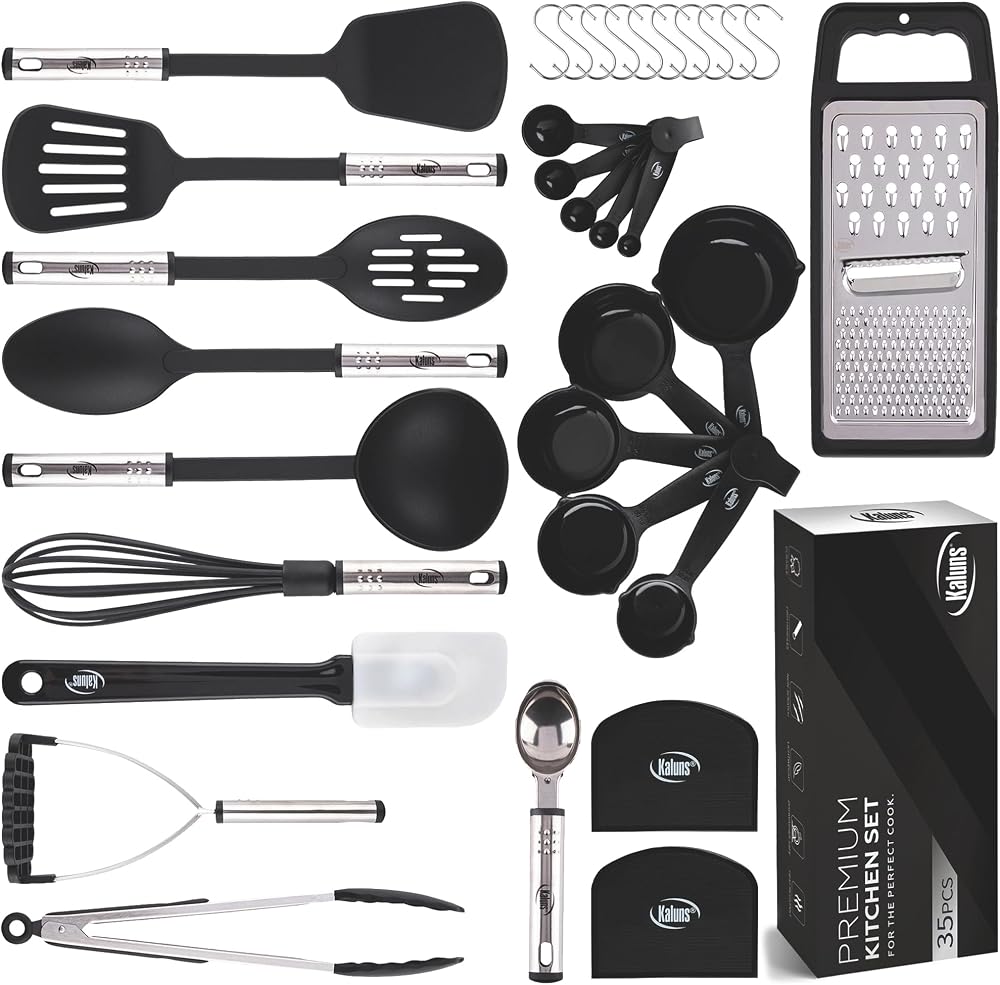
A truly complete kitchen utensil list has four buckets: prep, cooking, measuring, and serving/straining. That structure matters because it separates tools you use every day from tools you only need for certain recipes. It also keeps hand tools in the utensil category and leaves appliances like blenders, food processors, and stand mixers out unless you’re building a broader kitchen equipment list.
Here’s the clean boundary: if you hold it in your hand and use it to prep, cook, portion, strain, or serve food, it belongs here. If it plugs in, it’s an appliance. Simple. That distinction saves a lot of shopping mistakes.
The 12 utensils most kitchens use every week
The 12 most-used tools in a typical U.S. kitchen are a chef’s knife, paring knife, cutting board, spatula, turner, tongs, wooden spoon, whisk, ladle, measuring cups, measuring spoons, and a colander. In many homes, these get used daily or weekly, while specialty tools may sit idle for months. Silicone utensils commonly handle around 400–600°F / 204–316°C, but the exact rating depends on the brand and core material.
If you buy only the essentials first, make those 12 count. Everything else should earn its place.
| Utensil | Main job | Typical use frequency | Best material | Buyer value |
|---|---|---|---|---|
| Chef’s knife | Chopping, slicing, mincing | Daily | Stainless or high-carbon steel | Very high |
| Spatula/turner | Flipping eggs, pancakes, burgers | Weekly to daily | Silicone or metal | Very high |
| Tongs | Grabbing, turning, serving | Weekly | Stainless steel with silicone tips | High |
| Whisk | Mixing, aerating, emulsifying | Weekly | Stainless steel | High |
| Wooden spoon | Stirring sauces, soups, batters | Weekly | Hardwood | High |
| Ladle | Portioning soups, stews, sauces | Weekly | Stainless or nylon | High |
| Measuring cups | Dry and liquid measuring | Weekly | Stainless steel or glass | High |
| Measuring spoons | Small-quantity measuring | Weekly | Stainless steel | High |
| Colander | Draining pasta, rinsing produce | Weekly | Stainless steel or plastic | High |
| Peeler | Removing skins | Weekly | Stainless steel blade | High |
| Knife set basics | General prep | Daily | Steel blades | Very high |
| Can opener | Opening cans safely | Weekly | Stainless steel | Moderate |
The complete kitchen utensils list, organized by job
The smartest way to build a kitchen is by function, not by shopping aisle. A drawer full of random tools looks complete until you actually try to cook dinner. Then you discover you own three garlic presses and no decent whisk. That happens more than people admit.

Prep tools
Prep tools do the cutting, trimming, peeling, and early-stage work that happens before heat hits the pan. The core set includes a chef’s knife, paring knife, serrated knife, peeler, kitchen shears, grater, zester, bench scraper, cutting board, and vegetable brush. Blade material matters here: stainless steel resists rust and is easier to maintain, while carbon steel can hold a sharper edge but needs more care and can discolor if neglected.
- Chef’s knife — 8 to 10 inches is the common home-cook range.
- Paring knife — best for peeling, trimming, and small precision work.
- Serrated knife — useful for bread, tomatoes, and soft-skinned foods.
- Vegetable peeler — Y-peelers are usually faster; swivel peelers feel familiar.
- Kitchen shears — good for herbs, packaging, poultry trimming, and parchment.
- Box grater — coarse, medium, fine, and slicing faces in one tool.
- Zester — for citrus zest, hard cheese, garlic, and ginger.
- Bench scraper — underrated for dough, chopped herbs, and moving ingredients.
- Cutting board — wood or plastic; keep one for produce and one for raw meat if possible.
If you cook often, kitchen shears are not optional. They save time constantly. People who ignore them usually end up using a paring knife for everything, which is slower and sketchier.
Cooking tools
Cooking tools touch heat, so material choice matters more here than in any other category. The main players are spatulas, turners, ladles, skimmers, tongs, slotted spoons, wooden spoons, and whisks. Silicone, nylon, wood, and metal each have a place, but they are not interchangeable. Silicone is the safest all-around choice for nonstick pans. Metal is great for durability and sharp edges. Wood is gentle and quiet. Nylon is cheap but can warp faster.
- Spatula — ideal for scraping bowls and folding batter.
- Turner — flat tool for flipping eggs, fish, and pancakes.
- Ladle — for soups, chili, stew, and sauces.
- Skimmer — removes foam or lifts food from hot liquid.
- Tongs — best for grilling, tossing, and plating.
- Whisk — balloon whisks are best for air; flat whisks for sauces.
- Wooden spoon — still one of the most useful tools in any kitchen.
- Slotted spoon — for draining liquids while serving or stirring.
Balloon whisks move more air into eggs and cream. Flat whisks are better in shallow pans. That small difference matters.
Measuring and portioning tools
Measuring tools are where home cooks either get precise or guess and hope. For baking, gram-based scales beat cup measures almost every time because flour and sugar pack differently depending on how you scoop them. The basic set includes dry measuring cups, liquid measuring cups, measuring spoons, and a digital kitchen scale. If you bake often, the scale is the one upgrade that pays back immediately.
- Dry measuring cups — usually sold in 1/4, 1/3, 1/2, and 1 cup sizes.
- Liquid measuring cup — clear markings, usually 1 to 4 cups.
- Measuring spoons — standard set usually includes 1/4 tsp to 1 tbsp.
- Digital scale — ideal for baking, meal prep, and portion control.
- Kitchen timer — not glamorous, but it keeps dinner from burning.
A lot of people keep a “measuring cup” in their utensil drawer and never notice that it’s warped or missing markings. If you bake, replace that junk. Don’t fight your own tools.
Straining, draining, and rinsing tools
Straining tools separate liquid from solids, and the differences among them are bigger than most shoppers think. A colander has large holes for pasta and produce. A sieve uses finer holes for dry ingredients or rinsing small foods. A mesh strainer catches seeds, pulp, and fine particles. A salad spinner dries greens faster than paper towels and is worth it if you eat a lot of salads.
- Colander — for pasta, potatoes, and rinsing vegetables.
- Fine-mesh sieve — for tea, stock, powdered sugar, and small grains.
- Mesh strainer — a versatile middle ground for sauces and rinsing.
- Salad spinner — useful if you buy loose greens regularly.
Hole size matters. Large holes drain fast but let small food slip through. Fine mesh catches more, but it clogs sooner. Pick based on the food you actually make.
Serving tools
Serving tools are easy to overlook because they rarely feel urgent. Then you host dinner and realize you’re using a soup spoon to serve mashed potatoes. That looks sloppy and wastes time. The core serving set includes serving spoons, serving forks, tongs, pie servers, cake lifters, and gravy ladles.
- Serving spoon — for vegetables, rice, pasta, and casseroles.
- Serving fork — good for meats and larger plated items.
- Pie server — for clean slices of pie, quiche, and bars.
- Cake lifter — helps move delicate cakes and layered desserts.
- Gravy ladle — smaller bowl for sauces and pan drippings.
Specialty tools people forget
Specialty tools are where the “complete” list gets bloated, so you need a reality check. Some are genuinely useful. Others are drawer clutter with a price tag. The useful ones include a fish spatula, bench scraper, garlic press, citrus reamer, melon baller, cherry pitter, herb stripper, and pastry brush. The niche ones are fine if you cook those foods often. If not, skip them.
- Fish spatula — excellent for delicate fillets and smashing burgers.
- Garlic press — convenient, but many cooks prefer mincing by hand.
- Citrus reamer — good for lemons, limes, and oranges.
- Melon baller — useful for fruit platters and garnish work.
- Cherry pitter — worth it only if you process cherries in volume.
- Herb stripper — handy for thyme, rosemary, and similar stems.
- Pastry brush — for egg wash, butter, and glaze.
A fish spatula is one of the few specialty tools I’d call close to essential for serious home cooks. It’s thin, flexible, and better than a standard turner for delicate food. That tool earns its keep.
What to buy first if you’re starting from zero
If your kitchen is empty, start with multi-use tools, not one-trick gadgets. A minimalist starter kit should cover cutting, stirring, flipping, measuring, straining, and serving. That usually means 10 to 15 items, depending on how often you cook. The goal is to get functional fast without paying for duplicates.

Minimal starter kit
A practical starter kit includes a chef’s knife, paring knife, cutting board, peeler, spatula, turner, tongs, whisk, wooden spoon, ladle, measuring cups, measuring spoons, colander, can opener, and kitchen shears. If you want to stay lean, that is enough for most weeknight cooking.
- Chef’s knife
- Paring knife
- Cutting board
- Vegetable peeler
- Spatula
- Turner
- Tongs
- Whisk
- Wooden spoon
- Ladle
- Measuring cups
- Measuring spoons
- Colander
- Can opener
- Kitchen shears
If you want a tighter shopping path, start with what kitchen utensils are essential and build from there. That guide makes the “must buy now” list much clearer than a giant catalog.
Upgrade path by cooking style
Your cooking style should decide your next purchase. Baking-heavy cooks need scales, whisks, spatulas, and pastry brushes. Meal-prep cooks need sharp knives, bench scrapers, storage-friendly tools, and a good grater. Vegetarians usually benefit from better peelers, graters, strainers, and salad tools because produce prep becomes constant. Grillers need sturdy tongs, long-handled spatulas, and heat-resistant brushes.
- Baking-heavy — scale, rolling pin, pastry brush, dough scraper, fine whisk.
- Meal prep — sharp knives, bench scraper, measuring tools, storage containers.
- Vegetarian — peeler, grater, salad spinner, colander, citrus tools.
- Grilling — long tongs, turner, basting brush, meat thermometer.
- Small apartment kitchen — multi-use tools only; skip duplicates.
Small kitchens punish redundancy. If drawer space is tight, buy fewer tools and better ones. That changes everything.
Material matters more than most lists admit
Material is not a side note. It determines heat resistance, scratch safety, smell retention, dishwasher life, and how long the tool actually lasts. Cheap utensils often look fine on day one and then warp, rust, or loosen at the handle after a few months. That’s not a bargain. That’s a replacement cycle.

Silicone vs wood vs metal vs nylon
Silicone is the best all-around material for heat-safe cooking tools because it resists melting and is gentle on nonstick cookware. Wood is durable, quiet, and gentle, but it needs hand washing and occasional oiling. Metal is the toughest choice for scraping, flipping, and high-heat work. Nylon is inexpensive and light, but it can discolor or soften under high heat.
| Material | Heat tolerance | Nonstick safety | Dishwasher durability | Main downside |
|---|---|---|---|---|
| Silicone | About 400–600°F / 204–316°C depending on product | Excellent | Usually good | Can feel floppy on cheap models |
| Wood | High in normal cooking use | Excellent | Poor to moderate | Needs hand washing and drying |
| Metal | Very high | Poor on nonstick | Excellent | Can scratch pans |
| Nylon | Moderate | Good | Moderate | Can warp or stain |
The hidden cost of cheap utensils
Cheap utensils usually fail in the same ways: warped spatulas, loose handles, bent tongs, rust spots, and melted edges. A $4 tool that dies in six months is worse value than a $12 tool that lasts three years. If you cook often, replacement frequency matters more than sticker price.
best cheap kitchen utensils can still be worth buying if the construction is sound. The trick is to avoid the kind of bargain set that looks complete but performs like disposable junk.
The “complete” list, but with a reality check
Not every utensil deserves a spot in your kitchen, even if it technically counts. A complete list is useful only if it helps you cook better. If a tool is single-purpose, bulky, or fragile, it needs to prove its value fast. Otherwise it becomes drawer tax.
Tools that are technically utensils but rarely worth buying
Some tools are valid on paper and weak in real life. Garlic choppers, egg slicers, avocado tools, banana slicers, and novelty multi-tools usually lose to a knife and a board. Most home cooks also do not need three sizes of the same spoon shape. That kind of duplication clutters storage without improving results.
If you want a more honest question to ask before buying: “Will I use this at least once a week?” If the answer is no, skip it.
What professional kitchens keep that home cooks can skip
Professional kitchens use commercial-grade tongs, cambros, sheet pan racks, offset tools, deli containers, and specialized portioning gear because they move volume all day. Home cooks do not need that level of workflow support. A restaurant kitchen is built for speed and repetition. A home kitchen should be built for comfort and flexibility.
That distinction matters. You do not need restaurant gear to make good food at home. You need the right basics and a few smart upgrades.
Printable kitchen utensil checklist
If you want a simple inventory system, use this category-by-category checklist. Mark each item as owned, need, or replace. That gives you a much clearer shopping plan than a random cart full of “maybe useful” tools.
Master checklist by category
| Category | Utensils | Owned | Need | Replace |
|---|---|---|---|---|
| Prep | Chef’s knife, paring knife, serrated knife, peeler, shears, grater, zester, bench scraper, cutting board | |||
| Cooking | Spatula, turner, tongs, whisk, ladle, wooden spoon, slotted spoon, skimmer | |||
| Measuring | Dry cups, liquid cup, measuring spoons, kitchen scale, timer | |||
| Straining | Colander, sieve, mesh strainer, salad spinner | |||
| Serving | Serving spoons, serving fork, pie server, cake lifter, gravy ladle | |||
| Specialty | Fish spatula, garlic press, citrus reamer, melon baller, cherry pitter, herb stripper, pastry brush |
Shopping priorities by budget
Budget: buy the core 10 to 12 tools first and avoid full sets. Mid-range: upgrade knives, tongs, whisk, and measuring tools. Premium: buy fewer items, but choose better steel, better handles, and better balance. Cost-per-use is the smart way to think about it. A tool you use 200 times a year can justify a higher price. A gadget you use twice a year cannot.
If you’re also building out the rest of the kitchen, pairing this guide with a solid starter roundup like how to clean wooden cooking utensils helps you keep the tools you already own in better shape. A well-maintained spoon beats a replacement spree every time.
Real-world buying advice from the kitchen floor
After years of watching home cooks buy, break, replace, and overbuy, the pattern is obvious: the best utensils are boring in the best way. They fit the hand, survive the dishwasher when appropriate, and disappear into the cooking process. The flashy stuff gets attention. The plain stuff gets used.
One more practical note: if you are tempted by a giant utensil bundle, count the actual unique tools. If half the set is duplicate spatulas, tiny spoons, or low-grade gadgets, you are not getting a complete kitchen. You are getting a crowded drawer.
That’s the whole trick. Buy for the meals you cook, not the fantasy of cooking every possible meal.
People also ask
Complete list of kitchen utensils? A complete list of kitchen utensils includes knives, peelers, graters, spatulas, turners, tongs, whisks, ladles, wooden spoons, measuring cups, measuring spoons, colanders, strainers, can openers, kitchen shears, thermometers, and specialty tools such as zesters, pastry brushes, and garlic presses.
What are the 10 most essential kitchen utensils? The 10 most essential kitchen utensils are a chef’s knife, paring knife, cutting board, spatula, tongs, whisk, wooden spoon, ladle, measuring cups, and measuring spoons. If you cook often, add a peeler and colander right away.
What utensils do I need for a new kitchen? A new kitchen needs the basics for prep, cooking, measuring, and straining. Start with knives, cutting boards, spatula, turner, tongs, whisk, wooden spoon, measuring tools, colander, and kitchen shears. Add specialty tools only after you notice a real need.
What is the difference between a spatula and a turner? A spatula usually means a flexible tool for scraping bowls and folding batter, while a turner is a flatter, stiffer tool for flipping food in a pan. Many stores blur the terms, but the shapes and jobs are not the same.
Which kitchen utensils should I skip? Skip novelty gadgets, duplicate tools, and single-use items unless you cook that food constantly. Garlic choppers, banana slicers, and oversized utensil sets often look useful but add clutter without improving everyday cooking.