Can You Use Metal Utensils on Stainless Steel Safely?
Metal utensils are usually fine on stainless steel cookware, but the real answer depends on the pan’s finish, coating, and how you cook. Bare stainless can handle a spoon, spatula, or tong far better than nonstick surfaces, though polished interiors may pick up cosmetic scratches over time.
If your pan is bare stainless, the utensil material is rarely the problem. Heat control, food sticking, and aggressive scraping do more damage than a normal metal turner ever will. That changes everything. The exception is coated or decorative stainless, where metal can shorten the life of the surface fast.
Think of this as a trade-off guide, not a yes-or-no quiz. If you want the short version first, then the long version below will tell you exactly when metal is smart, when it is a bad idea, and how to keep your cookware looking good without babying it.
Can you use metal utensils on stainless steel? The short answer
Yes—on most bare stainless steel cookware, metal utensils are generally safe and will not hurt cooking performance. They can leave light scratches on polished interiors, but those marks are usually cosmetic. Avoid metal only on coated, decorative, or specialty-finish stainless where scratching can damage the surface and void the warranty.

What “safe” actually means: performance versus appearance
Safe means the pan still cooks normally after contact with a metal spoon, spatula, or tongs. Stainless steel is harder and more abrasion-resistant than nonstick coatings, so a few utensil marks rarely change searing, boiling, or sautéing performance. What changes first is appearance, not function.
A scratched stainless pan is usually still a perfectly good pan. The surface may look cloudy or marked under bright light, but unless you have deep gouges, warped metal, or corrosion, the cookware is still doing its job. In kitchen terms, that is a cosmetic issue, not a failure.
Where the answer changes: coated stainless, clad pans, and polished finishes
The answer changes immediately if the “stainless steel” cookware has a coating, enamel, or specialty interior finish. Bare stainless can take more abuse; coated interiors cannot. Mirror-polished pans also show scratches more clearly than brushed interiors, even when the actual damage is minor.
If you are shopping, read the care label the same way you would read a warranty card. “Metal utensil safe” means the manufacturer expects normal contact. If the manual says use silicone, wood, or nylon only, believe it. The company knows the finish better than the product photos do.
Why stainless steel usually handles metal utensils better than people think
Stainless steel is built for abrasion resistance, corrosion resistance, and high heat, which is why it shows up in restaurant kitchens and home cookware alike. A spoon scraping a pan is not the same as a knife cutting glass. The material is simply tougher than most people assume.
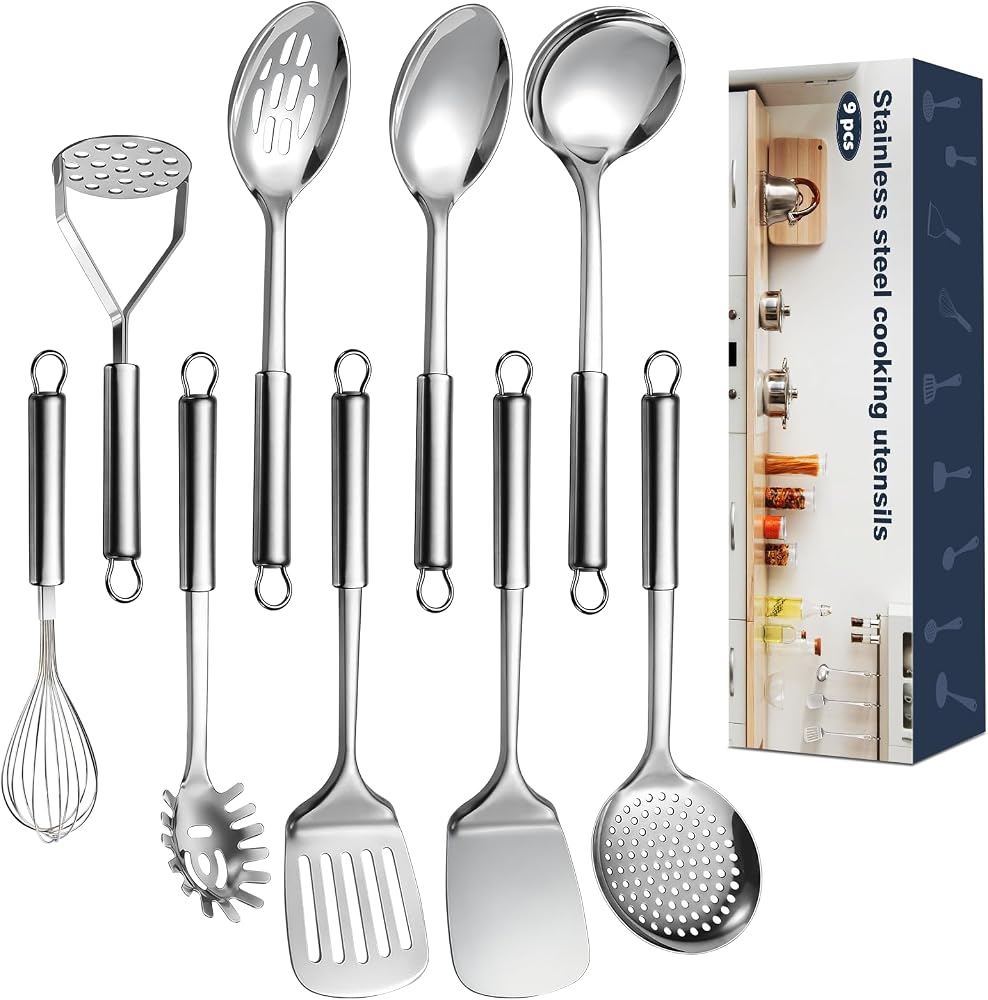
Stainless steel grades that matter: 18/10, 18/8, 304, 316
Most quality cookware uses 18/10 or 18/8 stainless, which roughly means 18% chromium and 10% or 8% nickel. In practical terms, that composition improves corrosion resistance and helps the pan resist rust spots, staining, and pitting. 304 is the common industry grade behind many 18/8 and 18/10 products; 316 adds molybdenum for extra corrosion resistance.
Here is the plain-English version: higher-grade stainless resists kitchen abuse better, but grade alone does not make a pan scratch-proof. Construction matters too. A cheap thin pan and a thick tri-ply pan can share the same stainless label while behaving very differently in daily use.
Hardness, abrasion, and why scratches are often superficial
Most utensil marks on stainless are surface abrasion, not structural damage. A scratch is a line in the finish; a gouge is deeper material displacement. If you can still clean the pan normally and food is not catching in the mark, you are probably looking at superficial wear.
Home cooks on Reddit and cooking forums say the same thing over and over: light scratches show up fast on shiny pans, but searing performance stays the same. That matches what I see in real kitchens too. The pan may look used. It is still usable.
Real-world cooking conditions that accelerate wear
Three things speed up wear: high heat, dry cooking, and abrasive cleaning. A pan run empty over maximum burner heat can discolor or spot faster. A dry pan encourages sticking, and sticking encourages aggressive scraping. Steel wool and rough scouring pads make the cosmetic damage even worse.
Stacked storage can be just as rough. Tossing a metal ladle into a pan or nesting cookware without a protector creates rim marks and edge dings. That is not a utensil problem alone. It is a storage problem too.
The hidden trade-off: metal utensils can be fine, but your pan’s finish may not be
Metal utensils are not the real enemy; finish quality is. A polished stainless pan can look scratched after a few weeks of normal use, while a brushed interior hides wear much better. Same pan material, very different visual outcome.

Polished stainless shows scratches faster than brushed steel
Mirror-polished interiors reflect light, so even tiny swirls stand out. Brushed stainless has a directional grain that camouflages light wear. That means two pans can age the same way mechanically while one looks “ruined” and the other still looks clean.
That cosmetic difference matters to buyers. If you care about keeping cookware showroom pretty, a brushed finish is the smarter buy. If you care about cooking, the shiny one usually performs just fine. Different priorities. Different answer.
Rivets, seams, and handle junctions are the real wear points
The vulnerable spots on stainless cookware are usually not the flat cooking surface. They are the rivets, seams, handle mounts, and any place where food can bake on and cleaning gets awkward. Heat discoloration often shows up there first, especially on pans used for high-heat searing and sauce reduction.
Those spots are also where grime hides. If you see brown buildup around rivets, that is not a sign that metal utensils ruined the pan. It usually means the cooktop ran hot, grease splattered, and the pan did not get a proper scrub afterward.
When metal-on-metal noise is a clue you are being too aggressive
Loud scraping is a warning sign. A light tap from a spatula is normal; grinding the edge of a turner across the surface is not. If you hear that sharp metal-on-metal screech, you are probably scraping harder than needed, especially on a pan that has not been preheated correctly.
Cooking should not sound like sanding lumber. If it does, back off. Let the food release on its own.
When you should avoid metal utensils entirely
Skip metal utensils on any stainless cookware that has a coating, decorative interior, or a delicate specialty finish. That is the line that matters. Bare stainless is one thing; layered surfaces are another.
Nonstick-coated stainless steel pans
If the pan has a PTFE, ceramic, or hybrid nonstick layer, metal utensils are a bad idea. One sharp edge can shorten coating life fast, and once the surface is scratched through, food release drops and cleanup gets worse. The pan may still cook, but it will not cook the way you paid for.
If you want a dedicated nonstick option, this is where a separate pan makes more sense than trying to make one pan do everything. For that lane, our guide to best cooking utensils for air fryer is useful too, because the same logic applies: choose tools that match the surface, not just the temperature.
Decorative, lacquered, or specialty-finish cookware
Some cookware uses tinted finishes, etched interiors, or decorative coatings that are not meant to be scrubbed with metal. The manufacturer instructions matter here more than general advice. If the care sheet warns against metal, believe it.
That warning is not marketing fluff. It is a warranty boundary. Ignore it and you own the damage.
Thin-gauge stainless that warps easily
Thin-gauge stainless is more likely to warp, hot-spot, and dent than heavy multi-ply cookware. A metal utensil may not be the thing that ruins it, but the combination of thin metal, high heat, and rough handling can make the pan age badly. Gauge matters because structure matters.
In plain numbers, heavier cookware with multi-ply construction generally handles abuse better than ultra-light pans. If the pan flexes easily when empty, treat it gently. That is not the pan for hard scraping.
Best utensil choices by cooking task
The best utensil depends on the job, not just the material. A metal spatula is great for searing, but a silicone spoon can be better for a delicate sauce. Matching the tool to the task reduces wear and gives you better control.
Sautéing and searing: metal spatulas, fish turners, tongs
For steak, chicken cutlets, smashed potatoes, and other high-heat jobs, a thin metal spatula or fish turner is often the best tool. The slim edge helps get under food that has browned properly, and tongs give you control without dragging across the pan like a shovel.
Look for rounded edges and a little flex, not a razor-sharp corner. A well-made stainless turner should slide under food cleanly without gouging the finish. If the tool feels like a pry bar, it is too aggressive.
Sauces, soups, and deglazing: spoons and ladles
For soups and pan sauces, a metal spoon is usually fine on bare stainless. It helps you deglaze browned bits and stir without heating up like plastic would. A deeper ladle is better for volume, while a smaller spoon gives you more control in a sauce pan.
In practice, this is where stainless shines. You can scrape fond off the bottom, build flavor, and clean the pan with one tool. That is part of why restaurant cooks like stainless so much.
Eggs, delicate fish, and low-sticking foods: silicone or wood
For eggs, pancakes, flaky fish, and other fragile foods, silicone or wood often works better because the real issue is sticking, not scratch resistance. A gentler utensil gives you a wider margin for error when the food has not fully released yet.
If you are still building out your kitchen drawer, a good overview of the different type of kitchen utensils can help you match the right tool to the right pan instead of forcing one utensil to do everything.
How to keep stainless steel looking good if you do use metal utensils
You can use metal utensils and still keep stainless looking respectable. The trick is reducing friction, heat abuse, and bad storage habits. Most cosmetic wear is preventable.
Use rounded edges, not sharp corners
A rounded spatula edge is easier on the finish than a sharp square corner. The same applies to spoons and tongs: smooth edges glide, rough edges dig. Tool geometry matters more than most people think.
If you buy one metal turner, choose the one with a tapered but smooth front edge. Cheap stamped utensils tend to be harsher on pans and hands. Spend the extra few dollars.
Preheat correctly and use enough fat
Proper preheating reduces sticking, and less sticking means less scraping. A stainless pan usually performs best when preheated for 1 to 3 minutes over medium to medium-high heat, then tested with a drop of water or a small amount of fat. When the food releases naturally, you do not need to force it.
That is the whole trick. The less you fight the pan, the longer it looks good.
Clean with non-abrasive tools
Use a nylon scrubber, soft sponge, or baking soda paste for stuck-on residue. Avoid steel wool unless you are intentionally restoring a badly abused surface and do not care about the finish. Even then, use it sparingly.
For stubborn brown residue, soak the pan in hot water for 10 to 20 minutes, then scrub. Most of the time, patience beats force. Force is what leaves the ugly marks.
| Cookware Type | Metal Utensils Safe? | Main Risk | Best Utensil Choice | Care Level |
|---|---|---|---|---|
| Bare stainless steel | Yes | Cosmetic scratches | Metal spatula, spoon, tongs | Low |
| Polished stainless steel | Yes, but marks show faster | Visible swirl marks | Smooth-edged metal tools | Medium |
| Brushed stainless steel | Yes | Minor finish wear | Any quality metal utensil | Low |
| Nonstick-coated stainless | No | Coating damage | Silicone, wood, nylon | High |
| Decorative specialty finish | Usually no | Finish damage, warranty issues | Follow manual | High |
Storage habits that prevent accidental damage
Separate pans with soft liners, paper towels, or pan protectors. Do not toss metal utensils into the same drawer with your cookware if you can avoid it. One bad jostle can create more visible damage than a week of normal cooking.
Drawer dividers and utensil cups are not just for neatness. They reduce accidental chips, dings, and rim scratches. Small habit, real payoff.
Buyer’s checklist: how to know if your stainless steel cookware can handle metal utensils
Before you buy or use a pan, check the construction and care instructions. The label tells you almost everything you need to know. If you cannot find the answer there, the product page or manual should spell it out.
Look for “metal utensil safe” language in the manual
Manufacturers usually say it plainly. If the manual states metal utensils are safe, that is your green light for normal use. If it says use wood or silicone only, that is your warning.
In kitchen gear, the manual beats the marketing copy every time. A glossy product page can make anything sound tough. The care sheet is the part that matters.
Check whether the interior is bare stainless or coated
Open the product listing and look for wording like “nonstick interior,” “ceramic coating,” “enamel finish,” or “bare stainless interior.” That one line changes your whole utensil strategy. Bare stainless is durable; coated surfaces are not in the same category.
If you are still deciding between cookware styles, a guide like best cooking utensils for induction cooktops can help you think through material compatibility in the same practical way.
Gauge and construction clues that signal durability
Tri-ply and 5-ply pans usually spread heat better and resist warping better than thin single-layer pans. A heavier base, tighter handle attachment, and solid rivets are all good signs. Those features do not make the pan scratch-proof, but they do make it more forgiving.
As a rough rule, if the pan feels flimsy in your hand, treat it gently. If it feels dense and balanced, it is more likely to shrug off normal metal-utensil use.
Bottom line: yes, but with one important exception
For bare stainless steel cookware, metal utensils are usually fine. The only real exception is coated, decorative, or specialty-finish stainless, where metal can damage the surface. If the pan is bare stainless, the utensil is rarely the problem. If the pan is coated, metal can be a dealbreaker.
The 3-second rule for deciding
If it is bare stainless, use the metal utensil. If it is coated or the manual warns against metal, do not. If you are unsure, assume the finish is the fragile part and choose silicone or wood until you confirm otherwise.
That is the simplest rule in the kitchen. It saves money and keeps the pan usable longer.
Real-kitchen take: what actually happens after months of use
In long-term home use, the first thing most people notice is not ruined cooking performance. It is cosmetic wear. Polished pans show it fastest, brushed pans hide it better, and heavy multi-ply pans usually keep their shape and heat control longer than bargain cookware.
That is why so many cooks keep one stainless pan for searing and another gentler pan for eggs or delicate foods. The right setup beats forcing one pan to do everything.
People Also Ask
Can you use metal utensils on stainless steel pans?
Yes. On bare stainless steel pans, metal utensils are generally safe and should not harm cooking performance. They may leave light scratches over time, especially on polished interiors, but those marks are usually cosmetic. Avoid metal on coated or specialty-finish pans.
Can you use metal utensils on stainless steel cookware?
Yes, if the cookware is bare stainless steel. The utensil itself is not the issue; the finish is. If the cookware has a nonstick coating, enamel, or a delicate decorative surface, metal utensils can damage it and shorten the product’s lifespan.
Can you use metal utensils on stainless steel without scratching it?
Not always. Bare stainless can still show light scratches, especially if the finish is polished. The goal is not zero marks forever; it is normal wear without functional damage. Rounded utensil edges, proper preheating, and gentle cleaning reduce visible scratches.
What utensils are best for stainless steel?
Metal spatulas, spoons, tongs, and turners are great for bare stainless steel. For delicate foods like eggs or flaky fish, silicone or wood is often better because it reduces sticking and gives you more control. The best choice depends on the task.
Does stainless steel scratch easily?
Stainless steel does not scratch as easily as nonstick coatings, but it is not scratch-proof. Polished finishes show marks faster than brushed finishes. Most scratches are cosmetic surface wear, not damage that affects how the pan cooks.
Can you use metal utensils on stainless steel if it is tri-ply or 18/10?
Yes. Tri-ply and 18/10 stainless cookware are usually good candidates for metal utensils, as long as the interior is bare stainless. The construction improves durability and heat control, but it does not change the rule for coated surfaces.
Answering the grammar-style confusion behind the question
The phrase “can you use metal utensils on stainless steel” is a permission question, not a modal verb quiz, but the wording matters because people often use it to ask about safety, not ability. In plain English, the question means: is it allowed, and will it damage something?
That is why the answer is not a simple dictionary definition. A meaning Cambridge or meaning Merriam-Webster style explanation would focus on permission and ability, but cookware needs a practical answer: yes for bare stainless, no for coated finishes. The English meaning is simple; the kitchen reality is more specific.
Schema
The article includes practical guidance, a comparison table, and a clear safety rule for bare versus coated stainless steel cookware.