Why Metal Cooking Utensils Win in Most Kitchens
Your spoon, skillet, and spatula are metal for a reason, not by habit. If you want the definition meaning in plain English, the answer is simple: metal gives cooks the best mix of heat control, strength, and long service life. That’s the real reason kitchens keep coming back to it.
But “metal” is not one thing. Stainless steel, aluminum, copper, and cast iron behave very differently, and each one solves a different cooking problem. If you’ve ever wondered why some tools are bare metal while others are coated, lined, or paired with silicone, the trade-off is where the story gets useful.
For buyers, students, and anyone trying to choose the right tool, this is less about theory and more about performance. The short version: metal works because it can take heat, move heat, and survive daily abuse better than most alternatives. That changes everything.
The short answer: metal solves 3 kitchen problems at once
Featured snippet answer: Cooking utensils are made of metals because metals conduct heat well, withstand high temperatures, and are strong enough for repeated use. They can be shaped into durable tools that last longer than many alternatives, though some metals need coatings because they can react with food or scratch easily.

Heat transfer that cooks evenly
Metals are used because they move heat predictably, and that matters in real cooking. Aluminum has thermal conductivity of about 205 W/m·K, copper is roughly 385 to 400 W/m·K, and stainless steel sits much lower at around 14 to 16 W/m·K. Those numbers explain why copper pans respond fast, aluminum pans heat quickly, and stainless steel often needs an aluminum or copper core to perform well.
In practice, that means a metal pan can spread burner heat across the cooking surface instead of creating one scorching hot spot. If you’ve ever burned eggs in the center of a pan while the edges stayed underdone, you’ve felt poor heat transfer firsthand. Simple, annoying, expensive.
High-temperature stability
Metals keep their shape under kitchen heat better than plastic, wood, or most composites. Aluminum melts at about 660°C, cast iron around 1150 to 1200°C, and stainless steel roughly 1400 to 1450°C. That’s why metal tools can move from stovetop to oven without turning soft, warped, or brittle.
This is also why restaurant kitchens trust metal for heavy use. A ladle or spatula may face boiling soup, a hot pan edge, a dishwasher cycle, and a crowded utensil bin all in one shift. Metal handles that abuse far better than most alternatives.
Strength and thin-wall design
Metal can be stamped, drawn, forged, or rolled into thin tools without falling apart. That makes it possible to build a light whisk, a rigid spoon, or a shallow ladle that still resists bending. The same property helps cookware survive scraping, stacking, and repeated washing.
In other words, metal is not just heat-friendly. It is structurally efficient. That’s why the same material shows up in both a delicate whisk and a heavy-duty stock pot.
The trade-off most people miss: not all metals are good in the same way
Metal is the default because it balances performance and durability, not because it is perfect. Different metals solve different problems, and that is why you see stainless steel, aluminum, copper, and cast iron used in very different ways. The best kitchen tool is usually a compromise, not a pure material victory.

Why stainless steel is common even though it conducts heat poorly
Stainless steel is popular because it resists corrosion, cleans easily, and does not react much with food. Its weak point is heat transfer: at roughly 14 to 16 W/m·K, it is a poor conductor compared with copper or aluminum. That is why many good stainless pans use bonded layers with aluminum or copper cores.
For utensils, stainless steel is often the practical choice because it is tough, dishwasher-safe, and low maintenance. It is the “forget about it” material. Not flashy, but dependable.
If you want a deeper buying guide on material choices, this is where a guide on what kitchen utensils are essential helps connect the dots between material and actual use.
Why aluminum is lightweight but often coated or anodized
Aluminum has a density of about 2.7 g/cm³, while stainless steel is around 8.0 g/cm³, so aluminum feels much lighter in the hand. It also moves heat well, which makes it useful in cookware and some utensil designs. The downside is reactivity and softer surface wear unless it is treated.
Anodizing is the common fix. It hardens the surface, improves scratch resistance, and reduces direct food contact with raw aluminum. That matters with acidic foods and long-term wear. Bare aluminum is cheap and useful, but treated aluminum is the version most people actually want.
Why copper is prized in pro kitchens but less common at home
Copper is the heat-transfer champion, with thermal conductivity around 385 to 400 W/m·K, which is why chefs love its fast response. The problem is cost, upkeep, and reactivity. Copper cookware usually needs a lining, often stainless steel or tin, so food does not contact the copper directly.
That lining is not a gimmick; it is the difference between a premium tool and a maintenance headache. Copper is excellent, but it asks for more money and more care. Most home cooks would rather not babysit a pan after dinner.
Why cast iron still survives
Cast iron is heavy, slow to heat, and slow to cool, but it holds temperature beautifully. That makes it ideal for searing, baking, and steady oven work. Its melting point is high enough for kitchen abuse, and its mass gives it thermal stability that thin utensils cannot match.
It is not the best choice for every job. It is the best choice for some jobs, and those jobs matter.
What utensils are actually made of metals?
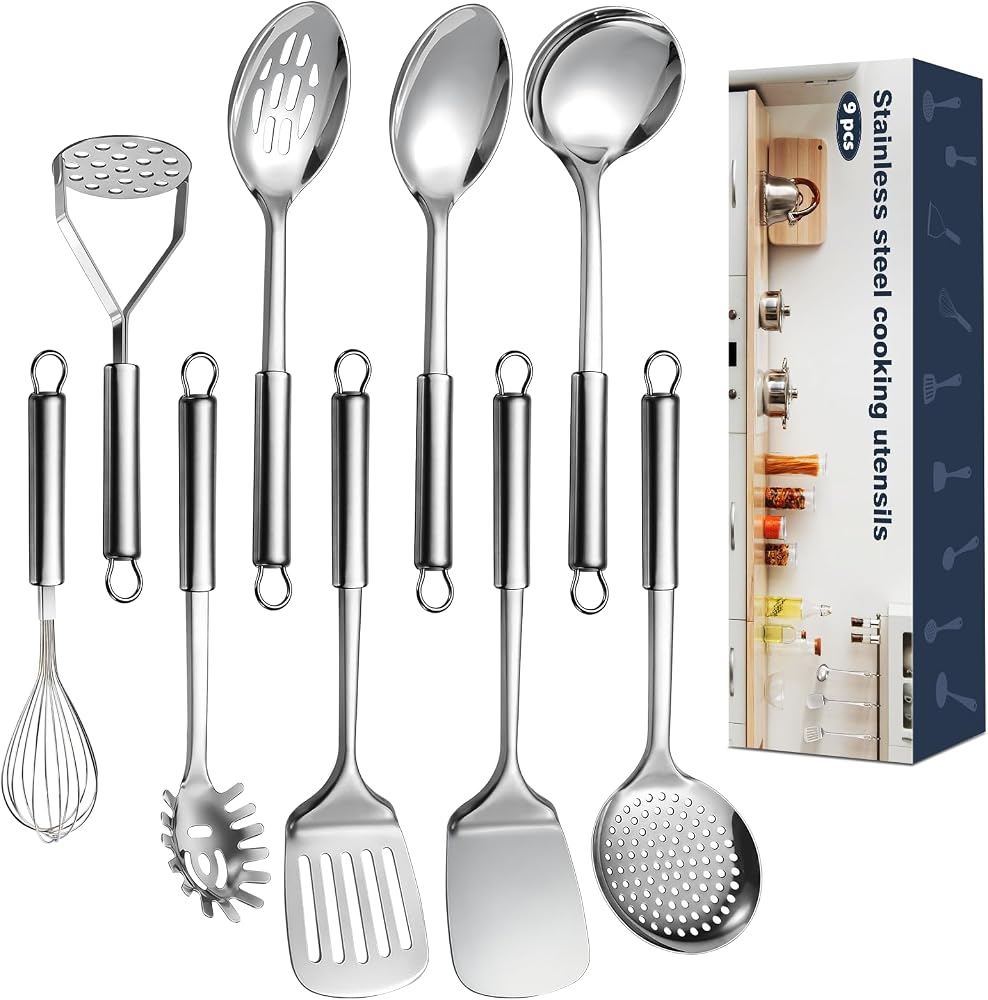
Most people think only pans are metal, but a lot of kitchen tools are metal from tip to handle or at least in the working part. Spoons, ladles, whisks, tongs, spatulas, frying pans, saucepans, stock pots, strainers, and measuring cups often use stainless steel, aluminum, or a mixed construction. Some are fully metal. Some are metal where it counts.

Common examples by function
- Spoons and ladles: usually stainless steel for strength, sanitation, and dishwasher safety.
- Whisks: often stainless steel wire for flexibility and spring-back.
- Tongs: commonly stainless steel with silicone tips or grips.
- Spatulas: metal versions are used for turning burgers, fish, and pancakes on durable cookware.
- Frying pans: often stainless steel, aluminum, cast iron, or copper-clad construction.
- Saucepans: frequently clad stainless steel with an aluminum or copper core.
For most households, the real decision is not “metal or not metal.” It is “which metal, and what job is it doing?” That distinction saves money and frustration.
The “metal + something else” reality
Modern tools are often hybrids because one material rarely does everything well. Silicone handles reduce burn risk, wooden grips stay cooler, nonstick coatings improve food release, and enamel or ceramic layers help with cleaning and reactivity. Hybrid construction is not a compromise to be ashamed of; it is usually the smart design choice.
If you are shopping, a practical guide to best cooking utensils non toxic can help you compare coatings, handles, and food-contact surfaces without getting lost in marketing language.
The classroom answer for “class 7” — two reasons, no fluff
Students usually learn this as two reasons: metals conduct heat and metals are strong enough for repeated use. That is the clean answer, and it is correct. If a teacher wants the short version, stop there.
Reason 1: Metals conduct heat
Heat moves through metal faster than through wood, plastic, or silicone. That makes metal useful for pans, spoons, and utensils that need to work near a flame, a burner, or a hot oven. The English meaning here is plain: metal helps food cook more evenly.
Reason 2: Metals are strong and durable
Metal utensils do not crack easily, and they usually survive repeated heating, washing, and contact with heavy cookware. That durability is the reason something made of metal often lasts for years instead of months. Students can remember it this way: metal is strong, so it lasts longer.
When metal is the wrong choice
Metal is useful, but it is not always the safest or most comfortable choice. The right answer depends on the food, the pan, and the cook. Some of the worst kitchen mistakes happen when people assume all metal is interchangeable.
Reaction with acidic foods
Uncoated reactive metals can interact with tomatoes, vinegar, citrus, and wine. That can affect flavor, color, and in some cases the surface of the utensil or pan. Aluminum and copper are the usual suspects if they are left untreated or unlined.
That is why lined copper pans and anodized aluminum matter. They keep the benefits while reducing the downside. Good engineering, not overkill.
Weight, burn risk, and handle heat
Some metal tools get hot fast, especially if the handle is fully metal and the tool sits on a burner edge or in a hot pan. A stainless steel spoon left in a pot can become uncomfortable or dangerous in seconds. Weight is another issue: cast iron and some steel tools are simply too heavy for delicate work.
That is why many home cooks prefer insulated handles or mixed-material tools. Comfort matters. So does not burning your hand.
Scratching and coating failure
Metal utensils can scratch nonstick coatings, enamel, and thin decorative finishes. Once the surface fails, the tool can lose its easy-clean behavior or start chipping. A cheap coated utensil that flakes after a few months is not a bargain. It is landfill with a handle.
Real-world buying logic: what chefs look for vs what home cooks need
Restaurant cooks and home cooks want different things from metal utensils. Chefs care about speed, sanitation, and abuse resistance. Home cooks care more about comfort, cleaning, and price. That difference explains why the same material can look perfect in one kitchen and annoying in another.
Restaurant priorities
In commercial kitchens, metal wins because it stacks well, sanitizes easily, and survives high-volume use. A chef may prefer a tool that can go from prep table to hot pan to dishwasher without special treatment. Fast heat response and rugged construction matter more than hand feel.
That is why you see more all-metal spoons, tongs, and pans in restaurants. They are practical, not pretty.
Home kitchen priorities
At home, people usually want tools that are light, comfortable, and easy to clean. Dishwasher safety matters. So does storage. A thinner, cheaper metal tool may seem fine at first, but if the handle gets hot or the hinge loosens, it becomes a daily annoyance.
If your drawer is already crowded, a practical overview of kitchen utensil storage ideas can help you choose tools that fit your space instead of fighting it.
The hidden cost of cheap metal tools
Low-quality metal utensils often fail in the same few ways: warping, rust, loose rivets, thin welds, and weak handles. A spoon that bends under pressure or a pan that warps on a burner is not a small defect. It changes how the tool cooks.
My blunt take: a cheap metal utensil that fails early is worse than a decent hybrid tool that lasts. Buy once, cry once. Or buy twice.
Quick comparison table: metal vs wood vs silicone vs plastic
This table gives the practical version, not the marketing version. The best material depends on heat, durability, and how hard you use the tool.
| Material | Heat resistance | Conductivity | Durability | Food reactivity | Typical use | Best for |
|---|---|---|---|---|---|---|
| Metal | Very high | High to very high | High | Low to moderate, depending on alloy | Pans, ladles, whisks, tongs, spatulas | High-heat cooking, long service life |
| Wood | Moderate | Low | Moderate | Low | Spoons, stirring tools | Gentle stirring, nonstick safety |
| Silicone | Moderate to high, usually 400°F to 600°F rated | Low | Moderate | Low | Spatulas, scrapers, tongs tips | Nonstick pans, flexible handling |
| Plastic | Low to moderate | Low | Low to moderate | Low | Serving tools, light-duty utensils | Low-heat prep only |
What the numbers mean in a real kitchen
Here is the practical version of the science. Copper and aluminum move heat fast, so they respond quickly when the burner changes. Stainless steel resists corrosion and lasts longer, but it usually needs a core of better heat-conducting metal. Cast iron holds heat but is slow to react. That is the full trade-off in one sentence.
| Material | Thermal conductivity | Approx. melting point | Density | Kitchen takeaway |
|---|---|---|---|---|
| Aluminum | ~205 W/m·K | 660°C | ~2.7 g/cm³ | Light, fast heating, often anodized or coated |
| Copper | ~385 to 400 W/m·K | ~1085°C | ~8.9 g/cm³ | Excellent heat control, expensive, often lined |
| Stainless steel | ~14 to 16 W/m·K | ~1400 to 1450°C | ~8.0 g/cm³ | Durable, nonreactive, often clad with aluminum or copper |
| Cast iron | Lower than aluminum and copper | ~1150 to 1200°C | High | Heavy, stable heat, great for searing and baking |
Practical steps to choose the right metal utensil
If you want a simple buying process, use this checklist. It works in stores and online, and it keeps you from getting distracted by shiny finishes and vague claims.
- Check the cooking surface: If the pan is nonstick, avoid sharp bare-metal edges.
- Look at the handle: Metal handles need insulation or enough length to stay cool.
- Match the alloy to the task: Stainless steel for durability, aluminum for lightness, copper for control, cast iron for heat retention.
- Inspect joints and rivets: Loose handles and weak welds fail early.
- Confirm dishwasher safety: If you will wash it often, do not buy a tool that hates water.
That is the whole game. Material first, comfort second, style last.
Why the best utensil often is not pure metal
The best kitchen tools usually combine materials because cooking has competing demands. A metal head gives strength and heat resistance, while a silicone handle, wooden grip, or coated surface improves comfort and safety. Pure metal is powerful, but hybrid construction is often smarter.
That is why modern kitchens are not abandoning metal. They are refining it. Stainless steel still leads in cookware and utensils, but it is now paired with aluminum cores, silicone tips, wooden accents, and nonreactive linings to solve the exact problems cooks actually have.
Final verdict
Cooking utensils are made of metals because metal balances performance and durability better than most other materials. It conducts heat, survives high temperatures, and holds up to daily use without falling apart. That is the core reason, and it is still true.
But the best utensil often isn’t pure metal
The smartest kitchen tool is usually a hybrid: metal where strength and heat matter, and another material where comfort, insulation, or food release matters. If you understand that trade-off, you stop buying by habit and start buying by function. That is how good kitchens stay efficient.
People Also Ask
What are cooking utensils made of metals?
Cooking utensils are often made of stainless steel, aluminum, copper, or cast iron. Stainless steel is common for spoons, tongs, and ladles because it is durable and nonreactive. Aluminum and copper are used where fast heat transfer matters, while cast iron is used for heavy-duty cookware.
Why are cooking utensils made of metals class 7?
The class 7 answer is simple: metals conduct heat and are strong. Students usually learn that metals help food cook evenly and last longer under repeated heating and washing. That is the textbook version, and it is accurate.
Why are cooking utensils made of metals give two reasons?
The two main reasons are heat conduction and durability. Metal moves heat efficiently, and it can handle repeated use without breaking easily. Those two properties make it practical for cooking tools and pans.
Why is cooking utensils made of metals?
Cooking utensils are made of metals because metal gives the best balance of heat control, strength, and long-term use. Some metals are better for utensils than others, so manufacturers often choose stainless steel, aluminum, copper, or a layered mix depending on the job.
Why are cooking utensils made of metals class 7?
Again, the short classroom answer is that metals are good conductors of heat and are durable. If a teacher asks for two reasons, those are the correct ones to give. You can also mention that metals are easy to shape into useful tools.
Why are cooking utensils made of metals give two reasons?
Two reasons: they conduct heat well and they are strong enough for repeated kitchen use. If you want the simplest possible answer for school, say that and stop there. No extra fluff needed.
Language note: why “why” shows up in dictionary results
If you landed here after seeing Cambridge Dictionary, Merriam-Webster, or a generic “why” page in search, that is because the word “why” has broad dictionary meaning in English. In everyday use, it can ask for a reason, express surprise, or even show annoyance. In this article, though, the reason we care about “why” is practical: why metal works so well in the kitchen.
That distinction matters. Search engines may show dictionary-style results for the word itself, but the real user intent here is the reason behind the material choice. This page answers that directly, with the facts people actually need.