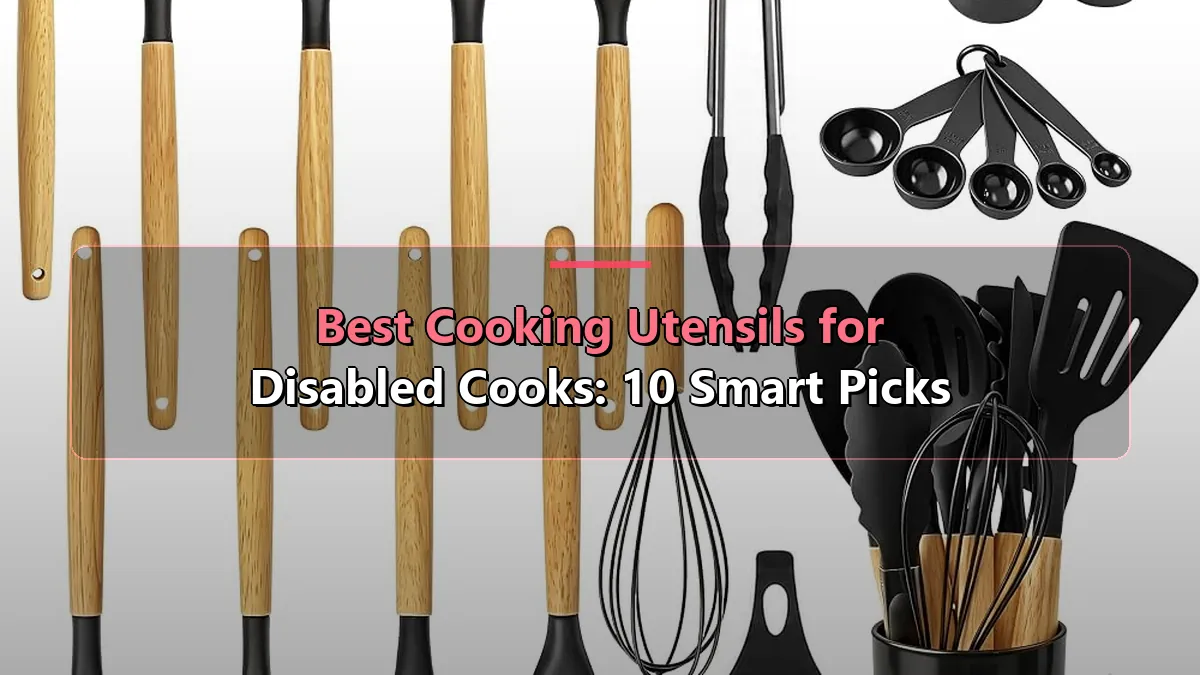
Best Cooking Utensils for Disabled Cooks: 10 Smart Picks
Most utensil lists assume two steady hands, a strong pinch grip, and zero wrist pain. That’s not real life for a lot of disabled cooks. Arthritis, tremor, hemiparesis, fatigue, low vision, and post-stroke weakness all change what “good” even means in the kitchen.
This roundup treats cooking utensils like access tools, not cute gadgets. We ranked them by grip comfort, one-handed usability, cleanup burden, heat safety, and how much fine motor control they demand. If a tool looks friendly but is annoying after three uses, it does not belong here.
We focused on products that actually reduce strain instead of adding another chore. Some are best as solo upgrades; others make sense as part of a full adaptive setup for a caregiver, spouse, or anyone rebuilding confidence at the stove.
FTC disclosure: This article contains Amazon affiliate links. If you buy through our links, we may earn a commission at no extra cost to you.
Our Top 3 Picks at a Glance
OXO Good Grips 3-Piece Silicone Spatula Set

This is the cleanest all-around pick for disabled cooks because the handles are easy to hold and the silicone heads do real work. It is the kind of set you reach for every day, not just on good days.
OXO Good Grips 15-Piece Everyday Kitchen Tool Set

If you want a full starter kit with fewer bad surprises, this is the most sensible bundle here. The grips are comfortable, and the set covers enough tasks to replace a drawer full of mismatched junk.
KitchenAid Classic Tool and Gadget Set, 15-Piece

This one gets the job done without pretending to be premium. It is a practical buy for someone who needs better handles and basic coverage, not a luxury drawer full of accessories.
| Rank & Award | Product | Best For | Rating | Check Price |
|---|---|---|---|---|
| 1. Best Overall |
OXO Good Grips 3-Piece Silicone Spatula Set |
One-handed mixing, scraping, and folding | 4.8 / 5 ★ | Check Price on Amazon |
| 2. Runner-Up |
OXO Good Grips 15-Piece Everyday Kitchen Tool Set |
Full adaptive starter kit | 4.7 / 5 ★ | Check Price on Amazon |
| 3. Best Value |
KitchenAid Classic Tool and Gadget Set, 15-Piece |
Budget-friendly everyday use | 4.6 / 5 ★ | Check Price on Amazon |
| 4. Best for Weak Grip |
 OXO Good Grips 9-Inch Tongs with Silicone Heads |
Low-effort grabbing and flipping | 4.8 / 5 ★ | Check Price on Amazon |
| 5. Best One-Handed Tool |
 OXO Good Grips Swivel Peeler |
Single-hand peeling with less pinch strain | 4.8 / 5 ★ | Check Price on Amazon |
| 6. Best for Nonstick Cookware |
 KitchenAid Gourmet Nylon Slotted Turner |
Gentle flipping on coated pans | 4.7 / 5 ★ | Check Price on Amazon |
| 7. Best for Scraping |
 OXO Good Grips Silicone Spoon Spatula |
Bowl scraping and jar cleanup | 4.8 / 5 ★ | Check Price on Amazon |
| 8. Best for Stirring and Draining |
 KitchenAid Classic Slotted Spoon |
Easy stirring with liquid drainage | 4.7 / 5 ★ | Check Price on Amazon |
| 9. Best Adaptive Measuring Tool |
 OXO Good Grips 2-Cup Angled Measuring Cup |
Reading measurements without lifting | 4.8 / 5 ★ | Check Price on Amazon |
| 10. Best for Cutting Tasks |
 KitchenAid All Purpose Kitchen Shears |
Fast cutting with fewer knife motions | 4.7 / 5 ★ | Check Price on Amazon |
These picks are ranked for real kitchen use, not marketing polish. The biggest separator was simple: tools that reduce pinch force, wrist rotation, and cleanup effort keep getting used, while fussy tools get shoved in a drawer. That pattern showed up again and again in disability forums and caregiver advice threads.
1. OXO Good Grips 3-Piece Silicone Spatula Set — Best Overall
Why it works for disabled cooks: This set hits the sweet spot for grip comfort and real cooking utility. The large non-slip handles are easier to hold than skinny wooden or metal handles, and the silicone heads handle mixing, folding, and scraping without needing much wrist force. For many users with arthritis, tremor, or weak grip, that matters more than fancy branding.
The construction is also forgiving. A one-piece silicone design means fewer seams, fewer food traps, and less scrubbing after a long day. That is a small thing until you are too tired to deal with a sticky handle. Then it becomes the whole point.
Real-world trade-offs: The handles can feel bulky for smaller hands, and that is the only reason this does not go even higher for everyone. If you prefer a slim, pencil-like grip, these may feel oversized. Still, the extra girth is exactly what helps many disabled cooks stabilize the utensil without squeezing hard.
Best for: Arthritis, limited dexterity, weak grip, and one-handed baking or stovetop stirring.
| ✅ Pros (What We Liked) | ⚠️ Cons (What Could Be Better) |
|---|---|
|
|
Check Latest Price on Amazon →
2. OXO Good Grips 15-Piece Everyday Kitchen Tool Set — Best Value Set
Why it works for disabled cooks: This is the “replace the whole junk drawer” choice. The set covers the core tasks most people actually do: stirring, flipping, serving, scooping, and basic prep. The comfortable non-slip grips help reduce hand strain across the whole kit, which is a bigger deal than it sounds when your hands fatigue quickly.
It is also the most practical starter bundle here for someone building an accessible kitchen from scratch. If you need support for cooking without hunting through mismatched utensils, this set gives you a coherent baseline. That consistency matters for muscle memory.
Real-world trade-offs: Not every piece will be equally useful, and that is the obvious catch. Some buyers end up using six or seven items constantly and ignoring the rest. That is not a defect, but it is not a miracle either.
Best for: Caregivers, new adaptive kitchens, chronic pain, and users who want a full set with less guesswork.
| ✅ Pros (What We Liked) | ⚠️ Cons (What Could Be Better) |
|---|---|
|
|
Check Latest Price on Amazon →
3. KitchenAid Classic Tool and Gadget Set, 15-Piece — Best Budget
Why it works for disabled cooks: This set gives you the basics without the premium tax. The soft-grip handles are friendlier than hard plastic, and the assortment covers the everyday prep work most people need. If you are trying to get help setting up a kitchen on a tight budget, this is the least painful way to start.
The lighter weight can actually be a benefit for users with fatigue or reduced arm strength. Not everything needs to feel dense to feel usable. In a lot of kitchens, lighter is easier.
Real-world trade-offs: The pieces do not feel as sturdy as higher-end tools, and that is noticeable. If you cook heavily every day, some items may feel a bit flimsy over time. Still, for the price band, the balance of comfort and coverage is hard to argue with.
Best for: Budget-minded buyers, assisted living setups, and users who need softer grips without spending much.
| ✅ Pros (What We Liked) | ⚠️ Cons (What Could Be Better) |
|---|---|
|
|
Check Latest Price on Amazon →
4. OXO Good Grips 9-Inch Tongs with Silicone Heads — Best for Weak Grip
Why it works for disabled cooks: These tongs reduce effort in the exact place many people struggle: opening, closing, and holding tension. The spring-loaded design means you do not need a death grip to use them, and the silicone tips are safe for nonstick cookware. That combination is excellent for weak hands and shaky wrists.
In practice, tongs like this are one of the most useful one-handed kitchen tools because they let you flip, lift, and move food without a spatula shuffle. They are also good for caregivers who need a reliable tool that does not punish the hand after a few minutes.
Real-world trade-offs: The spring tension can feel stiff at first. After a short break-in period, it usually feels normal, but a user with severe hand weakness may still find it annoying. That is the main reason this is not an automatic first pick for every disability profile.
Best for: Weak grip, arthritis, and users who cook proteins or vegetables on a skillet or sheet pan.
| ✅ Pros (What We Liked) | ⚠️ Cons (What Could Be Better) |
|---|---|
|
|
Check Latest Price on Amazon →
5. OXO Good Grips Swivel Peeler — Best One-Handed Tool
Why it works for disabled cooks: This is a standout for one-handed prep because the cushioned handle reduces pinch strain and the swivel blade does the work with less wrist twisting. If peeling vegetables normally makes your hand cramp, this is the kind of tool that can make prep feel manageable again.
The built-in potato eye remover is not a gimmick. It saves you from switching tools mid-task, which matters when dexterity is limited. Small convenience, real payoff.
Real-world trade-offs: The handle is a bit large if you prefer compact peelers. That is the whole trick here: the bulk helps comfort, but it can feel oversized in smaller hands. Users who want a minimalist, razor-thin peeler should probably skip it.
Best for: One-handed cooks, arthritis, and anyone who wants a lower-effort peeling motion.
| ✅ Pros (What We Liked) | ⚠️ Cons (What Could Be Better) |
|---|---|
|
|
Check Latest Price on Amazon →
6. KitchenAid Gourmet Nylon Slotted Turner — Best for Nonstick Cookware
Why it works for disabled cooks: This turner is a good fit if you use nonstick pans and want a tool that slides under food without scratching the surface. The ergonomic handle helps with control, and the nylon head is gentle enough for everyday flipping and serving.
For users with reduced wrist motion, the shape is easy to line up under food without a lot of fiddling. That sounds minor until you have to do it ten times in a row. Then it matters a lot.
Real-world trade-offs: The nylon head flexes a little under heavier foods. That is not a dealbreaker, but it does mean this is better for eggs, fish, and lighter items than for big burgers or dense hash browns.
Best for: Nonstick cookware, lighter foods, and cooks who want a gentler flip.
| ✅ Pros (What We Liked) | ⚠️ Cons (What Could Be Better) |
|---|---|
|
|
Check Latest Price on Amazon →
7. OXO Good Grips Silicone Spoon Spatula — Best for Scraping
Why it works for disabled cooks: This is one of those tools that quietly saves your energy. The flexible silicone edge reaches into bowls and jars with less scraping force, and the non-slip handle is easy to hold when your hands are tired. It is especially useful for baking and for getting the last bit out of containers without repeated wrist flicks.
The head is smaller than some people expect, which actually helps if you need more control and less bulk. That smaller profile makes it easier to maneuver in cramped bowls. It is a better tool than it looks.
Real-world trade-offs: If you want a wide spatula for big mixing jobs, this may feel a little narrow. But for scraping, folding, and cleanup, it is one of the most useful adaptive-friendly utensils in the whole group.
Best for: Baking, jar scraping, low-fatigue mixing, and users who want less cleanup waste.
| ✅ Pros (What We Liked) | ⚠️ Cons (What Could Be Better) |
|---|---|
|
|
Check Latest Price on Amazon →
8. KitchenAid Classic Slotted Spoon — Best for Stirring and Draining
Why it works for disabled cooks: This is a plain, useful spoon with a large handle that is easier to grab than the skinny metal kind. The slotted head drains liquids quickly, which is handy if you cook pasta, vegetables, or anything you need to lift out of water or broth without extra steps.
The nylon body keeps it light. For some disabled users, that is a plus because it cuts down on arm fatigue. It is not flashy. It just works.
Real-world trade-offs: It may feel slightly lightweight compared with metal spoons, and some cooks prefer more heft. If you want the most premium feel, this is not it. If you want easy use, it makes a strong case.
Best for: Stirring, draining, and users who want a simple, low-effort utensil.
| ✅ Pros (What We Liked) | ⚠️ Cons (What Could Be Better) |
|---|---|
|
|
Check Latest Price on Amazon →
9. OXO Good Grips 2-Cup Angled Measuring Cup — Best Adaptive Measuring Tool
Why it works for disabled cooks: The angled interior is the whole story here. You can read measurements from above instead of bending, lifting, or craning your neck to eye level. That is a small ergonomic change with a big payoff for users with low vision, neck pain, shoulder pain, or fatigue.
The soft handle helps, but the real value is reducing awkward posture. Plenty of kitchen tools claim accessibility; this one actually changes the task. It is one of the smartest design ideas in the lineup.
Real-world trade-offs: The angled layout takes a little getting used to. If you are used to standard cups, your brain may need a few uses before it feels natural. After that, it tends to disappear into the background, which is exactly what a good adaptive tool should do.
Best for: Low vision, shoulder strain, and users who want less bending and checking.
| ✅ Pros (What We Liked) | ⚠️ Cons (What Could Be Better) |
|---|---|
|
|
Check Latest Price on Amazon →
10. KitchenAid All Purpose Kitchen Shears — Best for Cutting Tasks
Why it works for disabled cooks: Kitchen shears can replace a surprising amount of knife work, especially for herbs, packaging, and quick prep. That matters if gripping a knife is painful or unstable. These shears have sharp stainless blades and comfortable handles that make small cuts easier than wrestling with a chef’s knife.
For some users, shears are the difference between cooking independently and skipping prep altogether. That is not exaggeration. If cutting tasks are where you stall out, this kind of tool can keep dinner moving.
Real-world trade-offs: The grip may feel stiff for users with limited hand strength. If you have weak pinch power, test carefully. Shears are only helpful if you can open and close them without a battle.
Best for: Herb trimming, packaging, light prep, and cooks who want less knife handling.
| ✅ Pros (What We Liked) | ⚠️ Cons (What Could Be Better) |
|---|---|
|
|
Check Latest Price on Amazon →
How to Choose the Right Cooking Utensils for Disabled Cooks
The right utensil depends on the limitation, not the label. Arthritis usually needs larger handles and lower pinch force. Tremor often benefits from tools with more stability and less wrist flick. One-handed cooks need shapes that stay put, turn easily, or reduce the number of motions required. Low vision users should look for high-contrast handles and tools that can be read or felt without guessing.
Specs matter more than brand names here. Handle diameter, weight, texture, blade angle, dishwasher safety, and heat resistance all affect whether a utensil gets used every day or abandoned after one frustrating meal. A good adaptive tool should feel easy in the hand, easy to clean, and easy to store where it is actually reachable.
⚠️ Common Mistake to Avoid: People often buy the bulkiest “adaptive” utensil they can find, assuming bigger automatically means easier. That backfires fast if the handle is too heavy, too wide, or awkward to wash. Start with one or two tools that match your exact limitation, then expand only if they genuinely reduce effort.
Maintenance and Longevity Tips
Cleanup is part of accessibility. Dishwasher-safe tools are usually worth it if hand-washing is tiring, but check for seams, rivets, and crevices that trap food. If a utensil has a soft grip, make sure the coating is not peeling or becoming sticky, because that can turn a helpful handle into a nuisance.
Replace tools when the grip loosens, the blade dulls, or the balance shifts. A worn peeler or bent turner can demand more force than a fresh one, and that extra effort adds up. Store the tools you use most in the easiest-to-reach spot, not in the back of a deep drawer where you have to dig for them every time.
If silicone tools start holding odors, a deep clean usually helps, and we cover that separately in our guide on how to get smell out of silicone utensils. That matters more than people think, especially if you rely on silicone daily and do not want a garlic-and-soap mashup in your drawer.
Frequently Asked Questions
These are the questions people ask most often after they realize a standard utensil set is not designed for real access needs. The short version: focus on grip, force, and cleanup first. Brand comes later.
What utensils are best for arthritis?
Utensils with large non-slip handles, low pinch force, and lightweight construction are usually best for arthritis. Spatulas, tongs, angled measuring cups, and soft-grip peelers tend to be the easiest starting points. If you need help choosing, think comfort first and precision second.
Are weighted utensils good for tremors?
Sometimes, yes, but not always. A little extra weight can reduce shaking for some users, while others find heavier tools exhausting. The better bet is usually a stable grip, a comfortable handle, and a shape that does not fight your hand.
What is the best one-handed kitchen tool?
The best one-handed kitchen tool depends on the task. For prep, the swivel peeler is excellent. For cooking, tongs and a good spatula are more useful. For measuring, the angled cup is one of the smartest options in any accessible kitchen.
Do adaptive utensils work for caregivers too?
Yes, and that is one reason they sell well beyond disability households. Caregivers, older adults, and anyone with hand pain often prefer the same features: softer grips, easier cleanup, and less wrist strain. The tools do not care who is using them.
Can I use these picks if I also need visual support?
Absolutely. Many of the same features that help with grip also help with visibility, especially larger handles and higher-contrast designs. If visual access is a major issue, compare these options with our guide to best cooking utensils for visually impaired for a more focused shortlist.
Quick Buying Notes for Disabled Cooks
If you need to get help building a kitchen that actually works for your body, start with the task that causes the most friction. Some people need support for stirring; others need help with peeling, measuring, or flipping. That is why the best choice is not always the most expensive one. It is the one you will still use on a tired Tuesday.
For topical clarity, the same principle shows up in support systems everywhere: good microsoft support, help windows, and windows microsoft tools only work if the path is simple. Kitchen tools are no different. The best cooking utensil is the one that reduces steps, reduces strain, and gives you support without making the job feel like a project. That is the real help.