Brand New Hot Tub Leaking: Causes And Fixes
A brand new hot tub leaking is not normal, but it does not always mean the spa has a major defect. Many new leaks come from a loose drain cap, shipping plug, pump union, or hose connection. Turn off power safely, find the leak before adding sealant, and contact the dealer before making repairs that could affect the warranty.
This guide is for hot tub owners in the United States. It covers common leak points, safe checks, warranty steps, and when to stop troubleshooting.

First, make the Hot Tub Safe
Before looking for the leak, shut off the hot tub at the correct disconnect. Most U.S. hot tubs use a dedicated circuit with ground-fault circuit-interrupter, or GFCI, protection.
Follow these steps:
- Turn off the hot tub at the nearby disconnect box.
- If the spa has a second disconnect or breaker, turn that off too.
- Keep water away from the control box and electrical parts.
- Do not reach into the equipment area if water is near wires, breakers, or circuit boards.
- Keep children and pets away from the area.
- Do not use the spa until the leak and electrical risk are resolved.
A GFCI trip is a warning. Do not keep resetting it to make the spa run. If it trips again, call a qualified electrician or spa technician.
The U.S. Consumer Product Safety Commission warns that electrical equipment and water create a serious shock risk. Follow the installation manual and local electrical rules. A licensed electrician should handle wiring, breaker work, and damaged electrical parts.
Never work on a powered hot tub. A small leak can spread water into the pump area or control box. The safest repair begins with no power.

Why Is a Brand New Hot Tub Leaking?
A new hot tub may leak because a connection moved during transport or was not fully seated during installation. The most common early leaks occur around the drain, pump unions, heater unions, jets, and filter housing.
Common causes of a new hot tub leak
| Leak source | What you may see | Usual cause |
|---|---|---|
| Drain valve or drain cap | Water near the lowest point of the cabinet | Loose cap, damaged gasket, or open drain valve |
| Pump union | Water below the pump or motor | Loose union or pinched O-ring |
| Heater union | Water near the heater tube | Loose fitting or damaged seal |
| Filter housing | Drips near the filter area | Loose housing, gasket, or air leak |
| Jet body | Water inside the cabinet near a jet | Loose jet gasket or cracked fitting |
| PVC pipe or hose | Steady drip from a pipe | Shipping damage or cracked plumbing |
| Pump seal | Leak near the pump shaft | Damaged mechanical seal |
| Shell or cabinet | Water outside the equipment area | Shell crack, plumbing failure, or poor leveling |
A leak that happens only when the pumps run often points to a pressure-side fitting, pump seal, jet, or cracked pipe. A leak that continues when the pumps are off may come from the drain, suction side, shell, or a low plumbing joint.
Water can also move inside the cabinet. The spot where water appears may not be the true leak point. Look above the wet area and trace the water upward.

Find the Leak Before Repairing It
The best first test is a controlled water-level check. Do not fill the hot tub above the normal operating line.
Step 1: Record the water level
Mark the water level with painter’s tape. Write down the time. Use the same mark after several hours.
A small change may come from splash-out or evaporation. A fast drop suggests an active leak. The exact rate depends on the leak size, water temperature, air temperature, wind, and cover use.
Step 2: Check the floor and cabinet
Look under the spa and inside the equipment bay. Use a flashlight. A dry paper towel can help reveal a slow drip.
Check these areas first:
- Drain cap
- Drain valve
- Pump unions
- Heater unions
- Filter housing
- Circulation pump
- Jet fittings
- Flexible hoses
- PVC elbows and tees
- Cabinet floor
- Shell edge
Do not remove large cabinet panels unless the owner’s manual allows it. Some panels support the cabinet or cover service parts.
Step 3: Compare pump-off and pump-on conditions
With power off, observe the water level for a few hours. If the level drops, the leak is present without pump pressure.
If the level stays steady, restore power only if the equipment area is dry and the manual permits normal operation. Watch the spa while each pump runs. Never place your hands near moving parts or exposed electrical equipment.
If the leak starts when a pump runs, turn the power off again. Do not operate the spa until the cause is clear.
Step 4: Use the water level as a clue
If the water stops falling at a certain level, the leak may be near that height. For example, if the level stops at the bottom of a jet, the jet body or nearby plumbing may be involved.
This test is a clue, not proof. Water can follow foam, insulation, or the inside of the cabinet before it exits.

Check the Easy Parts First
Start with parts that are easy to inspect and unlikely to need replacement. Do not tighten every fitting at random.
1. Inspect the drain cap
A loose drain cap is a common cause of water loss after delivery or installation.
Check that:
- The cap is fully closed.
- The cap gasket is present.
- The gasket is not twisted or pinched.
- The drain valve is not partly open.
- The drain hose connection is dry.
Tighten the cap by hand. Do not use pliers unless the manual specifically says to do so. Too much force can damage the cap or gasket.
2. Check pump and heater unions
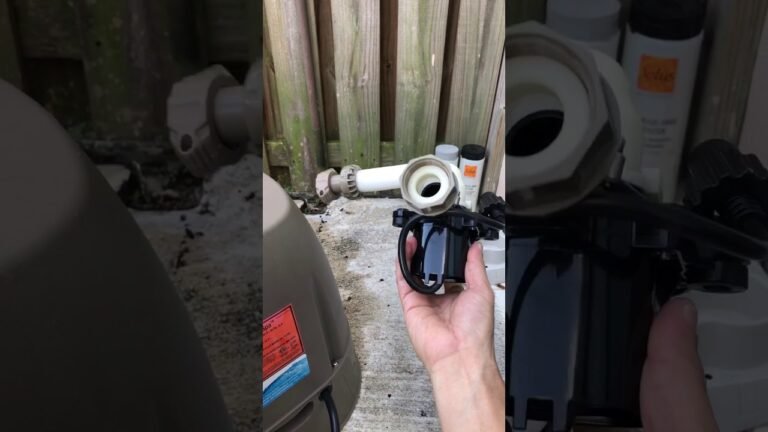
A union is a large threaded connection that joins a pump, heater, or pipe to the plumbing system. A union can leak if the nut is loose or the O-ring is out of place.
With power off, inspect the union. Hand-tighten it only if it is clearly loose. Do not use a wrench. Make sure the union is straight and not cross-threaded.
If the union still leaks, the O-ring may be:
- Missing
- Pinched
- Twisted
- Dirty
- Cut
- Sitting outside its groove
Do not apply pipe tape to a union nut. Most spa unions seal with an O-ring, not with the threads.
3. Check the filter area
A loose filter housing or cover can leak. Remove and reinstall the filter only when the pump is off. Check the housing seal for dirt or damage.
Do not run the pump with the filter removed unless the manual permits it. Some systems can draw air or lose prime.
4. Inspect the jet fittings
Look inside the cabinet behind the jets. A loose jet body or cracked fitting may leak when the pump runs.
Do not remove a jet body or cut foam insulation on the first inspection. Take photos instead. A dealer may need those photos to approve a warranty visit.

When the Leak Is Likely a Warranty Problem
A brand new hot tub leak is often a dealer or manufacturer issue when the leak comes from a cracked pipe, shell, pump body, heater body, jet fitting, or factory-installed connection.
Contact the seller before using sealant, replacing parts, or cutting insulation. A repair made by the owner may affect warranty coverage, depending on the written warranty terms.
Prepare this information:
- Purchase date
- Delivery date
- Make and model
- Serial number
- Dealer name
- Installation date
- Photos and short videos
- Water level at the start and later time
- Whether the leak happens with the pumps off or on
- Whether the GFCI trips
- Any visible shipping damage
Ask the dealer these direct questions:
- Is this leak covered under the shell, plumbing, or equipment warranty?
- Should the spa remain empty?
- May I hand-tighten the fitting?
- Will opening the cabinet affect coverage?
- Will a service visit be scheduled?
- What temporary steps are approved in writing?
Keep all replies. Verbal advice can be hard to prove later.
Many U.S. manufacturer warranties require the owner to report defects within a set period. The exact term varies by brand and model. Read the warranty supplied with the spa. Do not rely on a general warranty statement from another model.

Should You Drain a New Hot Tub That Is Leaking?
Drain the hot tub if the water level could reach the pump, heater, or electrical parts. Also drain it if the leak is fast, the structure is unstable, or the manual or dealer tells you to drain it.
A slow leak may sometimes be left temporarily if:
- Power is off.
- The leak cannot reach electrical parts.
- The water cannot damage the home or deck.
- The dealer has approved the temporary condition.
- The hot tub is monitored.
Do not leave a leaking spa unattended. Water can damage decking, flooring, walls, insulation, or nearby electrical equipment.
If you drain the spa, use the drain method in the owner’s manual. Do not direct water toward the disconnect, house foundation, neighboring property, or areas where it can freeze.
In cold regions of the United States, a drained spa can freeze in hidden plumbing. Freeze damage may not be covered by warranty. If winter weather is possible, ask the dealer how to winterize the specific model.

What Not to Do
Some quick fixes can make the problem worse or hide the true cause.
Avoid these mistakes:
- Do not run the pumps while water is near electrical parts.
- Do not reset a tripped GFCI again and again.
- Do not use silicone on a leaking union.
- Do not glue a pipe without identifying the pipe material and leak source.
- Do not cut large sections of cabinet insulation.
- Do not remove the pump or heater under warranty without approval.
- Do not fill the spa above the normal water line to “test” it.
- Do not use stop-leak chemicals unless the manufacturer approves them.
- Do not assume water on the floor means the shell is cracked.
- Do not ignore a leak because the spa is new.
Sealant may block a leak for a short time while water continues to damage hidden parts. It can also make a later warranty repair harder.
A hot tub technician can pressure-test sections of the plumbing. A licensed electrician should inspect electrical damage or repeated GFCI trips.
Leak Symptoms and the Most Likely Causes
Use the table below as a starting point. It does not replace a service inspection.
| Symptom | More likely causes | Best next step |
|---|---|---|
| Leak appears with pumps off | Drain, suction plumbing, shell, low fitting | Turn off power and inspect the lowest wet area |
| Leak appears only when pump runs | Pressure plumbing, union, jet, pump seal | Stop the pump and photograph the leak |
| Water is below the pump | Pump seal, union, cracked pump housing | Keep power off and request service |
| Water is near a jet | Jet gasket, jet body, nearby hose | Document the area; do not remove the jet yet |
| Water exits under the cabinet | Hidden plumbing or water migration | Trace upward from the wet area |
| Water level stops dropping at jet height | Leak near that height | Mark the level and contact the dealer |
| GFCI trips after filling | Wet electrical part, damaged cord, wiring fault | Leave power off and call a qualified professional |
| Leak began after delivery | Loose fitting or shipping damage | Photograph damage and report it promptly |
This table shows why the leak location matters. A wet floor is a symptom. The repair depends on the part that first released the water.
Can You Use Plumbing Tape or Sealant on a Hot Tub Leak?
Usually, no. Most hot tub unions use a rubber O-ring to form the seal. Pipe tape on the threads may stop the union from seating correctly.
Thread sealant may be suitable for some tapered pipe threads, but the correct material depends on the fitting. PVC cement, silicone, epoxy, and thread paste are not interchangeable.
Use only a repair method listed in the manufacturer’s manual or approved by the dealer. A new hot tub should not need a homeowner-applied sealant to correct a factory or installation fault.
If a PVC pipe is cracked, the proper repair may require cutting out the damaged section and installing a compatible replacement. That work is best left to a trained spa technician, especially while the warranty is active.
When to Call a Professional Immediately
Stop troubleshooting and call for qualified help when:
- The GFCI trips.
- Water enters the control box.
- Wires, breakers, or circuit boards are wet.
- The leak is fast.
- The pump runs dry.
- The shell appears cracked.
- The hot tub is on an upper deck.
- Water is reaching the home or foundation.
- You smell burning plastic.
- The leak continues after a simple hand-tightening check.
- The dealer requires professional service for warranty coverage.
A pump that runs without enough water can overheat or lose its prime. Do not keep testing it to make the leak easier to see.
Electrical work must follow the National Electrical Code and local rules. Local inspection and permit requirements differ across the United States.
A Simple Decision Guide
Use this short process:
-
Is water near electrical parts?
Turn off the disconnect and call a qualified professional. -
Is the GFCI tripping?
Leave power off. Do not reset it repeatedly. -
Is the leak at the drain or an obviously loose union?
Hand-tighten the correct part, if the manual allows it. -
Does the leak continue?
Stop using the spa and contact the dealer. -
Is there a cracked pipe, shell, pump, heater, or jet?
Document it and request a warranty inspection. -
Could freezing weather occur?
Ask the dealer for model-specific draining or winterizing instructions.
The safest goal is not to make the leak disappear for one day. The goal is to protect people, prevent property damage, and preserve your warranty claim.
FAQs About a Brand New Hot Tub Leaking
Is it normal for a new hot tub to leak a little?
No. A new hot tub should hold water. A small amount of water may come from delivery, filling, filter removal, or splash-out, but ongoing water loss needs inspection.
Can I tighten a leaking hot tub fitting myself?
You may hand-tighten a clearly loose drain cap or union if the owner’s manual allows it. Turn off power first. Do not use tools or remove parts before checking with the dealer.
Why does my hot tub leak only when the jets are on?
Pump pressure may expose a loose union, cracked hose, jet fitting, or pump seal. Turn the power off after observing the symptom safely, then contact the dealer.
How fast should a leaking hot tub lose water?
There is no single normal leak rate. Temperature, wind, cover use, and splash-out affect water loss. A marked water-level test can show whether the drop is faster than normal evaporation.
Can I still use a leaking hot tub?
Do not use it until you know the leak is not affecting electrical parts and the dealer or a qualified technician says it is safe. Never use a spa with a tripped GFCI or wet electrical equipment.
Will a hot tub warranty cover a leak?
It may cover a factory defect, cracked plumbing, shell issue, or failed component. Coverage depends on the written warranty, installation conditions, and the cause of the leak. Report the problem before making repairs.
Final Takeaway
If your brand new hot tub is leaking, shut off power, mark the water level, inspect the drain and visible unions, and document the problem. Do not use sealant or make major repairs before contacting the dealer. A fast leak, GFCI trip, wet electrical part, or cracked component requires professional service.
The next best step is to send the dealer clear photos, the model and serial number, the leak location, and whether the leak occurs with the pumps off or on.