What Order To Add Hot Tub Chemicals: Safe Step Guide
The correct order to add hot tub chemicals is:
- Test the water
- Adjust total alkalinity
- Adjust pH
- Adjust calcium hardness
- Add sanitizer
- Shock the water when needed
- Retest before use
This order helps each chemical work as intended. It also reduces cloudy water, scale, corrosion, skin irritation, and unsafe sanitizer levels.
For hot tub owners in the United States, always follow the product label and the spa manufacturer’s manual first. Chemical strengths and target ranges can vary by product and by hot tub surface.

Why the order of hot tub chemicals matters
Hot tub chemicals affect one another. Total alkalinity helps control pH. pH affects sanitizer performance. Calcium hardness affects scale and water balance. If you add chemicals in the wrong order, one product may reduce the effect of another.
The safest basic rule is simple:
Balance the water first, sanitize it second, and shock it only after the basic balance is correct.
Never add two hot tub chemicals at the same time. Add one product, let the water circulate, and retest before making the next adjustment.
The main water balance terms
- Total alkalinity, or TA: Helps keep pH from changing too quickly.
- pH: Shows how acidic or basic the water is.
- Calcium hardness, or CH: Measures dissolved calcium. Too little can damage some spa surfaces and equipment. Too much can cause scale.
- Sanitizer: Kills or controls germs. Common choices are chlorine and bromine.
- Shock or oxidizer: Breaks down organic waste, such as body oils and lotions. It may not provide lasting sanitation unless the label says it is a sanitizer.
The U.S. Centers for Disease Control and Prevention recommends keeping hot tub water at pH 7.0 to 7.8, with at least 3 parts per million of free chlorine or 4 to 8 parts per million of bromine. Your product label and spa manual may give narrower operating ranges.
The correct order to add hot tub chemicals
Use this sequence when filling a spa, correcting water balance, or starting routine maintenance.
1. Test the hot tub water first
Before adding any chemical, test the water. Use fresh test strips or a liquid test kit made for spas.
Check at least:
- Total alkalinity
- pH
- Free chlorine or bromine
- Calcium hardness, when possible
If the water is new, has been drained, or comes from a private well, also consider testing for metals such as iron and copper.
Do not guess the dose. The amount needed depends on the hot tub’s water volume, the current reading, and the product strength.
2. Adjust total alkalinity
Adjust total alkalinity before pH. TA acts like a buffer. If it is too low, pH may swing up and down. If it is too high, pH may stay high and become difficult to lower.
Many spa products list a TA target around 80 to 120 ppm, but this is not universal. Some manufacturers recommend a different range, especially for acrylic spas or saltwater systems.
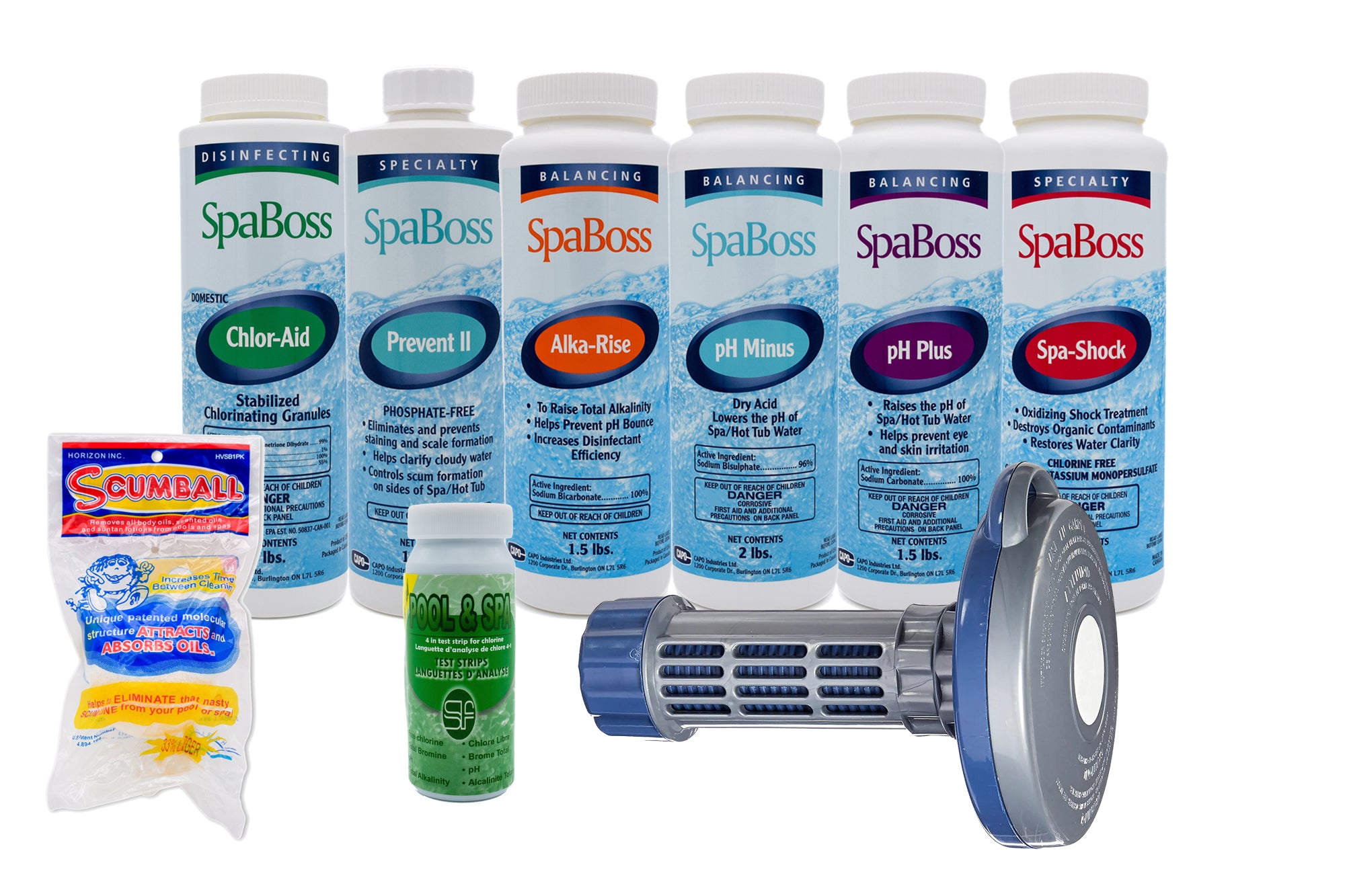
To raise alkalinity, use a product labeled for increasing total alkalinity. Sodium bicarbonate is the usual active ingredient.
To lower alkalinity, use the manufacturer-approved acid product. This may be sodium bisulfate or muriatic acid, depending on the label and local rules. Acid products need extra care because they can burn skin and damage surfaces.
After adding an alkalinity increaser or reducer:
- Turn on the circulation pump.
- Leave the cover open.
- Wait for the time stated on the label.
- Retest total alkalinity and pH.
- Repeat with a smaller dose if needed.
3. Adjust pH
Once total alkalinity is in range, adjust pH. A common target is 7.2 to 7.8, but use the range in your spa manual and chemical label.
If pH is low, use a pH increaser. If pH is high, use a pH decreaser.
Low pH can:
- Irritate skin and eyes
- Corrode heaters and metal parts
- Damage some spa surfaces
- Reduce water comfort
High pH can:
- Make water cloudy
- Encourage scale
- Reduce the activity of chlorine
- Increase eye and skin irritation
Run the pump while the product mixes. Keep the cover open, since trapped fumes may damage the cover or nearby materials.
4. Adjust calcium hardness
Calcium hardness is usually checked after alkalinity and pH. Follow the spa maker’s target because the correct range depends on the shell, heater, plumbing, water source, and sanitation system.
Low calcium hardness may contribute to corrosion or foaming. High calcium hardness may produce white scale on the heater, jets, shell, and plumbing.
If calcium hardness is too low, add a calcium hardness increaser. If it is too high, draining and refilling with softer water may be more practical than trying to remove calcium with a chemical.
Do not use a water softener without checking the spa manufacturer’s instructions. Very soft water can also create problems.
A practical point: calcium hardness changes slowly. You usually do not need to adjust it during every weekly water test.
5. Add the sanitizer
Add chlorine or bromine only after the main water balance is close to the target range.
If you use chlorine
Many hot tub systems use dichlor granules. Add the labeled amount with the pump running. Do not use pool chlorine unless the product label and spa manufacturer specifically approve it.
Check the free chlorine level before entering the water. The CDC recommends at least 3 ppm of free chlorine in hot tubs.
If you use bromine
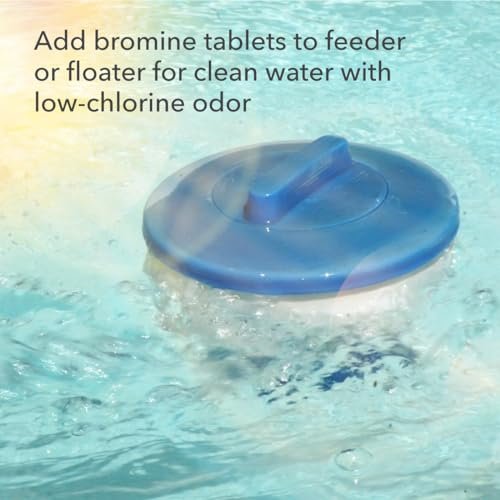
Bromine systems often use bromine tablets in a floating dispenser or an approved feeder. Tablets dissolve slowly and should not be placed directly on the spa shell unless the product instructions specifically allow it.
Some bromine systems also require a startup product called sodium bromide. This creates a bromide reserve, often called a bromide bank. An oxidizer then activates that reserve into usable bromine.
Follow the exact sequence on the bromine product label. Do not assume every bromine system works the same way.
The CDC recommends 4 to 8 ppm of bromine for hot tubs.
6. Add shock or oxidizer
Shock is generally added after sanitizer and basic water balance. It helps break down contaminants from:
- Sweat
- Body oils
- Cosmetics
- Lotions
- Leaves and other debris
There are two broad types:
- Chlorine shock: Adds chlorine and oxidizes contaminants.
- Non-chlorine shock: Oxidizes waste but may not kill germs by itself.
A non-chlorine shock is not automatically a sanitizer. Read the label carefully.
Keep the cover open while the product circulates. Do not use the hot tub until the label says it is safe and the sanitizer reading is within the correct range.
After heavy use, a strong odor, cloudy water, or a low sanitizer reading, shock may help. However, shock does not replace draining and cleaning when the water is old or badly contaminated.
7. Retest before using the hot tub
After the chemicals circulate for the time listed on the label, test the water again.
Check:
- pH
- Sanitizer
- Total alkalinity if you made a major adjustment
Do not enter the spa if the water is outside the product’s safe-use range. A strong chemical smell is not proof that the water is clean. It may indicate that sanitizer has reacted with contaminants.
A simple chemical order chart
Use this chart as a quick reference. The product label and spa manual remain the final authority.
| Step | Chemical or action | Main purpose | When to retest |
|---|---|---|---|
| 1 | Test water | Find the starting levels | Before any adjustment |
| 2 | Total alkalinity increaser or reducer | Stabilize pH | After circulation |
| 3 | pH increaser or decreaser | Set water acidity | After circulation |
| 4 | Calcium hardness increaser | Prevent corrosion or scale problems | After thorough mixing |
| 5 | Chlorine or bromine | Sanitize the water | Before use |
| 6 | Shock or oxidizer | Break down organic waste | Before use |
| 7 | Final test | Confirm safe conditions | Before entering |
Example: first fill after draining
A typical first-fill process looks like this:
- Clean the shell and filter.
- Fill the hot tub with fresh water.
- Test the water.
- Add a metal-control product if the source water contains metals and the label recommends it.
- Adjust total alkalinity.
- Adjust pH.
- Adjust calcium hardness if needed.
- Add the selected sanitizer.
- Shock according to the sanitizer system.
- Retest before use.
A metal-control product belongs early in the process when it is needed. It can help reduce staining or deposits from iron, copper, or other metals in the fill water. Use only a product approved for hot tubs.
Example: weekly maintenance
For routine care:
- Remove debris.
- Check the water level.
- Test pH and sanitizer.
- Adjust total alkalinity only if testing shows it is out of range.
- Correct pH.
- Add sanitizer if needed.
- Shock according to the product instructions and usage level.
- Retest before using the spa.
You do not need to add every chemical at every maintenance visit.
How long should you wait between hot tub chemicals?
Wait until the previous chemical has fully circulated before adding another one. The exact wait time depends on the product label, water volume, pump setting, and the size of the adjustment.
A safe general method is:
- Add only one chemical.
- Run the circulation system.
- Leave the cover open.
- Wait at least the label’s stated mixing time.
- Test the water.
- Add the next product only if needed.
Some products may require several hours before a reliable test. Large adjustments may need more than one treatment.
Do not rely on a fixed “15-minute rule” for every chemical. That shortcut may be too short for some products and unnecessary for others.
Can you add hot tub chemicals at the same time?
No. Do not mix hot tub chemicals together in a bucket, container, feeder, or measuring cup.
Mixing chemicals can cause:
- Fire
- Toxic gas
- A violent reaction
- Product damage
- Serious burns
Never mix chlorine and acid. Never mix different dry chemicals. Never pour water into concentrated acid. If a label gives special dilution instructions, follow them exactly.
Add chemicals directly to the water only as the label directs. Use separate, clean measuring tools for each product, and keep chemicals in their original containers.
Should you add chemicals with the hot tub cover on or off?
Keep the cover open while adding and circulating most hot tub chemicals. This allows fumes to escape and helps protect the underside of the cover.
Run the circulation pump unless the product label says otherwise. Do not use the jets if they create excessive splashing or aerosol mist around people.
Close the cover only when:
- The label permits it
- The water has mixed
- The chemical odor has cleared
- The sanitizer and pH readings are safe
Strong fumes, unusual color, or a chemical reaction are reasons to leave the area and seek help according to the product’s safety instructions.
What should you add first when hot tub water is cloudy?
Cloudy water has several possible causes. Do not keep adding shock without finding the cause.
Check these items in order:
- Sanitizer: Low chlorine or bromine is common.
- pH: High pH can make water cloudy.
- Total alkalinity: An out-of-range reading can make pH unstable.
- Filter: A dirty or worn filter may not remove particles.
- Bather load: Heavy use can overwhelm the sanitizer.
- Calcium hardness: High calcium can create scale and haze.
- Water age: Old water may need to be drained.
A typical correction is to clean or replace the filter, balance pH, restore sanitizer, and use shock if the product label recommends it. Keep the hot tub closed until the water clears and the test results are safe.
If water remains cloudy after proper treatment, drain and clean the spa. Persistent cloudiness can also point to biofilm, plumbing contamination, or equipment problems.

What should you add first if pH keeps rising?
If pH repeatedly rises, check total alkalinity before adding more pH decreaser. High TA can push pH upward. Aeration from air jets can also raise pH because it removes carbon dioxide from the water.
The useful sequence is:
- Test total alkalinity and pH.
- Lower TA only if it is above the manufacturer’s range.
- Use the spa’s jets only as directed.
- Retest after the water settles.
- Make small pH adjustments instead of large doses.
Do not lower total alkalinity just because pH rose once. Test results and the spa manual should guide the decision.
Safety rules for storing and adding hot tub chemicals
Use these rules every time:
- Read the entire product label before use.
- Wear the protective equipment listed on the label.
- Keep chemicals away from children and pets.
- Store products in a cool, dry, well-ventilated place.
- Keep containers closed and upright.
- Store chemicals away from gasoline, fertilizers, fuels, and other reactive materials.
- Do not store liquids above dry chemicals.
- Do not transfer chemicals to food or drink containers.
- Use clean, dry scoops.
- Never return unused product to its original container.
- Wash your hands after handling chemicals.
- Keep the product label available in an emergency.
If a chemical gets in your eyes or on your skin, follow the first-aid directions on the label. For a serious exposure, contact Poison Control in the United States at 1-800-222-1222 or seek emergency care.
Common mistakes when adding spa chemicals
Adding sanitizer before balancing pH
Sanitizer may work less effectively when pH is outside the recommended range. Balance the water first, then add sanitizer.
Using pool chemicals without checking the label
Some pool products are too strong, unsuitable for small water volumes, or incompatible with a particular spa system. Use a product labeled for hot tubs unless the manufacturer gives different instructions.
Adding too much product at once
More chemical is not always better. Overdosing can damage equipment, irritate skin, and make the spa unusable for longer.
Closing the cover right away
Trapped fumes can damage the cover and create an unpleasant atmosphere. Keep the cover open during the mixing period unless the product label says otherwise.
Using a non-chlorine shock as the only sanitizer
Non-chlorine shock can oxidize waste, but it may not sanitize the water. Keep an approved chlorine or bromine sanitizer in the proper range.
Ignoring the filter
Chemical treatment cannot replace filtration. Clean the filter based on the manufacturer’s schedule and replace it when it no longer cleans effectively.
Trusting a single test strip result
Test strips are useful for routine checks, but they can be affected by age, moisture, poor storage, and user technique. If readings seem unusual, confirm them with a fresh strip or a liquid test kit.
How often should you test hot tub water?
Test hot tub water before use and during routine maintenance. The CDC recommends testing hot tub water at least twice daily when the spa is in use, and more often with heavy use.
At minimum, check:
- pH
- Free chlorine or bromine
Check total alkalinity and calcium hardness less often, such as after a refill or when pH becomes difficult to control. Follow the schedule in your spa and chemical manuals.
Record your results. A simple log can show whether pH is slowly rising, sanitizer is being used faster than usual, or the water needs a drain and refill.
When should you drain and refill instead of adding more chemicals?
Drain and refill when:
- The water is old and difficult to balance.
- The total dissolved solids are high, if measured.
- The water stays cloudy after proper treatment.
- Foam returns quickly after chemical adjustments.
- You suspect contamination or biofilm.
- The water has been exposed to a major chemical mistake.
- Calcium hardness is too high to correct economically.
- The manufacturer’s maintenance schedule calls for a water change.
Before refilling, clean the shell and filter. Some manufacturers also recommend a plumbing purge product before draining, especially when biofilm is suspected. Use only a product approved for the spa and follow its instructions.
Frequently asked questions
Should I add alkalinity increaser or pH increaser first?
Add total alkalinity increaser first. Alkalinity helps stabilize pH, so adjusting pH before TA may lead to repeated corrections.
Do I add shock before or after chlorine?
In most systems, add or restore the regular sanitizer first, then add shock according to the product label. Some products combine sanitation and shocking, so read the label before using both.
Can I use chlorine and bromine together?
Do not casually combine chlorine and bromine products. Never mix them in dry form or in the same container. If you want to change sanitizer systems, follow the spa manufacturer’s instructions; draining and refilling may be necessary.
How long after adding chemicals can I use the hot tub?
Wait until the product’s label allows use and testing confirms that pH and sanitizer are in range. Time alone is not enough. A hot tub may need more circulation after a large chemical adjustment.
What happens if I add chemicals in the wrong order?
The water may remain unbalanced, or a chemical may work poorly. The safest response is to stop adding products, leave the cover open, run circulation as directed, and test the water. If a reaction, strong fumes, or unusual heat occurs, leave the area and follow the product emergency instructions.
Final checklist: the best order for hot tub chemicals
Use this sequence:
- Test the water.
- Adjust total alkalinity.
- Adjust pH.
- Adjust calcium hardness when needed.
- Add chlorine or bromine.
- Add shock or oxidizer.
- Circulate with the cover open.
- Retest before entering.
Make small changes, add only one chemical at a time, and follow the label for the exact product you use. For United States hot tub owners, CDC guidance is a useful safety baseline, but the spa manual and chemical label control when their instructions are more specific.