How To Shock A Hot Tub For The First Time: Easy Guide
To shock a hot tub for the first time, test the water, adjust the pH, add the correct shock product based on the label, and run the pumps with the cover open. Keep people out until the sanitizer returns to the safe range shown on the product label and confirmed by a test strip or liquid test kit.
This guide applies to hot tub owners in the United States. Product names, chemical strengths, and local water conditions vary, so the container label and your spa manufacturer’s manual always control the exact dose. Never mix hot tub chemicals together or add them in the wrong order.
What Does It Mean to Shock a Hot Tub?
Shocking means adding a larger-than-normal dose of an oxidizing sanitizer to break down contaminants in the water. These contaminants include sweat, body oils, lotions, cosmetics, urine, and other organic waste brought into the spa.
A shock treatment can also help restore the sanitizer’s cleaning power. In a hot tub, warm water and heavy bather loads can use up sanitizer fast. Shock is not the same as routine sanitizer. You still need to maintain the correct chlorine or bromine level after shocking.
Chlorine shock and non-chlorine shock
Hot tub shock usually falls into two groups:
- Chlorine shock: Adds chlorine and oxidizes waste. It can raise the free chlorine level for a period of time.
- Non-chlorine shock: Often uses potassium monopersulfate, also called MPS. It helps oxidize waste but does not provide the same sanitizing effect as chlorine.
Non-chlorine shock may be useful for routine oxidation in a bromine spa. It does not always activate bromide in every system, and it should not be treated as a replacement for sanitizer. Check the product label and your spa manual before using it.
Why shock a new hot tub?
A first shock can help treat water after:
- Filling the spa with fresh water
- Installing or cleaning the filter
- Using a new spa for the first time
- Adding several bathers
- Draining and refilling the tub
- Recovering from cloudy water or a strong odor
Fresh water is not always clean enough for spa use. It may contain metals, minerals, organic matter, or contamination from the plumbing system. A new hot tub can also have residue from manufacturing, transport, storage, or installation.
What You Need Before You Shock the Hot Tub
Gather the supplies before you begin. You should not have to leave an open spa while chemicals are circulating.
You will need:
- A chlorine or bromine test kit
- A pH and alkalinity test kit
- The correct hot tub shock product
- A clean, dry measuring scoop used only for that chemical
- Protective gloves and eye protection
- The hot tub owner’s manual
- A clean container, if the label says to dissolve the chemical first
Use a test kit made for spas. Pool test products may have ranges that are too broad or may not work well with your sanitizer system.
Do not use a kitchen spoon, food container, or wet scoop. Moisture can cause powdered chemicals to clump or react. Store chemicals in their original containers in a cool, dry, well-ventilated place away from children, pets, heat, and other chemicals.
How to Shock a Hot Tub for the First Time
Follow these steps in order. The product label may require a different dose or method, so use this process as a safe framework rather than a substitute for the label.
1. Read the product label and spa manual
Check the label for:
- Dose per gallon
- Whether the product is chlorine or non-chlorine shock
- Whether you must dissolve the product first
- Required pump and circulation time
- Required wait time before use
- Storage and handling warnings
Find the hot tub’s water capacity in gallons. Use the actual water volume if known. Do not guess the dose from the size of the shell alone because seats, plumbing, filters, and water level affect capacity.
2. Remove people, pets, and objects from the spa
No one should be in the hot tub while you add shock. Remove floating toys, drink holders, and other items that may be damaged by concentrated chemicals.
Keep children and pets away from both the spa and the chemical container. Avoid adding chemicals when strong wind could blow powder toward your face or nearby surfaces.
3. Check the water level
Fill the spa to the level marked by the manufacturer. If the water is too low, the pumps may draw air. If the water is too high, the water may overflow when people enter.
A first fill is also a good time to inspect the plumbing, filter, drain area, and equipment compartment for leaks. Do not operate the spa if water reaches electrical components or if you see an electrical fault.
4. Turn on circulation and jets
Run the circulation pump. Open the jets as directed by the manual. Water movement helps spread the chemical through the spa.
Some hot tubs have air controls. If the manual allows it, opening the air controls can improve mixing. Do not remove equipment covers or operate the spa in a way the manufacturer does not allow.
5. Test and adjust total alkalinity and pH
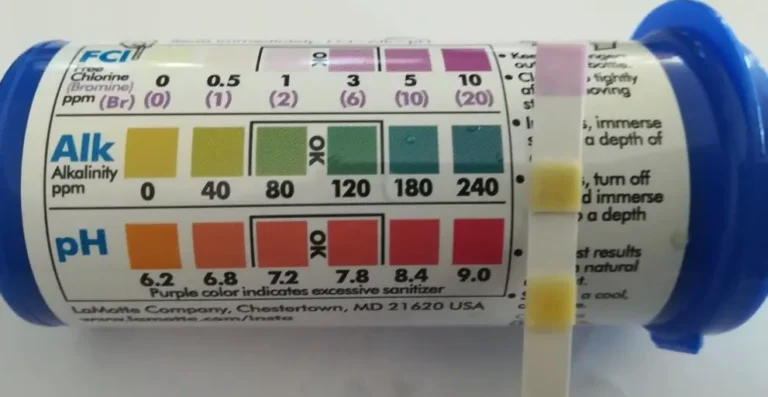
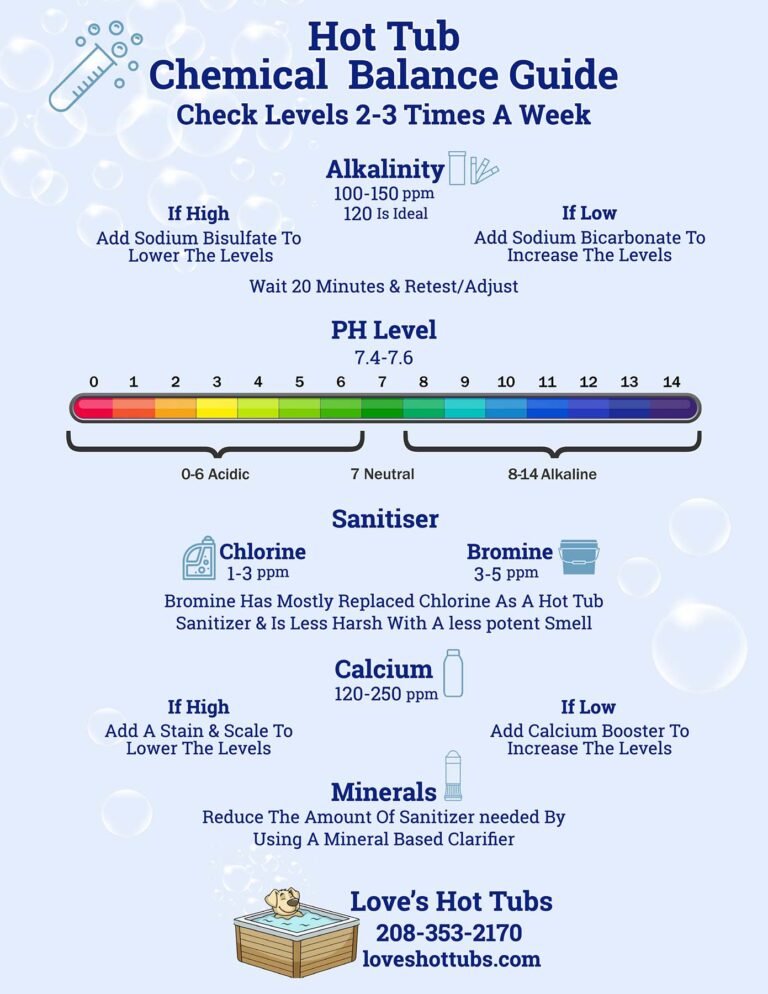
Test the water before adding shock. Most spa systems work best when pH is about 7.2 to 7.8. The Centers for Disease Control and Prevention recommends a pH range of 7.2 to 7.8 for hot tubs and spas.
Total alkalinity helps the water resist sudden pH changes. Your product label or spa manual may provide a target range. Adjust alkalinity first when it is far outside the recommended range, then adjust pH.
Do not add shock to water with a very high or very low pH and assume the problem will fix itself. Poor balance can reduce sanitizer performance and may increase the risk of skin or eye irritation.
6. Measure the shock dose carefully
Use the amount listed for your spa’s water volume. Different products have different strengths, so one scoop of one brand may not equal one scoop of another.
A simple volume calculation can help:
Required product = label dose per gallon × hot tub water volume in gallons
For example, if a label says to use a certain amount per 500 gallons, use the label’s chart for a tub that holds 350 gallons. Do not scale from another product unless the label specifically allows it.
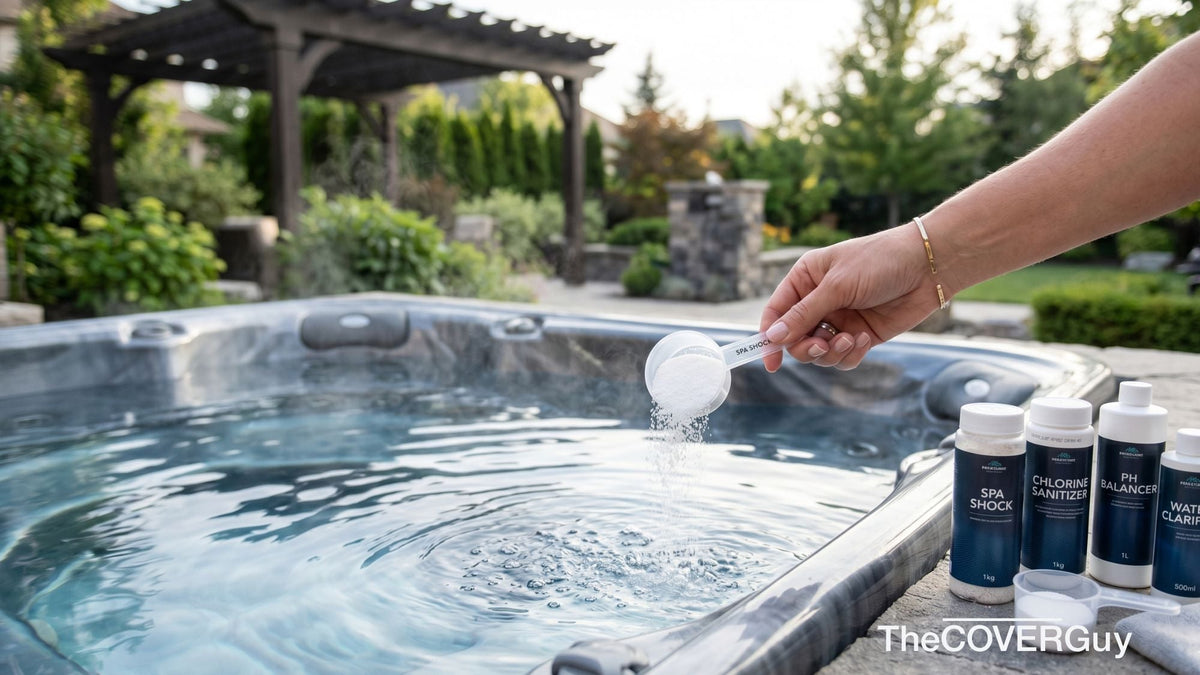
7. Add the shock as directed
For some products, you add the chemical slowly to the water near the return jets while the pump runs. Other products require pre-dissolving in a clean plastic bucket.
If the label says to dissolve the product:
- Fill the bucket with water.
- Add the chemical to the water, not water to the chemical.
- Stir with a clean plastic tool.
- Pour the mixture into the spa as directed.
Never mix chlorine shock with non-chlorine shock, bromine, acid, pH reducer, algaecide, or any other chemical in the same container. A dangerous reaction can produce heat, fire, or toxic gas.
8. Keep the cover open during circulation
Leave the cover open while the shock mixes, unless the product label or spa manual gives different instructions. Good ventilation helps chemical vapors escape.
Keep the jets or circulation system running for the time stated on the label. Do not lean over the water while adding or inspecting the chemical. If the odor is strong or your eyes or throat begin to burn, move away and get fresh air.
9. Wait and retest the water
Do not use the hot tub immediately after shocking it. Wait for the label’s required time, then test the water again.
Before use, confirm that:
- The pH is in the recommended range.
- The sanitizer is within the safe range for your system.
- The water is clear.
- There is no strong chemical odor or visible residue.
- The product’s required wait time has passed.
The CDC lists at least 3 parts per million (ppm) free chlorine or 4 to 8 ppm bromine for hot tubs. However, your product label and spa manufacturer may specify different operating targets. Use the stricter applicable instruction.
How Much Shock Should You Use?
The correct amount depends on the chemical, water volume, contamination level, and label directions. There is no universal scoop size for all hot tubs.
| Situation | What to do |
|---|---|
| First fill | Use the product’s start-up or initial-dose directions |
| Routine maintenance | Use the weekly or post-use dose on the label |
| Cloudy water | Test first, clean the filter, then follow the recovery dose |
| Strong odor | Test sanitizer and pH; do not add random chemicals |
| Heavy bather load | Follow the label’s bather-load or after-use dose |
| Unknown water volume | Find the manufacturer’s stated capacity before dosing |
A larger dose is not automatically better. Too much chlorine or bromine can damage covers, pillows, swimsuits, seals, and some spa surfaces. It can also cause skin and eye irritation.
Do not estimate a dose from another spa owner’s instructions. Their product may have a different active ingredient or concentration.

What Should You Do After Shocking?
After the shock has circulated and the water passes the test, return to normal water care. Shock is one part of a hot tub maintenance routine.
Maintain the sanitizer
Use the sanitizer system recommended for your spa. Depending on the system, this may include chlorine granules, bromine tablets, a saltwater generator, or another approved method.
Test the water regularly. The CDC recommends checking hot tub disinfectant and pH levels at least twice each day when the spa is in use. More frequent testing may be needed after heavy use, very hot weather, or a water-quality problem.
Clean the filter
A dirty filter can limit circulation and make clear water harder to maintain. Rinse the filter with a hose as directed by the manufacturer. Use a suitable filter cleaner when needed.
Do not run a disposable or damaged filter if the manual says it must be replaced. A filter should not be used as a substitute for proper chemical balance.
Keep the cover clean and vented
A clean, well-fitting cover helps reduce debris and heat loss. Do not place the cover over water with a strong chemical smell unless the product label specifically permits it.
A cover can trap vapors and may suffer chemical damage. Follow the cover and spa manufacturer’s care instructions.
Establish a routine
A basic routine may include:
- Testing pH and sanitizer before use
- Testing after heavy use
- Adding sanitizer as needed
- Shocking according to the product label
- Rinsing the filter
- Wiping the waterline
- Draining and refilling on the manufacturer’s schedule
Hot tub water should not be judged by smell alone. A strong “chlorine” odor can result from chloramines and poor water quality, not from clean water.
Signs the First Shock Worked
A successful shock treatment usually leaves the water clear and free of visible debris. The sanitizer reading should respond to the treatment, and the pH should remain within the recommended range.
These signs support normal operation:
- Clear water
- No foam that quickly returns
- No slimy surface or waterline
- No unusual color
- A sanitizer reading within the product’s target range
- No harsh odor when the cover is opened
Clear water alone does not prove that the spa is safe. Test results and the required wait time matter more than appearance.
What to Do If the Water Is Still Cloudy
If the water remains cloudy after shocking, do not keep adding shock without testing. Repeated doses can create an unsafe sanitizer level while leaving the real problem unresolved.
Use this order:
- Keep people out of the spa.
- Test pH, alkalinity, chlorine or bromine, and—if relevant—calcium hardness.
- Confirm that the test kit is not expired or contaminated.
- Rinse or clean the filter.
- Check that the pump and circulation system work properly.
- Inspect for low water flow, blocked filters, or closed valves.
- Follow the chemical manufacturer’s recovery instructions.
- Drain and refill if the water remains poor or the plumbing may be contaminated.
Cloudiness can come from high pH, poor filtration, excess body oils, low sanitizer, high calcium hardness, or a plumbing issue. A failed shock is not always a chemical-dose problem.
If the water has a green, brown, or black color, a persistent foul odor, visible growth, or repeated foam, stop using the spa. Follow the manufacturer’s decontamination instructions or contact a qualified spa service professional.

Common First-Time Shock Mistakes
Adding shock without testing
Testing gives you a starting point. Without it, you may not know whether the problem is low sanitizer, poor pH, high alkalinity, or something else.
Using pool shock without checking the label
Some pool products may be unsuitable for hot tubs. They may contain additives or have dosing instructions that do not match spa volumes. Use only a product labeled for your intended application.
Mixing chemicals
Never mix chemicals in a bucket, scoop, storage area, or spa. Add one product at a time and follow the label’s instructions for spacing between treatments.
Closing the cover right away
The cover can trap fumes and may be damaged by chemical vapors. Keep it open for the period required by the label and manual.
Entering because the water looks clear
Water can look clean while sanitizer levels remain too high or too low. Always test before use.
Using a scented household cleaner
Household soaps and cleaners can create foam, leave residues, or upset water balance. Use products approved for hot tub surfaces and water systems.
Ignoring the plumbing
A first fill can carry residue from the plumbing lines. If your spa manufacturer recommends a plumbing purge before draining and refilling, follow that procedure. A shock alone may not remove all buildup.
Hot Tub Shock Safety Rules
Chemical safety matters more than speed. Read the full label before opening the container.
- Wear gloves and eye protection.
- Avoid breathing dust or fumes.
- Add chemicals in a well-ventilated area.
- Keep chemicals away from children and pets.
- Store each product in its original container.
- Keep acids separate from chlorine products.
- Never combine different shock products.
- Do not use the spa while adding chemicals.
- Do not enter until testing confirms safe levels.
- Call 911 in the United States for trouble breathing, collapse, severe burns, or a serious chemical exposure.
- For exposure advice, contact Poison Control at 1-800-222-1222 in the United States.
If chemicals spill, follow the product’s spill instructions. Do not sweep wet chemicals into a drain or mix the spill with another product.
When Should You Call a Professional?
Contact a qualified hot tub technician when the problem involves equipment, wiring, leaks, or repeated water-quality failure.
Professional help is appropriate when:
- The circulation pump does not run.
- The breaker trips repeatedly.
- Water reaches electrical parts.
- The spa has a persistent leak.
- The water remains contaminated after following the manual.
- You cannot identify the chemical in the spa.
- A chemical reaction produces heat, smoke, or a strong gas.
- The water problem returns soon after each refill.
Do not open electrical panels or repair spa wiring unless you are trained and authorized to do so. Water and electricity create a serious shock hazard.
Key Takeaways
- Test the water before shocking a hot tub.
- Adjust pH and alkalinity according to the spa and product instructions.
- Measure the shock for the actual water volume.
- Never mix hot tub chemicals.
- Run circulation and keep the cover open as directed.
- Wait, retest, and use the spa only when the readings are safe.
- Shock does not replace routine sanitizer, filtration, or water changes.
Frequently Asked Questions
Can I shock a hot tub right after filling it?
Yes, if the product label and spa manual recommend a start-up shock. Test and balance the water first when possible. Use the initial-fill dose, not a routine maintenance dose.
Should I use chlorine or non-chlorine shock?
Use the type that matches your sanitizer system and the product directions. Chlorine shock adds sanitizer. Non-chlorine shock mainly oxidizes contaminants and may not sanitize the water by itself.
How long should I wait before using the hot tub after shocking?
Wait for the product label’s required time and retest the water. Do not use the spa until the sanitizer and pH are within the recommended ranges. The exact wait may vary by product, dose, water temperature, and ventilation.
Can I shock a hot tub with the cover on?
Usually, the cover should remain open while the chemical circulates, unless the product label or spa manual says otherwise. An open cover helps release vapors and reduces the risk of cover damage.
Why does my hot tub smell strongly after shocking?
A strong odor can come from chemical vapors or contaminants reacting with the sanitizer. Keep the cover open, ventilate the area, and stay out until the water passes a test. If the odor persists, clean the filter and investigate water balance rather than adding more chemicals at random.
Conclusion
The safest way to shock a hot tub for the first time is to follow a measured process: confirm the water volume, test the water, balance pH, use the labeled dose, circulate with the cover open, and retest before entering. The right chemical and dose depend on the sanitizer system and product strength.
For reliable results, treat shocking as part of regular hot tub care—not as a cure for every water problem. If the water stays cloudy, smells harsh, or produces repeated problems, stop using the spa and check the filter, circulation system, plumbing, and water balance.
Sources: CDC Healthy Swimming—Hot Tubs and Spas, CDC Model Aquatic Health Code, and the instructions on the specific EPA-registered product label.