Hot Tub Chemical Dosage Chart: Easy Water Care Guide
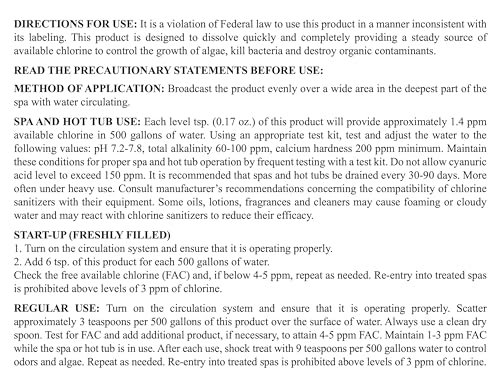
For most hot tubs in the United States, test the water before adding chemicals. Keep free chlorine at 3–5 parts per million (ppm) or bromine at 4–6 ppm, and keep pH between 7.2 and 7.8. The exact dose depends on your spa’s water volume, the chemical strength, and the product label.
This hot tub chemical dosage chart uses U.S. gallons and gives practical starting points. It does not replace the label on your product. Chemical formulas and strengths vary, so always retest the water before anyone uses the spa.

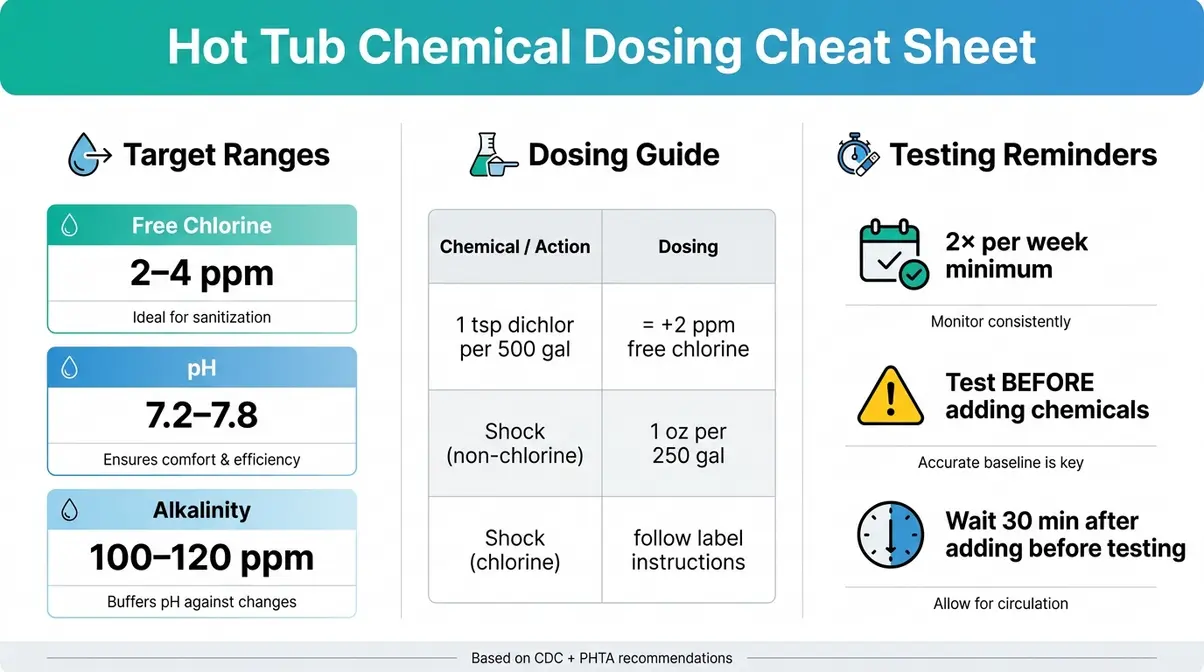
Hot Tub Chemical Dosage Chart at a Glance
Use the chart below as a starting reference for a typical residential hot tub. The amounts show how much product may raise sanitizer levels by about 1 ppm in 100 U.S. gallons.
| Chemical | Typical product strength | Approximate amount per 1 ppm in 100 gallons | Main use |
|---|---|---|---|
| Sodium dichlor | About 55%–62% available chlorine | 0.6–0.7 grams | Routine chlorine treatment |
| Calcium hypochlorite | About cal-hypo 65% available chlorine | About 0.6 grams | Chlorine treatment or shock |
| Liquid chlorine | 10% sodium hypochlorite | About 35–40 milliliters | Fast chlorine increase |
| Liquid chlorine | 12.5% sodium hypochlorite | About 27–31 milliliters | Fast chlorine increase |
| Sodium bromide | Varies by product | Use the label only | Creates a bromide reserve |
| Bromine tablets | Varies by product | Use a floater and test often | Maintains bromine |
| Non-chlorine shock | Varies by product | Use the label only | Oxidizes contaminants |
These figures are estimates. A product labeled “chlorinating concentrate” may contain a different percentage of available chlorine than another product with a similar name.
A simple rule for changing the dose
If your spa holds more or less than 100 gallons, multiply the amount by:
Your spa volume ÷ 100
For example, a 400-gallon spa needs about four times the 100-gallon dose.
If you need to raise chlorine by 3 ppm in a 400-gallon spa:
0.65 grams × 4 × 3 = 7.8 grams of sodium dichlor
Use a scale when possible. Measuring spoons are less reliable because chemical density differs between products.
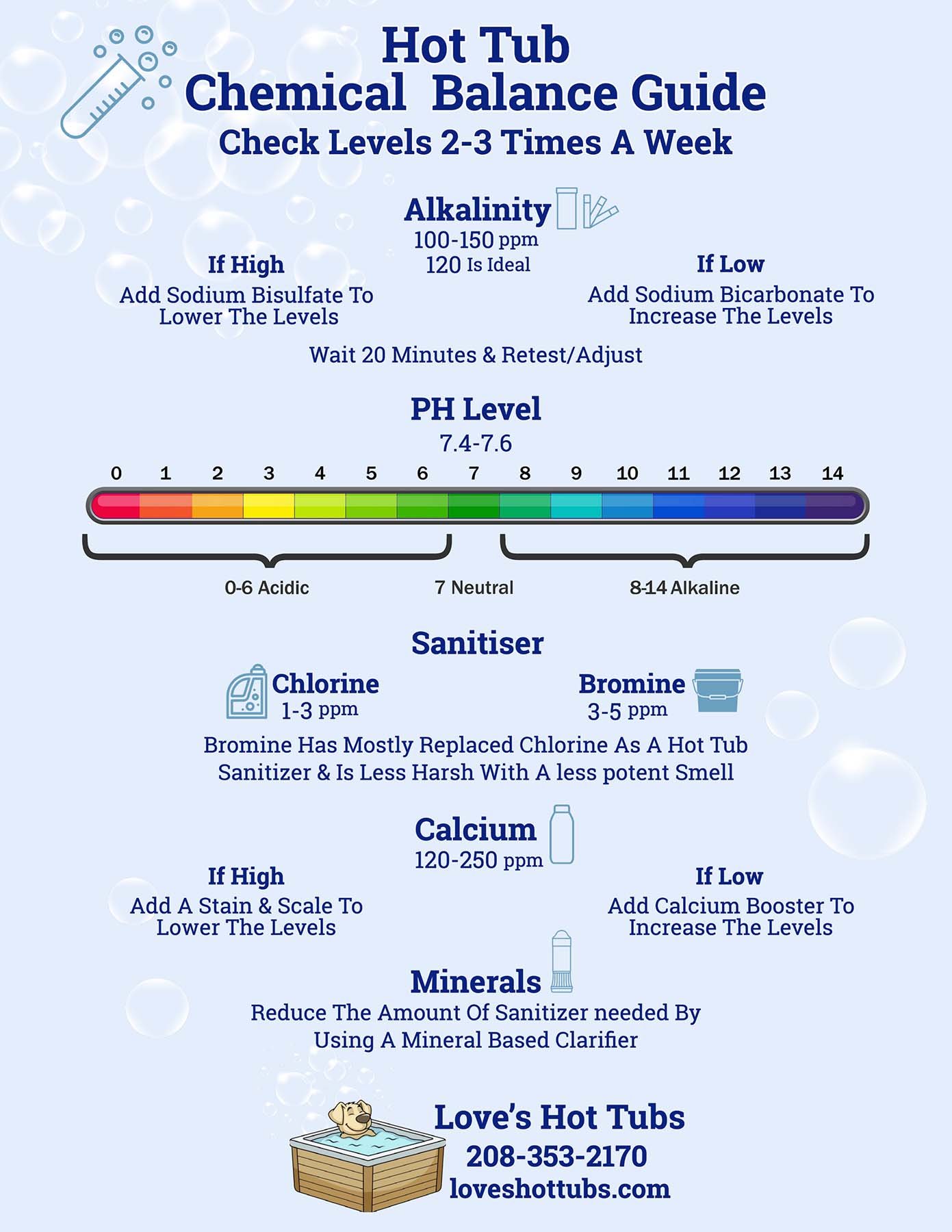
Common target ranges
| Water test | Common residential target |
|---|---|
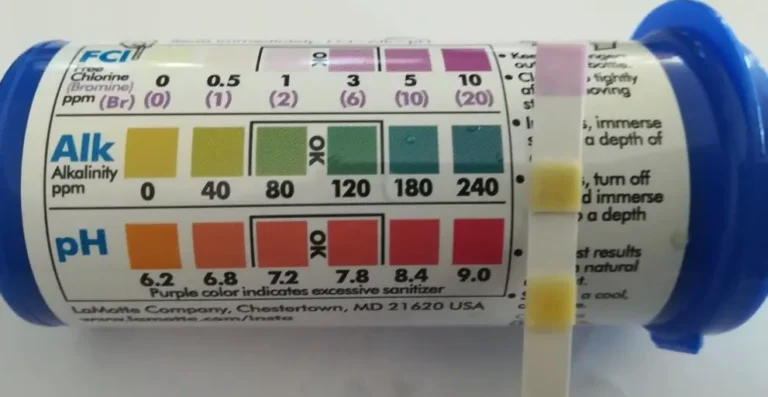
| Free chlorine | 3–5 ppm |
| Bromine | 4–6 ppm |
| pH | 7.2–7.8 |
| Total alkalinity | 80–120 ppm |
| Calcium hardness | Follow the spa maker’s range, often about 150–250 ppm |
The Centers for Disease Control and Prevention advises maintaining at least 3 ppm chlorine or 4 ppm bromine in hot tubs. Your local health department or spa manufacturer may use a different operating range.

How to Calculate the Correct Hot Tub Chemical Dose
The safest method is to calculate the dose from three details:
- The spa’s water volume.
- The current test reading.
- The product’s active chemical strength.
Step 1: Find the actual water volume
Use the spa manufacturer’s stated capacity if it is available. The listed capacity may be lower than the physical space inside the shell because it may account for normal water level and bathers.
If you need to estimate the volume of a rectangular spa, use:
Length × width × average water depth × 7.48 = gallons
For a round spa, use:
3.14 × radius × radius × average water depth × 7.48 = gallons
Measure in feet. These formulas give an estimate, not an exact fill volume.
Step 2: Test the water
Use a fresh test strip or, preferably, a liquid drop test kit. Test:
- Free chlorine or bromine
- pH
- Total alkalinity
- Calcium hardness when setting up or troubleshooting water
Do not add chemicals based only on how the water looks. Clear water can still have poor sanitizer levels.
Step 3: Decide how much to raise the sanitizer
Subtract the current reading from your target.
Example:
- Current free chlorine: 1 ppm
- Desired free chlorine: 4 ppm
- Required increase: 3 ppm
Do not automatically raise chlorine to a very high level unless the product label gives a shock dose and the spa is not in use.
Step 4: Apply the volume adjustment
Suppose the product dose is 0.65 grams per 100 gallons for a 1 ppm increase.
For a 350-gallon spa and a 3 ppm increase:
0.65 × 3.5 × 3 = 6.8 grams
This is an estimate. Retest after circulation.
Step 5: Add the chemical safely
Turn on the circulation pump. Add the chemical to the water according to the product label. Do not mix dry chemicals together, and do not pour water into a chemical container.
Leave the cover open for the time stated on the label, especially after using chlorine shock or other oxidizers. Keep people and pets out of the spa until the test result returns to the manufacturer’s safe range.
Step 6: Retest
Allow the water to circulate, then test again. Some products work within minutes, while others need more time. Follow the label’s contact and circulation instructions.

Chlorine Dosage Chart for Hot Tubs
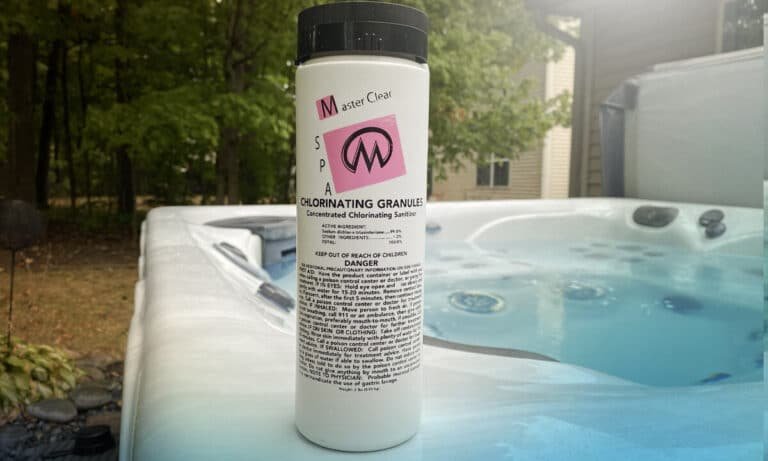
Chlorine is widely used in U.S. residential spas. Sodium dichlor is common because it dissolves quickly and is designed for spa water.
Sodium dichlor dosage
The following chart assumes a sodium dichlor product with about 55%–62% available chlorine.
| Spa volume | Approximate dose for a 1 ppm increase | Approximate dose for a 3 ppm increase |
|---|---|---|
| 100 gallons | 0.6–0.7 g | 1.8–2.1 g |
| 200 gallons | 1.2–1.4 g | 3.6–4.2 g |
| 300 gallons | 1.8–2.1 g | 5.4–6.3 g |
| 400 gallons | 2.4–2.8 g | 7.2–8.4 g |
| 500 gallons | 3.0–3.5 g | 9.0–10.5 g |
| 600 gallons | 3.6–4.2 g | 10.8–12.6 g |
A 400-gallon spa that tests at 1 ppm and needs to reach about 4 ppm would need an estimated 7.2–8.4 grams of this type of sodium dichlor.
Calcium hypochlorite dosage
Calcium hypochlorite, often called cal-hypo, is a strong chlorine source. It can raise calcium hardness over time, which may contribute to scale in hard water.
A product containing about 65% available chlorine may need roughly:
- 0.6 grams per 100 gallons for a 1 ppm increase
- 1.8 grams per 100 gallons for a 3 ppm increase
Use cal-hypo only if the label permits spa use. Some pool products are not suitable for hot tubs. Never mix cal-hypo with other chemicals, including products that contain acids or other chlorine types.
Liquid chlorine dosage
Liquid chlorine may be sold as sodium hypochlorite at different strengths. The dose changes with the percentage on the bottle.
Approximate amounts per 100 gallons for a 1 ppm increase:
| Liquid chlorine strength | Approximate amount |
|---|---|
| 10% sodium hypochlorite | 35–40 mL |
| 12.5% sodium hypochlorite | 27–31 mL |
Liquid chlorine loses strength with age, heat, and sunlight. Use the current label strength when calculating. Store it in a cool, ventilated place away from acids and other pool chemicals.
Chlorine shock dose
“Shock” means adding enough oxidizer to break down waste and help restore sanitizer performance. It does not always mean using a specific chemical.
There is no single safe shock dose for every spa. Product labels may give a dose based on:
- Spa volume
- Bather load
- Water condition
- Product strength
- Whether the product is chlorine or non-chlorine shock
Follow the label. Keep the cover open if required, run the jets as directed, and do not use the spa until the sanitizer reading is back in the safe operating range.

Bromine Dosage Chart for Hot Tubs
Bromine is popular in hot tubs because it remains effective in warm water and can be easier to maintain between uses. Bromine systems often use two separate products:
- A bromide salt to create a bromide reserve.
- An oxidizer to activate that reserve into active bromine.
Sodium bromide by itself is not a complete sanitizer. It needs an oxidizer, and the product label must state how to use it in a spa.
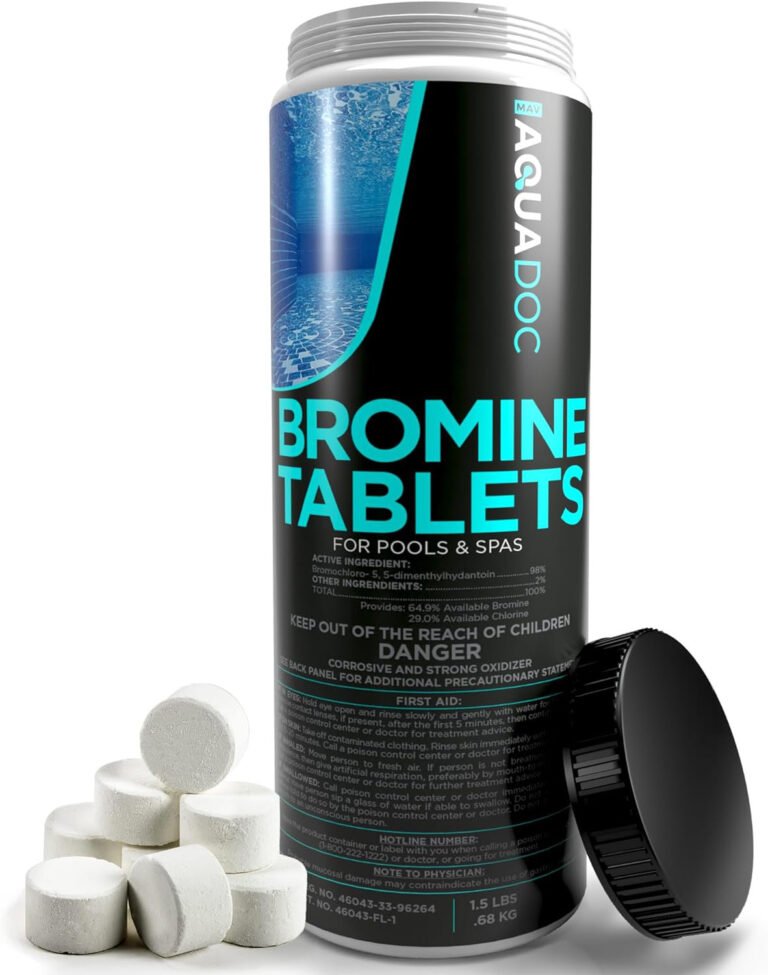
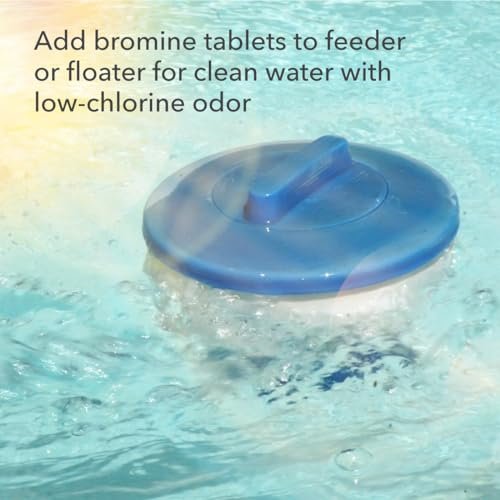
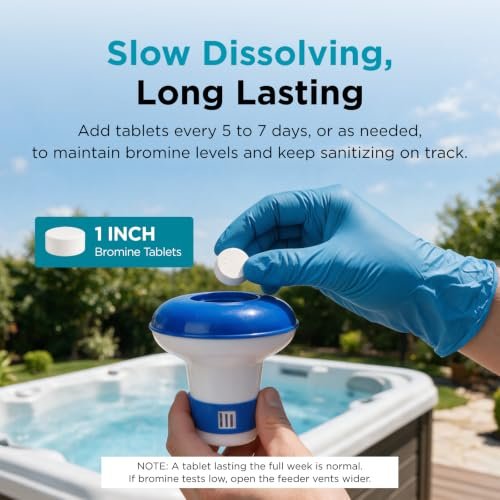
Bromine tablets
Bromine tablets are usually placed in a floating dispenser or an approved feeder. The correct setting depends on:
- Tablet size
- Tablet concentration
- Spa volume
- Water temperature
- Cover use
- Number of bathers
- Circulation time
Do not use a fixed “number of tablets per spa” rule. Start with the label setting, then test bromine and pH regularly. Adjust the feeder slowly because tablets dissolve over time.
A common residential target is 4–6 ppm bromine, but some public-health guidance permits or recommends a broader range. Follow the stricter requirement among the product label, spa maker, and local authority.
Sodium bromide startup
A bromide reserve is normally added when a spa is first filled or after a complete drain and refill. The label may state a dose in ounces per 100 gallons.
Do not estimate this dose from the chlorine chart. Sodium bromide is measured by the product’s own instructions, and the amount needed depends on the concentration.
After adding sodium bromide, use the required oxidizer. Then test the water. The bromine reading should rise before the spa is used.
Non-chlorine shock in a bromine spa
Non-chlorine shock, often based on potassium monopersulfate, can activate bromide and oxidize organic waste. It may help maintain a bromine system, but it does not always provide the same disinfecting action as a registered sanitizer.
Use the shock product according to its label. Continue testing bromine. Do not assume that clear water means the bromine level is adequate.

pH, Alkalinity, and Hot Tub Chemical Doses
Sanitizer cannot work as intended when pH is far outside its target range. Test and adjust alkalinity first, then pH, and then sanitizer.
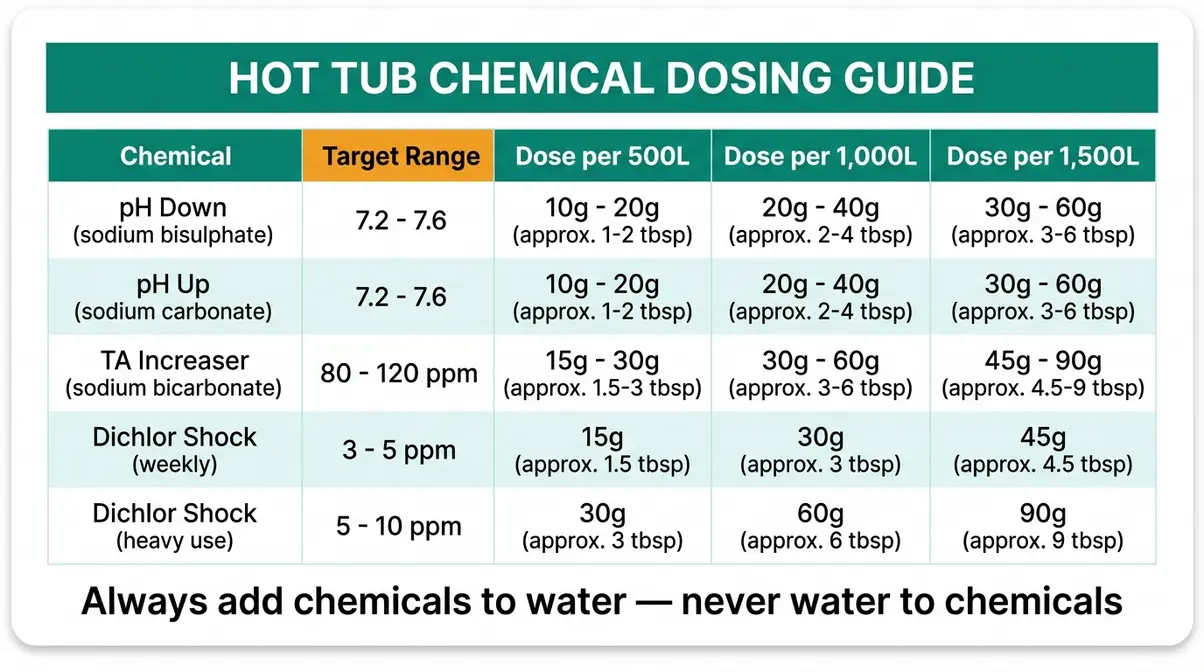
pH dosage guide
The amount of pH increaser or decreaser depends on the current pH, total alkalinity, water volume, and product strength. Use the label dose rather than a universal spoon measurement.
| Test result | Usual action |
|---|---|
| pH below 7.2 | Add pH increaser in small steps |
| pH 7.2–7.8 | No pH adjustment is usually needed |
| pH above 7.8 | Add pH decreaser in small steps |
| pH above 8.0 | Correct before relying on the sanitizer |
Add only part of the label dose when the reading is far from the target. Allow the water to circulate, then retest.
Total alkalinity
Total alkalinity helps resist rapid pH change. A common residential target is 80–120 ppm, but acrylic spa manufacturers may recommend a narrower range.
If alkalinity is low, add alkalinity increaser, usually sodium bicarbonate, according to the label. Add it in stages. A large single dose can push the pH too high.
If alkalinity is high, lowering it usually requires repeated small doses of acid with aeration. This process can take time. Do not try to correct high alkalinity with one large acid dose.
Calcium hardness
Calcium hardness is not a daily chemical. Test it when filling the spa and when dealing with scale or foaming.
- Low calcium hardness can contribute to corrosion or water that is aggressive toward surfaces.
- High calcium hardness can contribute to scale, especially when pH and temperature are high.
Use the hot tub manufacturer’s target. A calcium increaser may be needed in soft water. In hard water, dilution with fresh water may be more practical than repeated chemical treatment.
Hot Tub Dosage Examples
These examples show the calculation method. They are not a substitute for the product label.
Example 1: Raise chlorine by 2 ppm
A 300-gallon spa contains sodium dichlor with about 60% available chlorine. The test shows 2 ppm, and the target is 4 ppm.
Estimated sodium dichlor dose:
0.65 g × 3 × 2 = 3.9 g
Add about 3.9 grams, allow circulation, and retest. If the result is still low, make a smaller follow-up adjustment.
Example 2: Raise chlorine after heavy use
A 450-gallon spa has a free chlorine reading of 0 ppm after several bathers used it. The product label gives a shock dose of 1 ounce per 500 gallons.
Scale the label dose:
1 ounce × 450 ÷ 500 = 0.9 ounce
This calculation applies only if the label dose is intended for the same purpose and product strength. Keep the spa closed until testing confirms that the water is safe.
Example 3: Correct pH before adding sanitizer
A 400-gallon spa tests at:
- Free chlorine: 4 ppm
- pH: 8.1
- Alkalinity: 100 ppm
The chlorine level is within the target, but the pH is high. Adjust pH according to the acid product label, circulate, and retest. Do not add more chlorine simply because the pH is high.
Example 4: Convert a label dose
A label says to add 1 tablespoon per 250 gallons. Your spa holds 375 gallons.
1 tablespoon × 375 ÷ 250 = 1.5 tablespoons
This is only a volume conversion. It does not confirm that the label dose is appropriate for your current test result.

How Often Should You Add Hot Tub Chemicals?
Test the water before each use and at least several times each week when the spa is active. Test more often after heavy use, a water change, extreme heat, or a sanitizer problem.
A basic routine looks like this:
Before use
Test sanitizer and pH. Do not use the spa if sanitizer is absent or pH is well outside the recommended range.
After use
Test again after heavy use. Add the amount needed to restore the target range. Use a shock product when the label or water condition calls for it.
Weekly
Check alkalinity and inspect the water for:
- Cloudiness
- Foam
- Strong chemical odor
- Slippery surfaces
- Sudden sanitizer loss
Clean the filter as directed. A dirty filter can make water treatment less effective.
Monthly or as needed
Check calcium hardness and review the water balance. Clean the waterline and follow the spa maker’s drain-and-refill schedule.
Common Hot Tub Chemical Dosing Mistakes
Adding chemicals without testing
A test strip gives you a starting point. Adding the same amount every week can cause sanitizer or pH to drift.
Using pool products without checking the label
Some pool chemicals are not labeled for hot tubs. A spa has less water, higher heat, and often more aeration. Read the directions for the exact product.
Mixing chemicals
Never mix chlorine, bromine, acids, shock, or other products in a container. Add one product to the water at a time and follow the required waiting period.
Using the spa right after shocking
Shock products can produce high sanitizer levels or irritating vapors. Wait until the label permits use and the test result is in range.
Measuring by a heaped spoon
A heaped spoon can hold much more chemical than a level spoon. A small digital scale is more consistent for dry products.
Adding chemicals with the cover closed
Some products require ventilation. Follow the label. Opening the cover can help gases escape, but keep the area secure from children and pets.
Chasing pH without checking alkalinity
If pH rises again and again, total alkalinity may be too high. Repeatedly adding pH decreaser without addressing alkalinity can waste chemicals and create unstable water.
Relying on color or smell
A strong “chlorine smell” may indicate combined chlorine and contaminants, not clean water. Test the water instead of judging sanitizer level by odor.

What to Do When the Dose Does Not Work
If the sanitizer remains low after dosing, check the problem in this order:
- Confirm the test. Use a fresh kit or a second test method.
- Check the product. Confirm the chemical type, strength, and expiration or storage condition.
- Check the water volume. An incorrect gallon estimate causes repeated dosing errors.
- Inspect the filter. A dirty filter can hold contaminants and restrict circulation.
- Check the cover and circulation. Poor circulation or a faulty cover can affect sanitizer loss.
- Look for high bather demand. Body oils, cosmetics, sweat, and debris consume sanitizer.
- Consider a drain and refill. Old water with high dissolved solids or persistent contamination may be difficult to balance.
If the water is cloudy, has a strong odor, causes skin or eye irritation, or cannot hold sanitizer after repeated treatment, stop using the spa. Drain and clean it according to the manufacturer’s instructions, or ask a qualified spa technician for help.

Hot Tub Chemical Safety in the United States
Read the entire product label before use. In the United States, many pool and spa chemicals are regulated as pesticides or disinfectants by the Environmental Protection Agency. The EPA registration label states approved uses, doses, storage rules, and safety instructions.
Follow these basic rules:
- Wear the protective equipment listed on the label.
- Keep chemicals in their original containers.
- Store products in a cool, dry, ventilated place.
- Keep acids away from chlorine products.
- Keep chemicals away from children, pets, heat, and ignition sources.
- Never add water to a dry chemical.
- Never combine different products.
- Rinse chemical measuring tools after use, if the label permits.
- Do not pour unused chemicals into drains or onto soil.
- Contact poison control or emergency services after an exposure.
For an exposure in the United States, call Poison Control at 1-800-222-1222. For a serious reaction, breathing problem, or suspected chemical mixing incident, call 911.

Frequently Asked Questions
How much chlorine should I add to a 400-gallon hot tub?
The amount depends on the product strength and the desired increase. For sodium dichlor with about 55%–62% available chlorine, approximately 2.4–2.8 grams raises chlorine by 1 ppm in 400 gallons. To raise it by 3 ppm, use about 7.2–8.4 grams, then retest.
How much bromine should a hot tub have?
A common residential target is 4–6 ppm bromine. Some public-health guidance uses a broader range. Follow the spa maker’s instructions, the product label, and local rules. Bromine tablets should be adjusted through testing, not by a fixed tablet count alone.
Can I use chlorine and bromine together?
Do not switch between chlorine and bromine products without understanding the system. A bromide reserve can convert added oxidizer into bromine, so adding chlorine to a bromine spa may affect the water chemistry. Follow one complete system and its label instructions.
How long should I wait after adding hot tub chemicals?
The wait time depends on the chemical. Keep the spa closed during treatment if the label requires it. Use the spa only when the sanitizer and pH readings are within the recommended range and the label permits reentry.
Why does my hot tub lose chlorine so fast?
Common causes include heavy use, high water temperature, poor circulation, sunlight exposure, dirty filters, low stabilizer where applicable, and contaminants from lotions or body oils. Confirm the test result, clean the filter, check circulation, and consider a drain and refill if the problem continues.
Conclusion
A hot tub chemical dosage chart is a starting tool, not a universal prescription. The reliable process is to measure the water volume, test the current levels, calculate the needed change, follow the product label, circulate the water, and test again.
For most U.S. residential spas, aim for 3–5 ppm free chlorine or 4–6 ppm bromine, with pH at 7.2–7.8. Add chemicals one at a time, never mix products, and keep everyone out of the spa until the water is balanced and safe.