High pH And Low Alkalinity In Hot Tub: Easy Fixes
High pH and low alkalinity in a hot tub can make the water hard to balance. The pH may rise above the safe comfort range, while total alkalinity stays too low to keep the pH steady. This often leads to scale, cloudy water, skin and eye irritation, and repeated swings after each chemical adjustment.
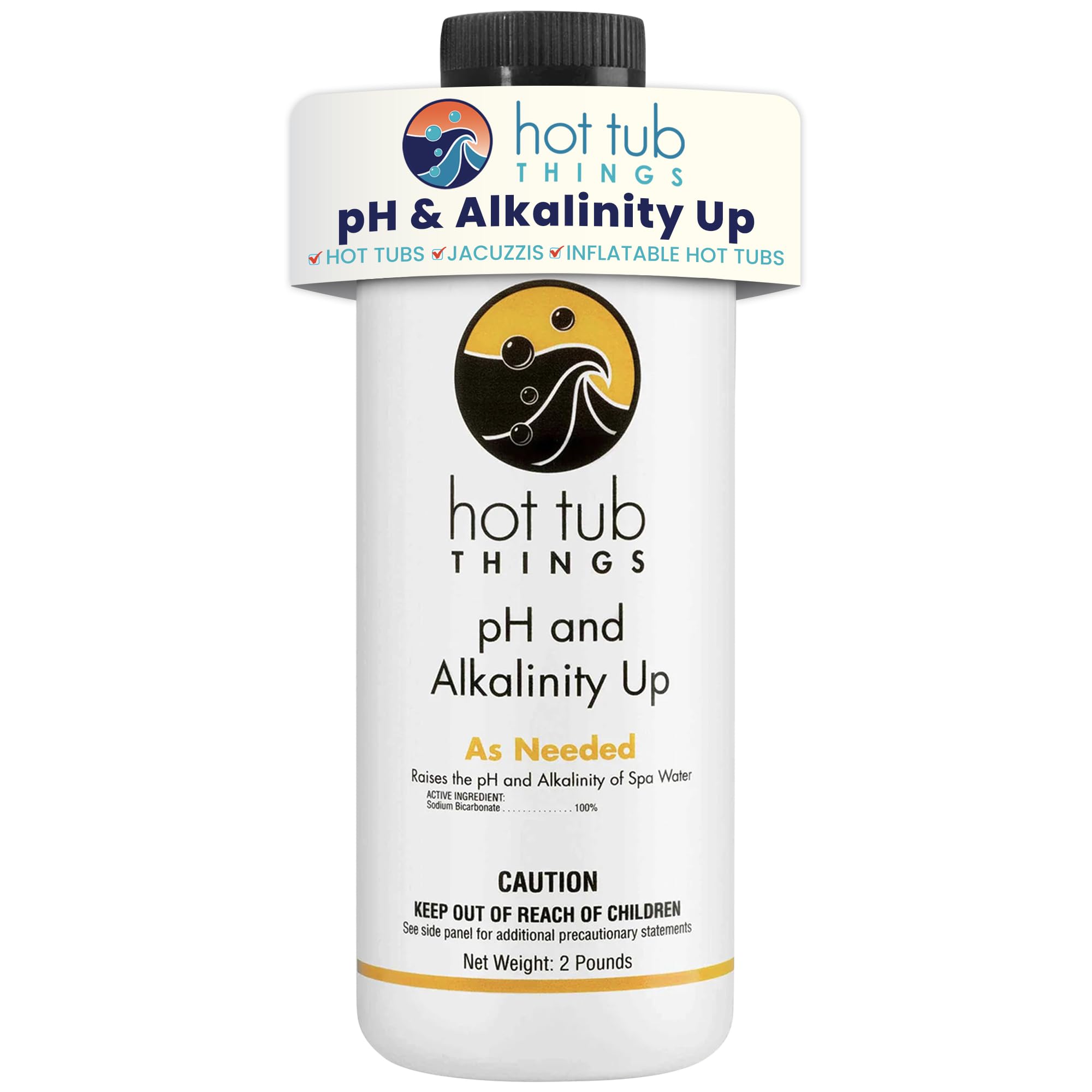
The best fix is to test with a reliable method, raise total alkalinity first, and then fine-tune pH. For most residential hot tubs in the United States, aim for a pH of 7.2 to 7.8 and total alkalinity of about 80 to 120 parts per million (ppm), unless the hot tub manufacturer gives a different range.
Quick Answer: What Should You Do First?
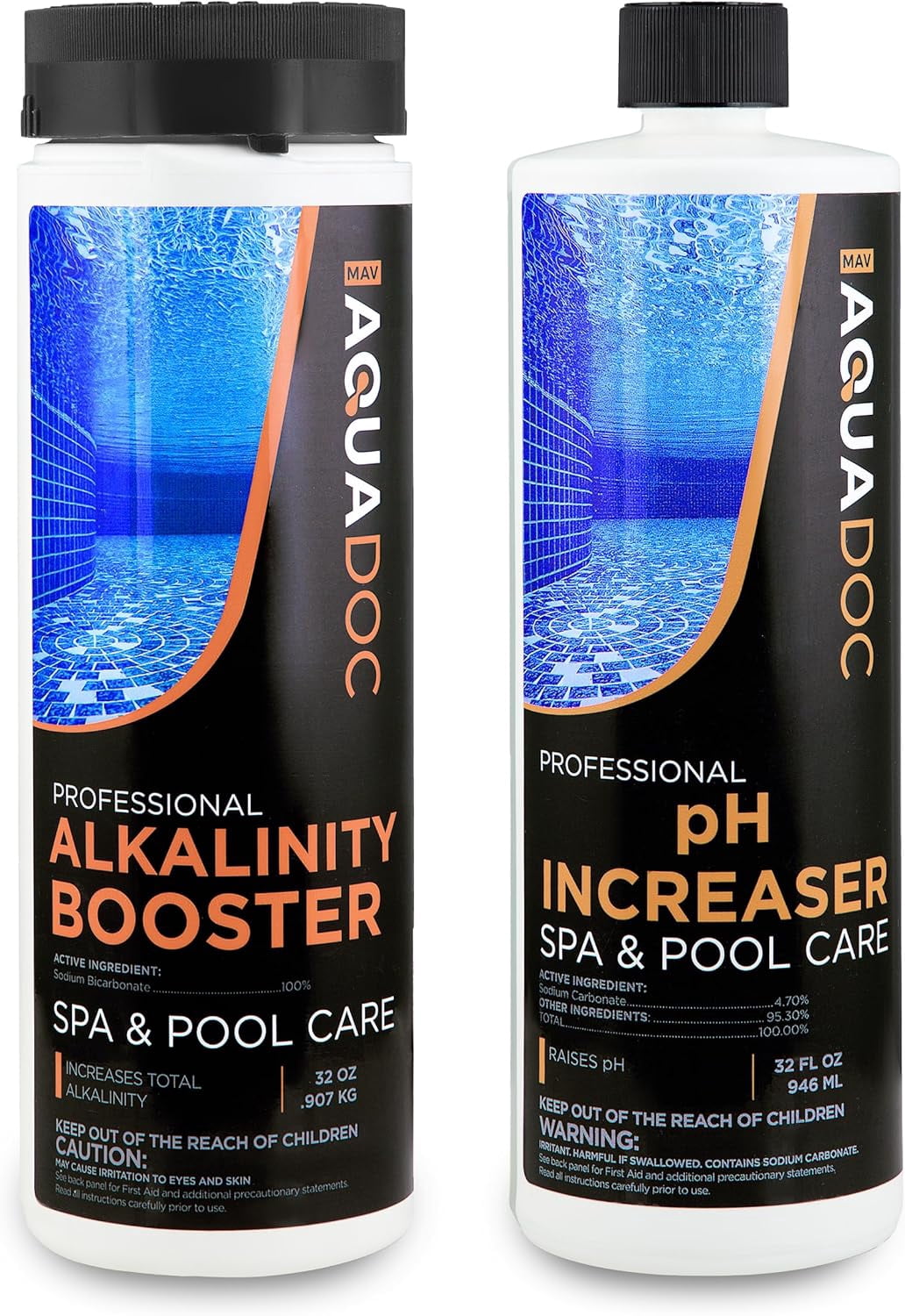
If your hot tub has high pH and low alkalinity, raise the total alkalinity before making a major pH adjustment. Use sodium bicarbonate, commonly sold as alkalinity increaser or baking soda, according to the product label and your hot tub volume.
Then:
- Turn on circulation and leave the cover open.
- Add the alkalinity increaser in small doses.
- Wait at least 30 minutes, or follow the product label.
- Retest total alkalinity and pH.
- Once alkalinity is in range, lower high pH with a pH decreaser if needed.
- Retest again before using the hot tub.
Do not add acid and alkalinity increaser at the same time. Never mix hot tub chemicals together or pour one chemical directly onto another.
Understanding pH and Total Alkalinity
pH measures how acidic or basic the water is. Total alkalinity measures the water’s ability to resist rapid pH change. They work together, but they are not the same test.
What high pH means
A pH above 7.8 is considered high for most hot tubs. High pH can:
- Cause cloudy water
- Reduce the effectiveness of chlorine or bromine
- Promote scale on heaters and jets
- Irritate the eyes and skin
- Leave water feeling dull or dry
- Make filters collect more debris
The pH scale is logarithmic. A small numerical change can represent a meaningful change in acidity. This is why testing and gradual adjustment matter.
What low alkalinity means
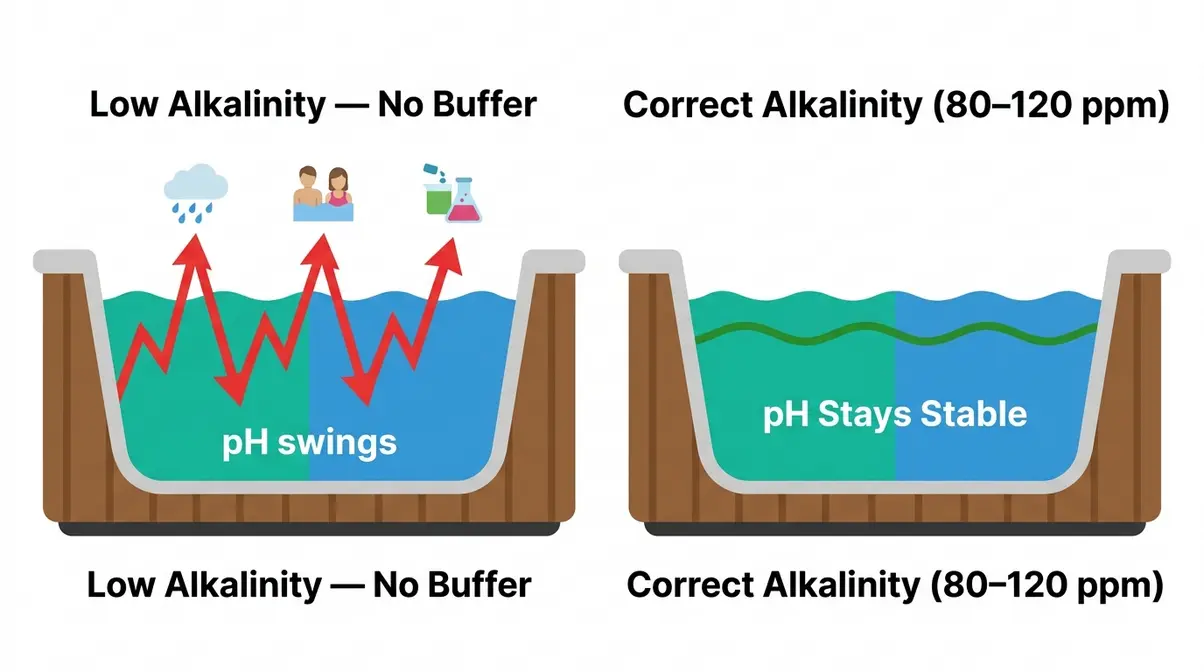
Total alkalinity below about 80 ppm is low for many residential hot tubs. Low alkalinity gives the water too little buffering capacity. As a result, pH can move quickly after:
- Adding sanitizer
- Using the hot tub
- Running air jets
- Adding fresh water
- Using acidic chemicals
- Allowing carbon dioxide to leave the water
Low alkalinity often causes pH to bounce up and down. However, it does not always mean that pH will be low at the same time. Water can have high pH and low alkalinity when aeration, chemical additions, or testing conditions push pH upward.
Why the two readings can conflict
Think of alkalinity as a shock absorber for pH. When the shock absorber is weak, the pH can move more easily. A hot tub with low alkalinity may show high pH after strong aeration, even though its overall buffering level is poor.
This is why lowering pH alone may not solve the problem. Acid can bring the pH down for a short time, but the water may drift again if alkalinity remains low.

Common Causes of High pH and Low Alkalinity
The most common cause is an incorrect adjustment sequence. Other causes include aeration, inaccurate testing, water replacement, and chemical imbalance.
Adding acid without restoring alkalinity
Repeated use of pH decreaser lowers both pH and alkalinity. If you keep adding acid to control rising pH, total alkalinity may eventually fall below the recommended range.
This creates a cycle:
- pH rises.
- Acid lowers pH.
- Alkalinity drops.
- The pH becomes less stable.
- Aeration causes pH to rise again.
- More acid is added.
The solution is to restore alkalinity, not just chase the pH reading.
Running air jets for long periods
Air jets add oxygen-rich air to the water and increase carbon dioxide loss. As carbon dioxide leaves, pH can rise. This effect is common in hot tubs because the water is warm and frequently aerated.
A spa with low alkalinity may show a faster pH rise during or after jet use. This does not necessarily mean the sanitizer is causing the problem.
Using a high-pH source water
Some municipal water supplies have naturally high pH or high mineral content. Fresh water added during a drain and refill can change the starting balance.
Water from a private well may also contain minerals that affect pH, alkalinity, hardness, or staining. If the same imbalance returns after every refill, test the source water before making repeated chemical changes.
Relying only on test strips
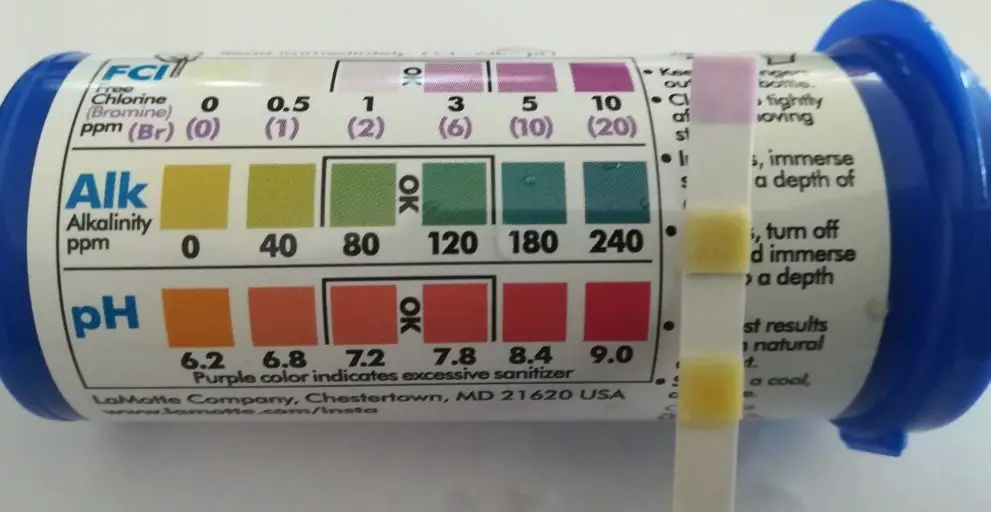
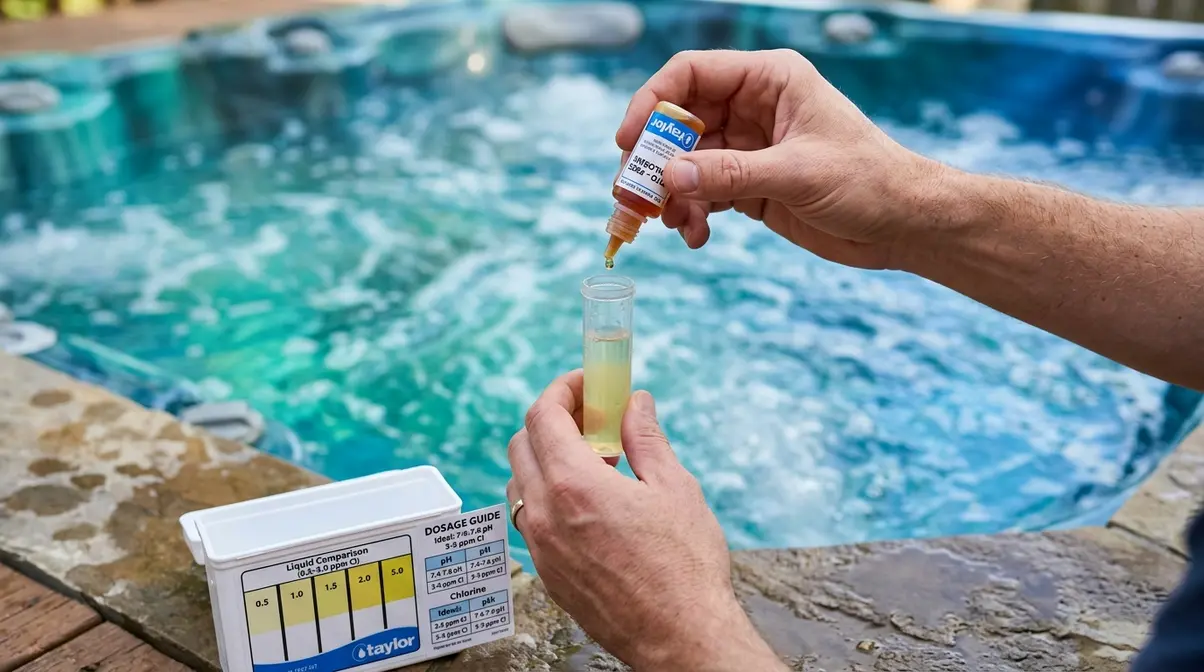
Test strips are useful for quick checks, but they can be difficult to read. Errors may occur when:
- The strip is old or damp
- The sample is taken near a chemical dispenser
- The strip is held in the water too long
- The color is read under poor light
- The sample is tested immediately after chemical use
- The sanitizer level is outside the strip’s useful range
A liquid drop test kit is often easier to interpret for pH and alkalinity. Follow the test kit instructions closely.
Using the wrong chemical or dose
Different products have different strengths. A product labeled for pH reduction may contain sodium bisulfate, while another may contain a different acid compound. Alkalinity increaser usually contains sodium bicarbonate, but the label dose still matters.
Do not estimate doses by sight. Confirm:
- Hot tub water volume
- Current test result
- Desired target
- Product concentration
- Manufacturer instructions
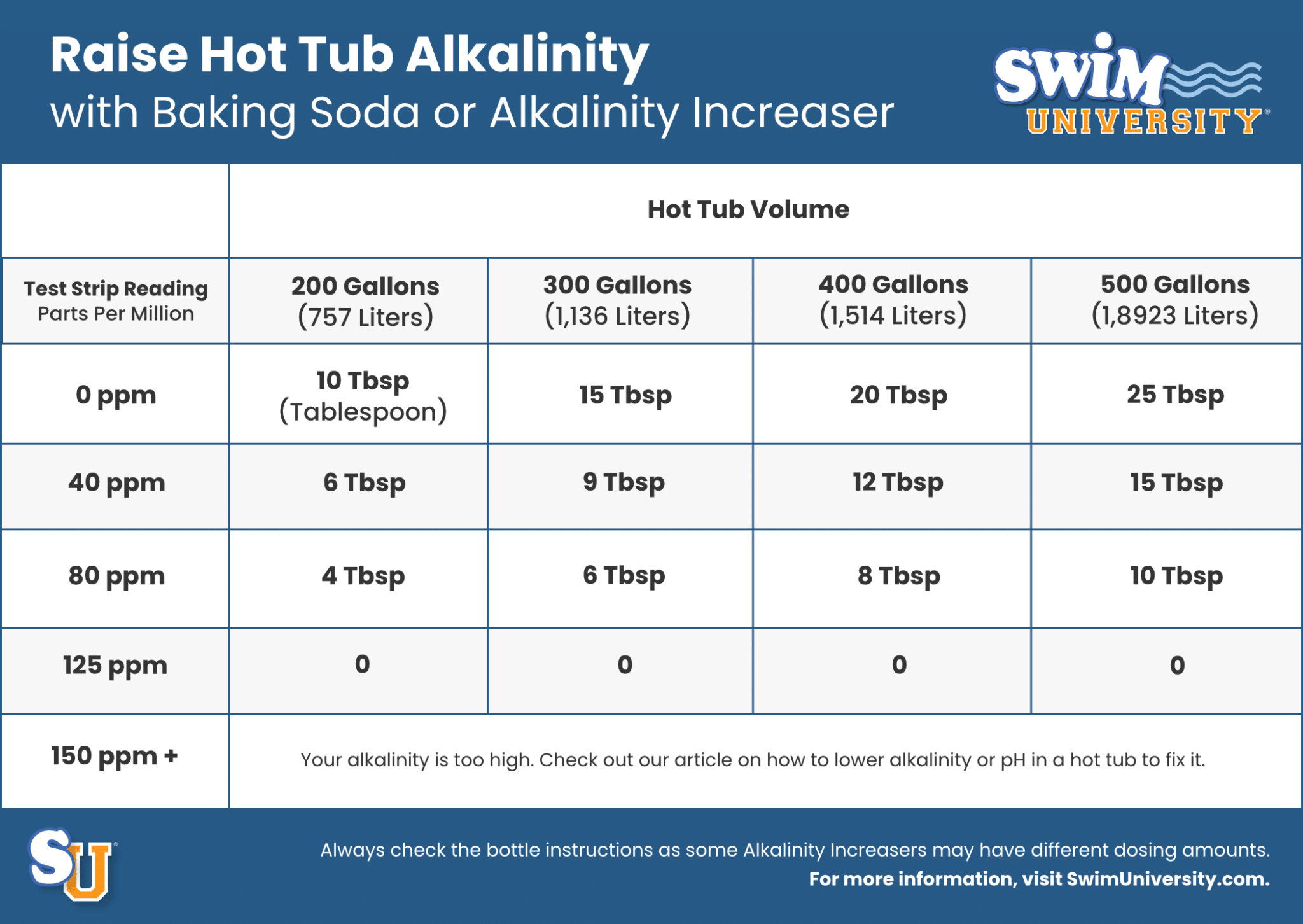
How to Fix High pH and Low Alkalinity Step by Step
Follow this sequence when the test results are reliable and the water is safe to handle.
1. Confirm the water volume
Find the actual water capacity in the owner’s manual or on the manufacturer’s specification label. Do not assume that a “400-gallon” hot tub holds exactly 400 gallons during normal use.
The water volume affects every chemical dose. A dose for a 500-gallon spa can be too strong for a 250-gallon spa.
2. Test the water again
Test the water before adding anything. Collect the sample from elbow depth and away from return jets, floating dispensers, or chemical feeders.
For a more reliable reading:
- Use a clean sample container if the test requires one.
- Check that the test kit has not expired.
- Follow the stated sample size.
- Compare the color in natural or neutral light.
- Test at least several minutes after the jets stop.
If the result seems unusual, confirm it with a second test method or a water test from a reputable pool and spa dealer.
3. Raise total alkalinity gradually
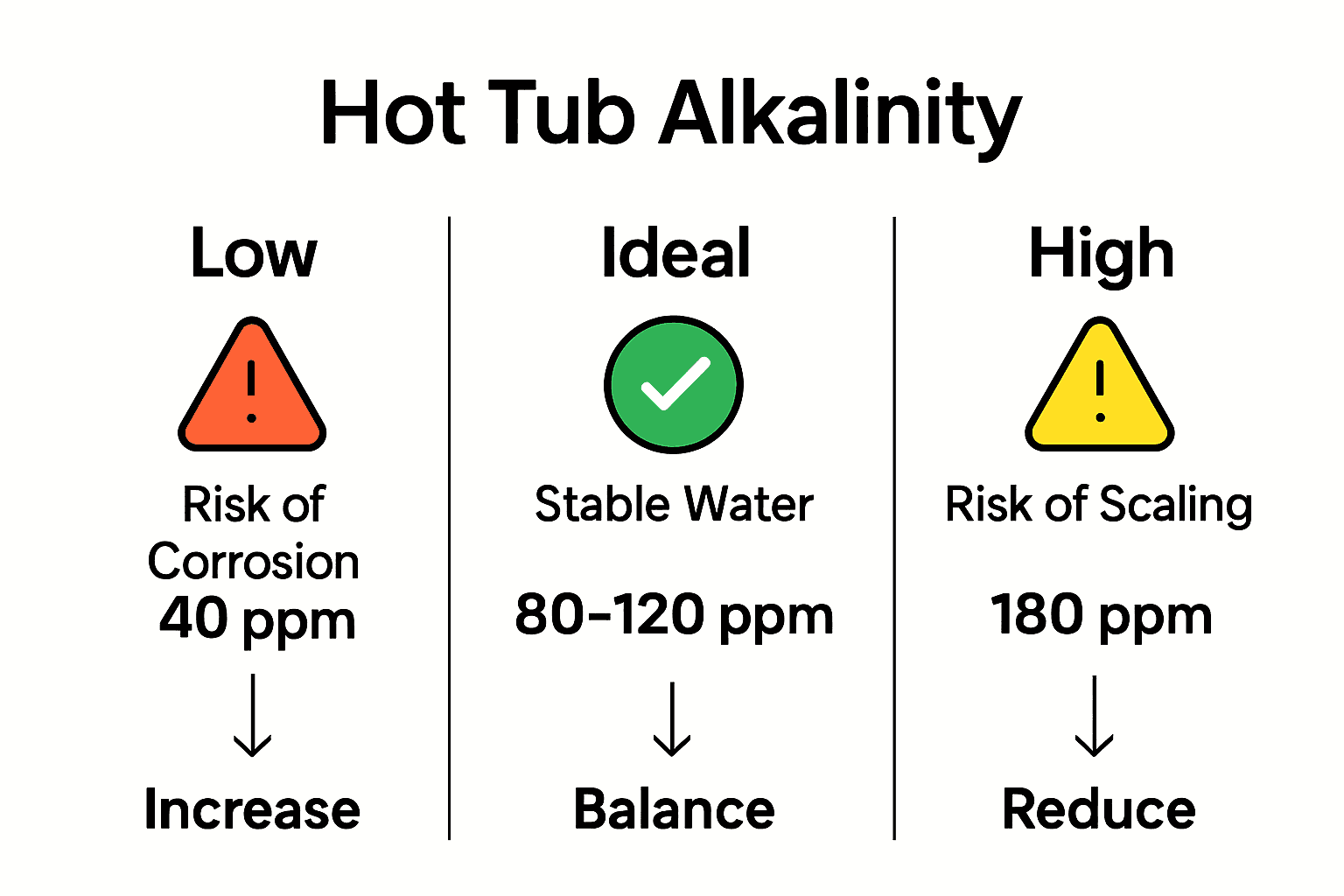
Use sodium bicarbonate-based alkalinity increaser. Add only the amount directed for your hot tub size and current alkalinity level.
A practical approach is to add part of the calculated dose, circulate the water, and retest. Small adjustments reduce the risk of overshooting the target.
Keep the cover open during chemical adjustment. Run the circulation pump according to the product instructions, and do not use the hot tub until the chemicals are fully dispersed and the water tests within the manufacturer’s safe range.
4. Retest alkalinity and pH
After circulation, test both values again. Adding sodium bicarbonate may raise pH slightly. That is not usually a problem if alkalinity was low and the pH is only modestly above the target.
If total alkalinity is still low, make another small adjustment. Avoid adding a large amount all at once unless the product instructions specifically call for it.
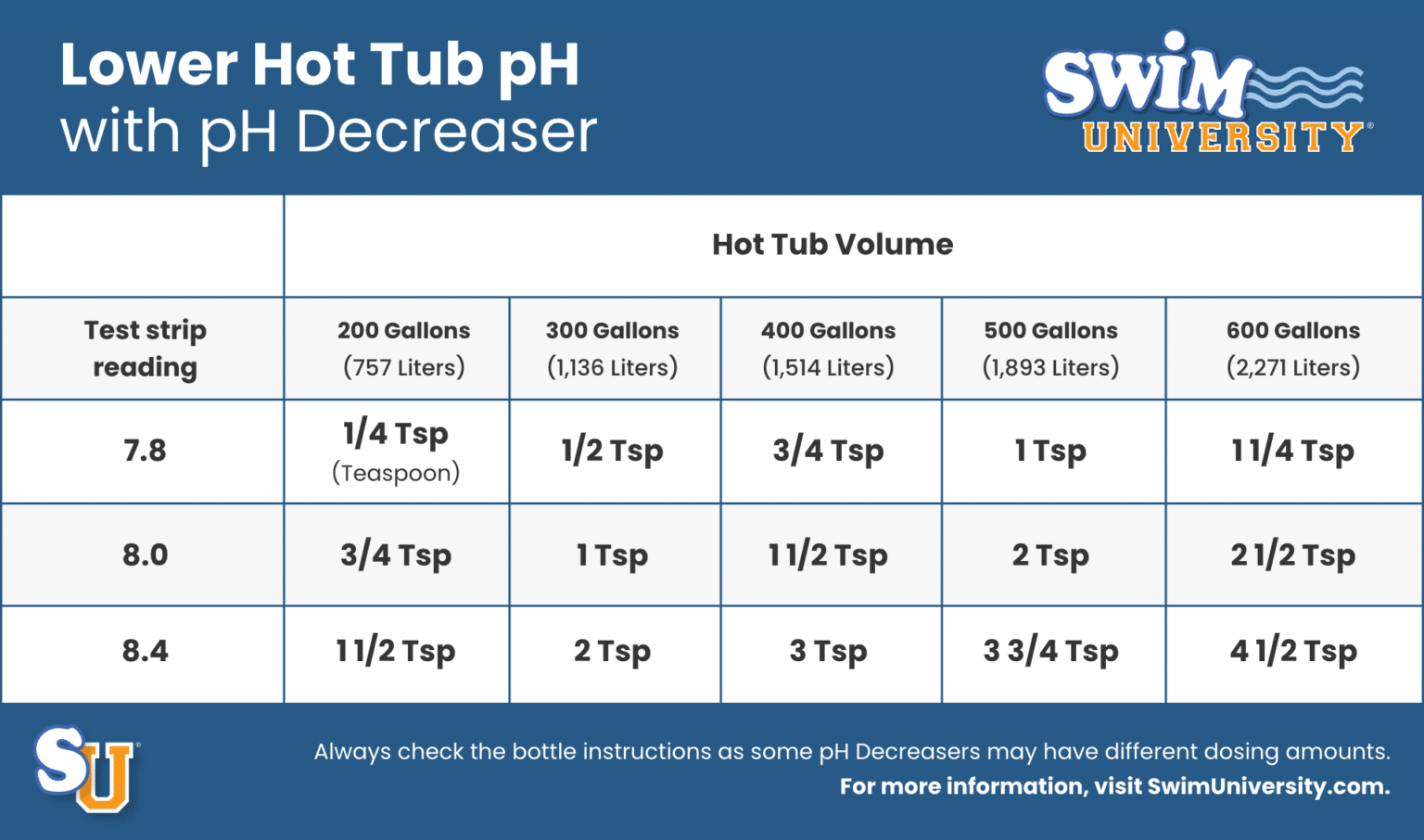
5. Lower the pH after alkalinity is corrected
If pH remains above the recommended range, use the labeled dose of pH decreaser. Common products contain sodium bisulfate. Some systems use diluted muriatic acid, but this requires extra care and should be used only when the hot tub manufacturer permits it.
Add acid carefully with the circulation system running. Keep the cover open, avoid splashing, and never mix acid with chlorine, bromine, or other chemicals.
6. Allow the water to circulate
Let the water circulate long enough for the chemical to disperse. The exact waiting time depends on the product label, water volume, circulation rate, and hot tub design.
Do not rely only on elapsed time. Retest the water before soaking. The water should have a normal appearance, a suitable pH, and a sanitizer level within the range recommended by the manufacturer and applicable public-health guidance.
7. Check sanitizer and water clarity
pH and alkalinity are only part of safe hot tub care. Also check:
- Free chlorine or bromine
- Water clarity
- Water odor
- Filter condition
- Calcium hardness
- Water temperature
- Signs of biofilm or contamination
If the water is cloudy, has a strong chemical odor, or causes irritation, do not use the hot tub until the cause is corrected.

Which Chemical Should You Use?
The correct product depends on which measurement needs to change.
| Problem | Common chemical | Main effect | Key caution |
|---|---|---|---|
| Low total alkalinity | Sodium bicarbonate | Raises alkalinity and may raise pH slightly | Add in measured amounts |
| High pH after alkalinity is corrected | Sodium bisulfate or another labeled pH reducer | Lowers pH and may lower alkalinity | Use only the labeled dose |
| Low pH and low alkalinity | Sodium bicarbonate first | Raises alkalinity with a modest pH effect | Do not use acid |
| High pH and high alkalinity | Acid-based pH reducer | Lowers pH and alkalinity | May require repeated small adjustments |
| Unclear test results | No chemical until confirmed | Prevents an incorrect adjustment | Use a better test method |
The key distinction is this: sodium bicarbonate is mainly for alkalinity, while acid is mainly for lowering pH. They are not interchangeable.
Avoid using washing soda to correct low alkalinity unless the product instructions and a knowledgeable professional specifically direct you to do so. Sodium carbonate can raise pH much more strongly than sodium bicarbonate and may worsen high-pH water.

What Target Range Should You Use?
For many residential hot tubs in the United States, these are practical starting ranges:
| Water factor | Common target |
|---|---|
| pH | 7.2–7.8 |
| Total alkalinity | 80–120 ppm |
| Free chlorine | Follow the hot tub and sanitizer label |
| Bromine | Follow the hot tub and sanitizer label |
| Calcium hardness | Follow the manufacturer’s specification |
The Centers for Disease Control and Prevention recommends a hot tub pH range of 7.2 to 7.8 in its recreational water guidance. Sanitizer targets can vary by chemical type, product label, local rules, and hot tub design.
Some manufacturers recommend a narrower alkalinity range, such as 80 to 100 ppm. Use the owner’s manual when its target differs from a general industry range.
Do not treat one test result as a complete water-quality diagnosis. High calcium hardness, low sanitizer, metals, high water temperature, and poor filtration can create similar symptoms.

Why pH May Rise Again After You Fix It
A rising pH after correction is often caused by aeration. Hot tub jets and air controls move carbon dioxide out of the water, which can increase pH over time.
Other possible causes include:
- Low or borderline alkalinity
- Fresh water with high carbonate content
- Excessive use of air jets
- Use of certain sanitizer systems
- High bather load
- Improper chemical dosing
- A test method that gives inconsistent readings
You can reduce pH drift by keeping alkalinity in the manufacturer’s range, limiting unnecessary air injection, and testing on a regular schedule. Do not lower alkalinity too far just to slow pH rise. Very low alkalinity makes the water less stable and can increase corrosion risk.

Signs the Water Is Balanced
Balanced water should have:
- A pH within the recommended range
- Total alkalinity within the recommended range
- A sanitizer level that matches the product label
- Clear water
- No sharp chemical smell
- No unusual foam
- No scale on the shell, heater, or jets
- No skin or eye discomfort during normal use
A mild chlorine or bromine smell does not prove that the water is safe. A strong odor can occur when sanitizer reacts with contaminants. Test the water rather than judging it by smell.
If the water remains cloudy or irritating after chemical adjustment, inspect the filter and confirm sanitizer levels. Persistent problems may require draining, cleaning, and refilling the hot tub.

Common Mistakes to Avoid
Lowering pH every day
This can push alkalinity lower and create larger pH swings. Test both pH and alkalinity before adding more acid.
Adding a full dose without retesting
Chemical labels provide dose guidance, but test results and actual water volume still matter. Smaller additions are easier to correct.
Closing the cover after adding chemicals
Some products require the cover to remain open during circulation. Trapped fumes may damage the cover or create an unsafe environment.
Mixing chemicals
Never mix chlorine, bromine, acid, oxidizer, or alkalinity products. Add one product at a time, follow the label, and store chemicals in their original containers.
Using the hot tub before testing again
A chemical may be dispersed before it is safe to soak, or the water may still be outside the desired range. Retest first.
Ignoring calcium hardness
High pH combined with high calcium hardness increases the risk of scale. Low calcium hardness can contribute to corrosion. Follow the hot tub manufacturer’s hardness range.
Adding baking soda without checking volume
A dose that is reasonable for a large spa may be excessive in a small one. Measure the water capacity before adjusting.
When Should You Drain the Hot Tub?
Chemical adjustment is usually suitable when the water is clear and the imbalance is recent. A drain and refill may be more practical when:
- The water is old or heavily used
- Total dissolved solids are high
- The water remains cloudy
- Foam persists after cleaning
- The source water is easier to balance than the current water
- You have added too much of several chemicals
- The water has a persistent odor or suspected contamination
- Biofilm is suspected
Before refilling, clean the shell and filter. If biofilm is a concern, follow the hot tub manufacturer’s plumbing-cleaning instructions. After refilling, balance alkalinity first, then pH, then sanitizer.
If the hot tub has an electrical fault, damaged wiring, a leaking heater, or a chemical exposure, stop using it and contact a qualified professional. Do not work on electrical equipment while the spa is connected to power.
A Simple Maintenance Routine
A routine prevents most high-pH and low-alkalinity problems.
Before use
Test pH and sanitizer. Check that the water is clear and that the surface has no unusual film.
Several times per week
Test pH and sanitizer based on how often the hot tub is used. Frequent use creates a greater chemical demand.
Weekly
Test total alkalinity and inspect the filter. Rinse the filter when needed, following the filter manufacturer’s instructions.
Monthly or as directed
Deep-clean the filter, inspect the cover, and review calcium hardness and water age. Drain and refill according to the hot tub manufacturer’s schedule and your usage level.
Keep a simple log of test results and chemical additions. A log can reveal a pattern, such as pH rising after every refill or alkalinity falling after repeated acid use.
Frequently Asked Questions
Can I lower pH before raising alkalinity?
You can lower pH if it is dangerously high, but when both pH is high and alkalinity is low, it is usually better to correct alkalinity first if the pH is only moderately high. Adding more acid may make the low-alkalinity problem worse.
Does baking soda lower pH?
No. Sodium bicarbonate mainly raises total alkalinity. It may cause a small increase in pH, especially when the starting alkalinity is very low. It is not the right product for high-pH water when alkalinity is already in range.
Why does my pH keep rising in my hot tub?
Aeration from jets is a common reason. Heat and air injection help carbon dioxide leave the water, which can raise pH. Other causes include low alkalinity, high-pH source water, testing error, and certain sanitizer systems.
Is high pH and low alkalinity dangerous?
The readings can make water less comfortable and less stable. High pH may reduce sanitizer performance and encourage scale. Low alkalinity can allow fast pH changes and may contribute to corrosion when the water becomes acidic. Do not use the hot tub until the water is within the manufacturer’s recommended ranges.
Can I use household baking soda in a hot tub?
Pure sodium bicarbonate can affect alkalinity, but a spa product provides dosing instructions based on water volume and target levels. If using household baking soda, confirm that it contains only sodium bicarbonate and calculate the amount carefully. Never use baking powder, detergent, or other kitchen products.
Key Takeaways
- High pH and low alkalinity are different problems that can occur together.
- Test both values before adding chemicals.
- Raise low alkalinity with sodium bicarbonate in small, measured doses.
- Retest before using acid to lower pH.
- Keep the cover open during chemical treatment when the label requires it.
- Never mix hot tub chemicals.
- Use the manufacturer’s target ranges when they differ from general guidance.
- Drain and refill when the water is old, contaminated, heavily overloaded, or difficult to restore.
Conclusion
High pH and low alkalinity in a hot tub usually point to an unstable water balance, not a single chemical failure. The safest correction is to confirm the readings, adjust alkalinity gradually, and then fine-tune pH.
Start with the hot tub’s actual water volume and the manufacturer’s target ranges. Add one chemical at a time, allow full circulation, and retest before soaking. If the imbalance returns often, check aeration, source water, testing accuracy, sanitizer use, and water age.
Sources and Standards Consulted
- Centers for Disease Control and Prevention: Model Aquatic Health Code
- Centers for Disease Control and Prevention: Healthy Swimming—Hot Tub and Spa Use
- U.S. Environmental Protection Agency: Registered Antimicrobial Pesticide Products
- Pool & Hot Tub Alliance: Water Chemistry and Maintenance Resources
- The owner’s manual and chemical labels for the specific hot tub, sanitizer, and test system remain the controlling instructions for product use.